
Good health begins long before nutrients reach your bloodstream. It starts in your gut, where trillions of microorganisms help digest food, produce essential compounds, train the immune system and even communicate with the brain. This vast community of bacteria, fungi and other microbes is known as the gut microbiome, and scientists now recognise it as one of the most important contributors to overall health.
Until recently, gut health was largely associated with digestion. Today, research suggests it may influence far more than bowel habits. A healthy gut microbiome has been linked to immune function, metabolism, heart health, mental wellbeing and the body’s inflammatory response. While scientists are still uncovering exactly how these relationships work, one message has become increasingly clear: what you eat has a profound impact on the health of your gut.
Among the foods attracting the greatest scientific interest are fermented foods. These traditional staples, many of which have been part of Indian kitchens for centuries, contain beneficial microorganisms created through natural fermentation. Alongside a fibre-rich diet, fermented foods may help support a more diverse gut microbiome, an important marker of good digestive health.
Interest in this area has grown rapidly following research published in journals such as Cell, where scientists observed that diets rich in fermented foods increased microbial diversity and reduced several markers of inflammation in healthy adults. At the same time, organisations such as the International Scientific Association for Probiotics and Prebiotics (ISAPP) continue to emphasise that fermented foods and probiotics should be viewed as part of an overall healthy dietary pattern rather than miracle cures.
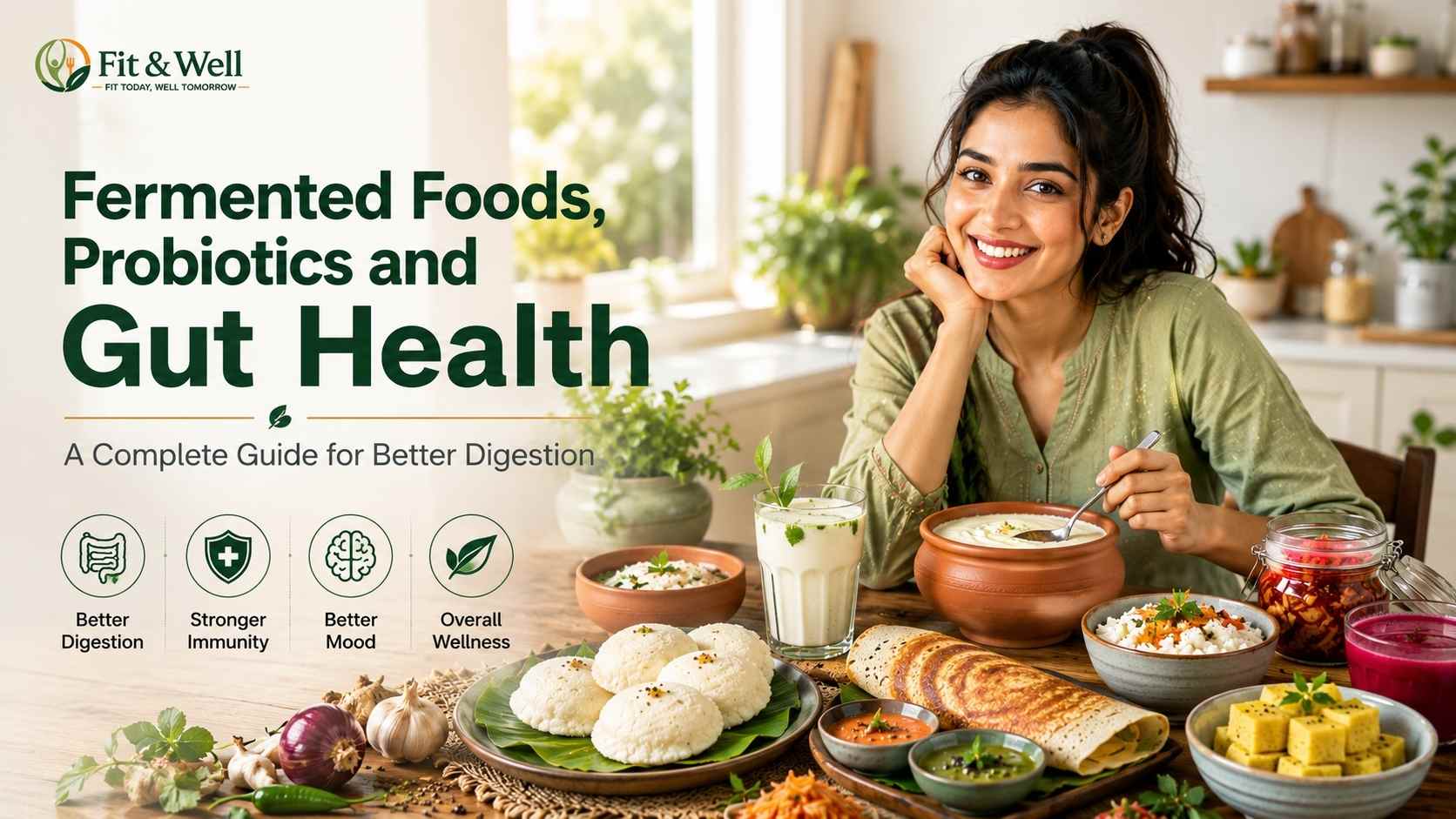
For many Indians, improving gut health doesn’t require expensive supplements or imported superfoods. Some of the most beneficial choices may already be part of traditional meals, from homemade curd and buttermilk to idli, dosa and fermented rice preparations passed down through generations.
Understanding how these foods work and how to include them sensibly in your diet is the first step towards supporting a healthier gut.
What Is Gut Health?
Gut health refers to the balance and proper functioning of the digestive system, particularly the community of microorganisms living in the intestines. A healthy gut supports efficient digestion, nutrient absorption, immune function and communication between the gut and the brain.
Gut health isn’t defined by the absence of digestive symptoms alone.
Someone with regular bowel movements may still have an unhealthy diet that negatively affects the diversity of their gut microbiome, while occasional digestive discomfort doesn’t necessarily indicate poor gut health.
Instead, maintaining a healthy gut involves supporting the microorganisms that help keep the digestive system functioning normally.
A healthy gut typically depends on several factors, including:
- Eating a varied, fibre-rich diet.
- Including fermented foods where appropriate.
- Staying physically active.
- Getting enough sleep.
- Managing stress.
- Limiting unnecessary antibiotic use.
- Drinking enough water.
- Avoiding excessive alcohol and ultra-processed foods.
Rather than searching for a single “gut health food”, it’s the overall pattern of your lifestyle and diet that matters most.
What Is the Gut Microbiome?
The gut microbiome is the collection of trillions of microorganisms living mainly in your large intestine. These microbes include bacteria, fungi, viruses and other microscopic organisms that work together to support many essential functions within the body.
Although the word “bacteria” often carries negative associations, most gut bacteria are either harmless or beneficial.
They help:
- Break down dietary fibre.
- Produce certain vitamins, including vitamin K and some B vitamins.
- Create short-chain fatty acids that nourish the cells lining the colon.
- Support immune function.
- Help prevent harmful bacteria from multiplying.
- Influence metabolism.
- Communicate with the nervous system through the gut-brain axis.
Each person’s microbiome is unique, shaped by genetics, birth method, diet, environment, medications and lifestyle.
Researchers now believe that microbial diversity, meaning a wide variety of beneficial microorganisms, is one of the strongest indicators of a healthy gut.
Why Gut Health Matters
Your digestive system does much more than process food.
Scientists continue to discover links between gut health and many other aspects of wellbeing.
Digestive Health
A balanced microbiome supports efficient digestion and may help reduce common digestive complaints such as bloating, constipation and diarrhoea.
Immune Function
Around 70% of the body’s immune cells are located within or around the gastrointestinal tract.
Beneficial gut bacteria help train the immune system to distinguish between harmless substances and genuine threats, supporting a balanced immune response.
Mental Wellbeing
The gut and brain communicate continuously through what scientists call the gut-brain axis.
This two-way communication network involves nerves, hormones and chemical messengers produced by gut microbes.
Although research is ongoing, scientists are investigating how gut health may influence mood, stress resilience and cognitive function.
Metabolic Health
Emerging evidence suggests that the gut microbiome may influence blood sugar regulation, appetite and body weight by affecting how nutrients are processed and how hormones involved in metabolism are regulated.
Inflammation
Low-grade chronic inflammation has been linked to several long-term health conditions.
Some studies suggest that improving microbial diversity through diet may help support a healthier inflammatory response, although research in this area continues to evolve.
What Are Fermented Foods?
Fermented foods are foods and drinks produced through a natural process in which beneficial microorganisms, such as bacteria or yeast, break down sugars and starches into other compounds, including organic acids. This process helps preserve food, enhances flavour and, in some cases, creates live microorganisms that may support gut health.
Fermentation has been used for thousands of years, long before refrigeration existed.
Besides extending shelf life, fermentation often improves taste, texture and, in some cases, the nutritional profile of foods.
Not all fermented foods contain live probiotics by the time they reach your plate. Some products are heated or pasteurised after fermentation, which destroys many of the beneficial microorganisms.
This is one reason it’s important to understand the difference between fermented foods and probiotic foods rather than assuming they’re always the same.
How Fermentation Supports Gut Health
When certain fermented foods contain live microorganisms, they may contribute to the diversity of bacteria already living in the gut.
Fermentation can also:
- Increase the availability of some nutrients.
- Improve digestibility.
- Produce beneficial compounds such as organic acids.
- Enhance flavour naturally.
- Support a varied diet that’s rich in whole foods.
However, fermented foods work best as part of an overall healthy eating pattern. They cannot compensate for a diet that’s consistently low in fibre and high in ultra-processed foods.
What Are Probiotics?
Probiotics are live microorganisms that, when consumed in adequate amounts, provide a health benefit to the host. Most probiotics belong to specific strains of beneficial bacteria, although certain yeasts are also used.
It’s important to remember that not every yoghurt, fermented drink or supplement qualifies as a probiotic. The microorganisms must be present in sufficient numbers and supported by scientific evidence demonstrating a health benefit.
Common probiotic bacteria include species from the Lactobacillus and Bifidobacterium groups, although many different strains are currently being studied.
Prebiotics vs Probiotics vs Postbiotics: What’s the Difference?
The terms prebiotics, probiotics and postbiotics are often used interchangeably, but they play very different roles in supporting gut health. Understanding how they work together can help you make more informed dietary choices instead of relying on marketing claims.
What Are Prebiotics?
Prebiotics are types of dietary fibre that pass through the digestive system without being broken down. Rather than feeding your body directly, they serve as food for the beneficial bacteria already living in your gut.
When these bacteria ferment prebiotic fibres, they produce compounds known as short-chain fatty acids, which help nourish the cells lining the colon and contribute to a healthy gut environment.
Some of the best natural sources of prebiotics include:
- Garlic
- Onions
- Leeks
- Bananas, especially slightly green bananas
- Oats
- Apples
- Asparagus
- Chicory root
- Lentils
- Chickpeas
- Whole grains
A diet rich in plant-based foods naturally provides a wide variety of prebiotic fibres without the need for supplements.
What Are Probiotics?
Probiotics are live microorganisms that can provide health benefits when consumed in adequate amounts. They help replenish or support beneficial bacteria within the gut, although their effects depend on the specific strain and the individual consuming them.
Natural probiotic foods include:
- Homemade curd with live cultures
- Traditional buttermilk
- Kefir
- Kimchi
- Sauerkraut
- Miso
- Tempeh
Not all probiotic products contain the same bacterial strains, and not every strain has the same health benefits. This is why researchers increasingly focus on strain-specific evidence rather than referring to probiotics as a single group.
What Are Postbiotics?
Postbiotics are the beneficial compounds produced when gut bacteria digest fibre and other nutrients.
These include:
- Short-chain fatty acids
- Enzymes
- Peptides
- Vitamins
- Organic acids
Unlike probiotics, postbiotics aren’t living microorganisms. Instead, they’re the substances created by healthy gut bacteria that help support digestion, strengthen the intestinal barrier and influence immune function.
Scientists consider postbiotics one of the most promising areas of microbiome research, although much remains to be understood.
Think of It Like a Garden
One simple way to understand these three concepts is to imagine your gut as a garden.
- Prebiotics are the fertiliser that feeds the plants.
- Probiotics are the healthy plants themselves.
- Postbiotics are the flowers and fruit produced by those healthy plants.
Without fertiliser, the plants struggle to grow. Without healthy plants, there is little fruit to harvest. Likewise, a healthy gut depends on all three working together.
The Best Indian Fermented Foods for Gut Health
India has one of the richest traditions of fermented foods in the world. Long before probiotics became a wellness trend, many Indian households were naturally incorporating fermented foods into their daily meals.
These traditional foods not only add flavour and variety but may also contribute to a diverse gut microbiome when prepared using traditional methods.
Homemade Curd (Dahi)
Curd remains one of the most widely consumed fermented foods in India.
Prepared by fermenting milk with beneficial bacterial cultures, homemade curd is often richer in live microorganisms than many commercially flavoured yoghurt products, which may contain added sugars or undergo additional processing.
It can be enjoyed:
- With meals
- As plain yoghurt
- In raita
- As a base for lassi
- Mixed with fruit
Buttermilk (Chaas)
A refreshing staple during warmer months, chaas combines fermented curd with water and spices such as cumin, ginger or coriander.
Besides supporting hydration, traditional buttermilk provides beneficial bacteria while being naturally lower in fat than many dairy products.
Idli and Dosa
The fermentation of rice and urad dal batter creates the distinctive texture and flavour of idlis and dosas.
Although cooking reduces many live microorganisms, fermentation still improves digestibility and enhances the availability of certain nutrients compared with unfermented batter.
Dhokla
This popular Gujarati dish is made using fermented gram flour or rice batter.
Like idli, steaming destroys most live bacteria, but the fermentation process still contributes to improved texture and digestibility.
Kanji
Kanji is a naturally fermented drink traditionally prepared in northern India using black carrots, mustard seeds and water.
Its tangy flavour develops through natural fermentation, making it one of India’s lesser-known fermented beverages.
Appam
Popular in Kerala and parts of southern India, appam batter is fermented before cooking, producing its characteristic soft centre and crisp edges.
Fermentation improves flavour while making the rice batter easier to digest.
Ambali
Consumed in parts of Karnataka and Telangana, ambali is a fermented finger millet (ragi) drink valued for its refreshing taste and nutritional qualities.
It combines whole grains with natural fermentation, making it a nutritious traditional beverage.
Gundruk
Originating from Himalayan communities, particularly Nepal and parts of north-east India, Gundruk consists of naturally fermented leafy vegetables.
It’s commonly used in soups and curries and remains an important traditional fermented food in mountain regions.
Kinema
Kinema is a fermented soybean product widely consumed in Sikkim and neighbouring Himalayan regions.
Its strong flavour resembles other fermented soybean foods found across East Asia.
Fermented Foods from Around the World
Expanding your diet beyond familiar foods can increase dietary diversity, which is beneficial for your gut microbiome.
Popular fermented foods include:
- Kefir
- Kimchi
- Sauerkraut
- Tempeh
- Miso
- Natto
- Kombucha
Each offers different microorganisms and nutritional characteristics, which is one reason variety matters more than relying on a single fermented food.
Not Every Fermented Food Contains Live Probiotics
One of the biggest misconceptions surrounding gut health is that every fermented food is automatically a probiotic food.
That’s not true.
Some fermented foods lose their live microorganisms during heating, pasteurisation or processing.
Examples include:
- Freshly baked sourdough bread
- Most commercial pickles made with vinegar
- Beer
- Wine
- Pasteurised sauerkraut
- Shelf-stable kimchi
These foods may still provide nutritional benefits, but they shouldn’t automatically be considered sources of live probiotics.
Choosing traditionally fermented foods that haven’t been heavily processed is generally the best way to obtain naturally occurring beneficial bacteria.
Common Myths About Fermented Foods and Gut Health
The growing popularity of gut health has also led to a flood of misinformation. While fermented foods and probiotics can support a healthy digestive system, it’s important to separate evidence from marketing claims.
Myth 1: All Fermented Foods Contain Probiotics
Fact: Not every fermented food contains live microorganisms.
Many fermented products are heated, filtered or pasteurised after fermentation, which destroys the beneficial bacteria. Examples include many commercially produced pickles, shelf-stable sauerkraut, beer and wine.
If you’re looking for probiotic benefits, choose products that contain live and active cultures whenever possible.
Myth 2: More Probiotics Are Always Better
Fact: More isn’t necessarily better.
Different probiotic strains perform different functions, and consuming excessive amounts doesn’t automatically provide additional health benefits.
A varied, balanced diet remains far more important than consuming large quantities of probiotics.
Myth 3: Probiotic Supplements Are Better Than Food
Fact: Supplements can be useful in certain situations, but they’re not a substitute for a healthy diet.
Whole foods provide fibre, vitamins, minerals and naturally occurring compounds that work together to support the gut microbiome.
For most healthy individuals, food should be the primary source of gut-friendly nutrients.
Myth 4: Gut Health Only Affects Digestion
Fact: Digestion is only one part of the picture.
Research continues to explore links between the gut microbiome and immune function, metabolism, inflammation and the gut-brain axis.
Although many questions remain unanswered, scientists increasingly recognise the gut as one of the body’s most influential organ systems.
Myth 5: Fermented Foods Cure Digestive Disorders
Fact: Fermented foods may support digestive health, but they aren’t a cure for conditions such as IBS, Crohn’s disease, ulcerative colitis or coeliac disease.
Anyone with ongoing digestive symptoms should seek medical assessment rather than relying solely on dietary changes.
Myth 6: Everyone Should Take Probiotic Supplements
Fact: There’s no universal recommendation for probiotic supplementation.
The benefits depend on factors such as age, overall health, medical history and the specific probiotic strain being used.
Myth 7: Yogurt and Curd Are Exactly the Same
Fact: Although both are fermented dairy products, commercially produced yoghurt and traditional homemade curd are prepared using different bacterial cultures.
Their nutritional profiles and microbial composition may therefore differ.
Myth 8: Gut Health Can Be Fixed Overnight
Fact: Improving the gut microbiome is a gradual process.
Consistent healthy eating, regular physical activity, good sleep and stress management have a far greater impact than short-term detoxes or expensive supplements.
Key Takeaways
If there’s one message to remember, it’s that gut health depends on everyday habits rather than quick fixes.
Here are the most important points from this guide:
- A healthy gut microbiome supports digestion, immunity and overall wellbeing.
- Fermented foods can contribute to gut health when included as part of a balanced diet.
- Prebiotics feed beneficial gut bacteria, while probiotics introduce live microorganisms and postbiotics are the beneficial compounds they produce.
- Fibre-rich plant foods remain the foundation of a healthy microbiome.
- Traditional Indian fermented foods such as homemade curd, chaas, kanji and fermented millet preparations can be valuable additions to your diet.
- Not all fermented foods contain live probiotics.
- Lifestyle habits including sleep, physical activity and stress management influence gut health as much as diet.
- Gut health is highly individual, so there’s no single food or supplement that works for everyone.
Frequently Asked Questions
Are fermented foods good for everyone?
Most healthy adults can safely enjoy fermented foods as part of a balanced diet. However, people with certain medical conditions or weakened immune systems should seek personalised medical advice.
Which Indian fermented food is best for gut health?
Homemade curd, traditional buttermilk (chaas), kanji, fermented ragi (ambali) and naturally fermented vegetables are among the most nutritious options.
Is homemade curd a probiotic?
Homemade curd usually contains live bacterial cultures, although the exact strains vary depending on preparation methods.
What’s the difference between probiotics and fermented foods?
Fermented foods are foods produced through fermentation. Probiotics are specific live microorganisms shown to provide health benefits. Not every fermented food contains probiotics.
How often should I eat fermented foods?
Small daily servings as part of a balanced diet are generally considered more beneficial than eating large amounts occasionally.
Can fermented foods improve immunity?
A healthy gut microbiome supports normal immune function, although fermented foods should be viewed as one part of an overall healthy lifestyle rather than an immune-boosting cure.
Are probiotic supplements necessary?
Most healthy people can support their gut microbiome through a varied diet rich in fibre and fermented foods. Supplements may be recommended in specific situations by healthcare professionals.
Can children eat fermented foods?
Many traditional fermented foods such as homemade curd are suitable for children when prepared safely and introduced as part of a balanced diet.
Can fermented foods cause bloating?
Some people experience temporary bloating when first increasing fermented foods. Introducing them gradually often helps the digestive system adapt.
What’s more important for gut health: fibre or probiotics?
Both matter, but fibre forms the foundation of a healthy gut microbiome because it nourishes the beneficial bacteria already living in your digestive system.
Final Thoughts
For generations, Indian kitchens have naturally included fermented foods without describing them as probiotics or microbiome-friendly meals. Homemade curd, buttermilk, fermented batters and traditional regional foods have quietly supported digestive health long before modern science began exploring the complex relationship between food and the gut microbiome.
Today’s research doesn’t suggest that fermented foods are miracle cures, nor should they replace medical treatment or a balanced lifestyle. What it does show is that a varied diet rich in plant foods, dietary fibre and carefully chosen fermented foods may help support a healthier gut microbiome, which in turn contributes to overall wellbeing.
It’s also worth remembering that gut health is highly individual. A food that works well for one person may not suit another. Paying attention to how your body responds, introducing new foods gradually and focusing on long-term healthy habits are far more effective than chasing the latest dietary trend.
Rather than searching for a single “superfood”, think of gut health as the result of countless everyday choices. Eating more whole foods, staying physically active, managing stress, sleeping well and enjoying traditional fermented foods in moderation all contribute to creating a healthier environment for your gut microbiome.
If you’re looking to improve your overall well-being, supporting your gut is an excellent place to begin. After all, a healthy digestive system doesn’t just help you process food. It helps lay the foundation for better health throughout the body.
For more practical, evidence-based advice on healthy eating, digestive wellness and preventive healthcare, explore our Nutrition and Healthy Eating