
Key Takeaways of this One Health Mission article
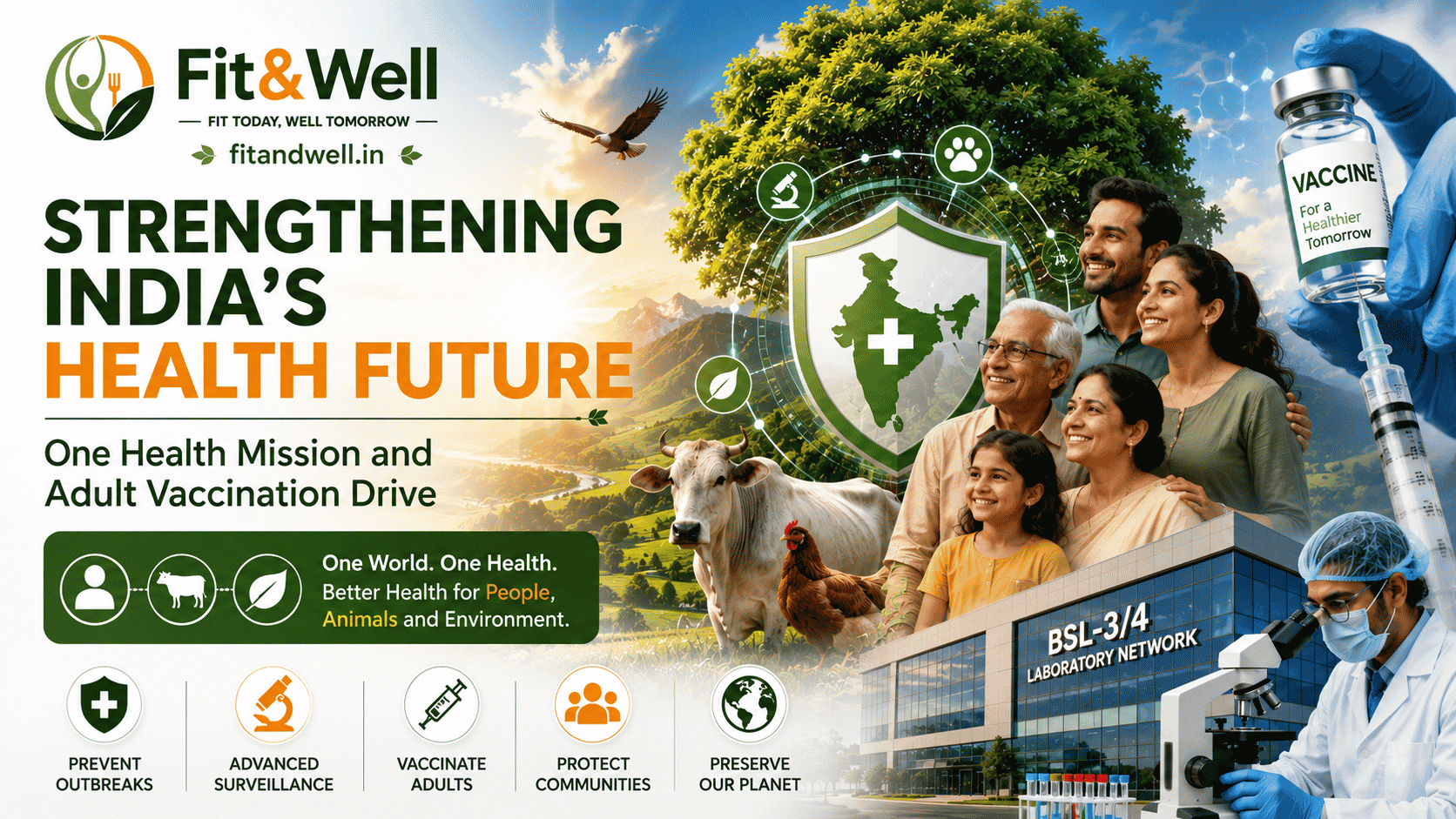
- One Health Mission connects human, animal, and environmental health surveillance across India through 22 advanced laboratories
- Adult vaccination coverage remains critically low, below 2% for most vaccine,s despite proven health and economic benefits
- 22 BSL-3/4 laboratories form India’s national disease detection network for rapid outbreak response
- COVID-19 vaccination proved India’s technical capacity: over 2 billion doses administered using the CoWIN digital platform
- Antimicrobial resistance killed at least 1.27 million people globally in 2019; adult vaccination reduces antibiotic dependence
- Policy gap exists: India lacks a formal National Adult Immunisation Programme despite having technical infrastructure
- Budget allocation: Rs 37,227 crore allocated to the National Health Mission in 2025-26, yet no dedicated adult immunisation funding
India Faces Complex Health Threats
India stands at a critical juncture in its health security journey. The nation confronts multiple threats simultaneously. Dense population clusters create disease transmission risks. Massive livestock populations increase zoonotic spillover potential. Climate volatility accelerates pathogen evolution.
The National One Health Mission (NOHM) and Adult Vaccination Drive (AVD) represent India’s strategic response. These initiatives work in tandem. NOHM monitors disease threats across species and ecosystems. AVD protects vulnerable populations through preventive immunization.
Together, they form India’s shield against pandemic threats and the burden of endemic diseases. The integration of these approaches is essential for building national health resilience.
Understanding the One Health Mission Approach
What Makes One Health Different?
The One Health paradigm recognises a fundamental truth: human health connects directly to animal and environmental health. The World Health Organisation defines One Health as an integrated, unifying approach that aims to sustainably balance and optimise the health of people, animals and ecosystems.
Diseases don’t respect boundaries between species. Approximately 75% of emerging infectious diseases originate in animals. Environmental degradation creates new pathways for the transmission of pathogens.
CDC’s One Health approach encourages collaborative efforts of disease detectives, laboratorians, physicians, and veterinarians working across human, animal, and environmental health. This multisectoral coordination is essential for addressing complex health threats.
Why India Needs One Health Now
India’s unique circumstances create heightened vulnerability:
Population Density: Over 1.4 billion people living in close proximity
Livestock Scale: One of the world’s largest cattle, poultry, and livestock populations
Biodiversity Hotspot: Extensive wildlife populations in varied ecosystems
Climate Change: Increasing frequency of extreme weather events
Recent crises demonstrate the urgent need. COVID-19 originated from animal sources. Lumpy Skin Disease devastated cattle populations. Avian Influenza threatens repeatedly. These events prove that siloed responses fail.
Explore preventive health strategies at fitandwell.in
NOHM: India’s Integrated Surveillance System
Governance Structure
The National One Health Mission operates through robust central oversight. The Executive Committee provides policy guidance. The Health Minister chairs this committee. The Principal Scientific Advisor serves as Vice Chair.
The Scientific Steering Committee handles technical matters. It includes department secretaries and directors-general. Two states rotate as members, ensuring that ground-level input is provided.
This structure ensures accountability across government silos. Multiple ministries collaborate: Health and Family Welfare, Agriculture and Animal Husbandry, Environment and Forest, and Climate Change.
National Laboratory Network
NOHM established 22 BSL-3/4 laboratories across India’s geography. These facilities provide advanced diagnostic capabilities. The Indian Council of Medical Research supports this network.
Laboratory functions include:
- Advanced pathogen detection and identification
- Disease outbreak sample analysis
- Biosample repository maintenance
- Novel pathogen discovery through sequencing
The labs employ cutting-edge technology. Artificial Intelligence assists in pattern recognition. Next-Generation Sequencing identifies new threats rapidly. Metagenomic pipelines discover previously unknown pathogens.
The WHO One Health Initiative team was established in July 2021 to coordinate interagency engagement and partnership. This global framework supports India’s national efforts.
Fighting Antimicrobial Resistance
The estimated national cost to treat infections caused by six antimicrobial-resistant germs frequently found in health care can be substantial—more than $4.6 billion annually, according to a collaborative CDC study.
The global situation remains dire. Antimicrobial resistance resulted in the deaths of at least 1.27 million people worldwide in 2019. Six bacterial antimicrobial-resistant hospital-onset infections increased by a combined 20% during the COVID-19 pandemic compared to the pre-pandemic period, peaking in 2021, and remaining above pre-pandemic levels in 2022.
India recognises AMR as a critical national threat. NOHM coordinates efforts across sectors:
- The Indian Council of Medical Research monitors human health
- The National Center for Disease Control tracks disease patterns
- The Food Safety and Standards Authority addresses food chain issues
- The Central Pollution Control Board monitors environmental factors
This setback underscores the need for sustained prevention efforts, including vaccination as a key strategy to reduce antibiotic demand.
Discover antimicrobial resistance insights at fitandwell.in
Adult Vaccination: India’s Coverage Crisis
The Stark Reality
India achieved remarkable success in childhood immunisation. DTP3 coverage in India reached 94% in 2024. Measles coverage consistently exceeds 90%. The Universal Immunisation Programme demonstrates exceptional technical capacity.
Adult vaccination tells a different story. Coverage of adult vaccines remains critically low, at less than 2% for most vaccines. The estimated percentages were 1.5% for influenza, 0.6% for pneumococcal disease, 1.9% for typhoid and 1.9% for hepatitis B.
This gap represents a massive missed opportunity. The infrastructure exists. The expertise is proven. What’s missing is policy commitment and dedicated funding.
Why Adult Vaccination Matters
India’s population is ageing rapidly. By 2050, 20% of Indians will be elderly. This demographic shift demands new approaches.
Health benefits include:
- Prevention of vaccine-preventable diseases
- Protection of immunocompromised individuals
- Reduction of disease transmission to infants
- Prevention of outbreak amplification
Economic returns are substantial:
- Reduced healthcare expenditure
- Protected workforce productivity
- Avoided catastrophic family expenses
- Decreased antibiotic consumption
Currently, 63 million Indians fall into poverty annually due to health costs. Adult vaccination directly addresses this crisis. When a productive adult avoids hospitalisation for preventable pneumonia or influenza, the family escapes financial disaster.
Priority Vaccines for Indian Adults
Medical experts recommend specific vaccines based on age and risk factors:
Essential for All Adults:
- Influenza: Annual vaccination reduces respiratory illness risk
- COVID-19: Ongoing protection against evolving variants
- Tdap: Tetanus, diphtheria, and pertussis protection
For High-Risk Groups:
- Pneumococcal: Critical for the elderly and those with chronic diseases
- Hepatitis B: Important for healthcare workers and chronic disease patients
- Typhoid: Essential due to drug-resistant strains in South Asia
- Herpes Zoster: Prevents shingles in adults over 60
Healthcare workers require mandatory vaccination. The elderly need subsidised access. Individuals with diabetes, COPD, cancer, or renal disease should receive priority.
Learn about vaccine-preventable diseases at WHO
Implementation Challenges
NOHM Faces Structural Hurdles
Inter-Sectoral Coordination Issues:
Different departments operate under distinct frameworks. Human health, veterinary services, and environmental agencies use different terminology. They track different indicators. Training personnel across disciplines adds complexity.
Sustainability Concerns:
Crisis-driven coordination works temporarily. During outbreaks, agencies collaborate effectively. But routine surveillance requires formal structures. Long-term funding remains uncertain.
Environmental Health Deficit:
The environmental pillar remains the weakest component. Yet environmental factors drive disease emergence. Water quality affects pathogen transmission. Pollution influences antimicrobial resistance patterns. Wildlife health impacts spillover events.
Without robust environmental integration, NOHM treats symptoms rather than root causes.
Barriers to Adult Vaccination Scale-Up
Policy and Funding Gaps:
No nationally mandated adult immunisation schedule exists. The National Health Mission received Rs 37,227 crore allocation in 2025-26, which is 3% higher than the revised estimates of 2024-25. But specific adult vaccination funding isn’t earmarked.
Individuals bear most vaccination costs. This creates access inequality based on socioeconomic status.
Operational Challenges:
Large-scale implementation demands extensive resources. Cold chain infrastructure needs expansion. Supply chains require strengthening. Workforce training is essential.
However, India administered over 2.2 billion COVID-19 vaccine doses using the CoWIN platform. This proves that technical capability exists.
Cultural and Knowledge Barriers:
Low public awareness of the benefits of adult vaccines persists. Vaccine hesitancy exists in some communities. Many physicians lack adult immunisation training.
Clear, culturally relevant information dissemination is essential. National guidelines would provide clarity for healthcare providers.
Explore healthcare delivery systems at fitandwell.in
Success Stories from Indian States
Kerala’s Pioneering Approach
Kerala developed India’s first state-level Antimicrobial Resistance Strategic Action Plan in 2018. The state responded effectively to Nipah virus outbreaks and Avian Influenza threats.
Kerala’s model includes:
- Multi-sectoral task forces with clear mandates
- Community-based surveillance networks
- Trained volunteers in local governments
- Rapid outbreak response protocols
- Sustained community engagement
The state is expanding its program to four districts in the Pemba basin. It leverages existing governance structures effectively.
Gujarat Builds Systems
Gujarat focused on developing One Health Surveillance systems. The state strengthened cross-sectoral collaboration among surveillance teams.
Evaluations revealed gaps in data management and communication. The human health system needs better data sharing. Animal health surveillance requires an improved capacity for interpretation.
Despite challenges, assessments concluded that fully integrated surveillance is feasible. Gujarat provides valuable lessons for national scale-up.
These state examples prove NOHM concepts work. They also highlight challenges in expanding nationwide.
Creating Synergy: Intelligence-Driven Protection
Connecting Surveillance to Vaccination
NOHM provides early warning capabilities. Advanced laboratories detect emerging threats. Surveillance networks track disease patterns across species.
Adult vaccination provides a defence mechanism. This combination creates powerful protection:
- Detection: NOHM surveillance identifies emerging threats
- Assessment: Risk analysis pinpoints vulnerable populations
- Deployment: Targeted vaccination campaigns launch rapidly
- Protection: High-risk groups receive priority immunisation
Veterinary staff face the highest spillover risks. Animal handlers work at the interface. Laboratory personnel handle dangerous pathogens. These groups need immediate vaccination when threats emerge.
The Digital Infrastructure Advantage
CoWIN proved India’s capacity to execute complex, massive adult immunisation efforts. Over 2.2 billion doses were administered using this platform.
This infrastructure should become permanent:
A sustained digital system enables:
- Lifelong electronic health records for all citizens
- Real-time immunisation status tracking
- Automated reminder systems for scheduled vaccines
- Identification of missed vaccination opportunities
- Integration with NOHM surveillance data
Imagine automated reminders for elderly citizens about annual flu shots. Or alerts for patients with chronic diseases about pneumococcal vaccines. The technology exists. Implementation requires policy commitment.
Vaccination Reduces Antimicrobial Resistance
Adult vaccination directly combats AMR. The mechanism is straightforward:
- Fewer bacterial infections mean less antibiotic prescribing
- Influenza vaccination prevents secondary bacterial pneumonia
- Pneumococcal vaccines reduce severe respiratory infections
- Lower antibiotic demand reduces resistance selection pressure
This makes AVD essential to NOHM’s AMR strategy. It’s not just about human health. It’s about preserving the effectiveness of antibiotics across the entire One Health spectrum.
Understand integrated health approaches at fitandwell.in
The Path Forward: Policy Recommendations
Establish the National Adult Immunisation Programme
India needs a formal NAIP immediately. This program must include:
Dedicated Funding:
- Earmark the National Health Mission budget specifically for adult vaccines
- Fund centralised vaccine procurement at scale
- Support sustained public awareness campaigns
- Subsidise vaccines for priority populations
Strategic Prioritisation:
- Mandate healthcare worker vaccination for influenza and COVID-19
- Provide free vaccines for elderly and chronic disease patients
- Target high-risk occupational groups
- Phase rollout based on epidemiological evidence
Proven Infrastructure:
- Adapt CoWIN platform for routine adult immunisation
- Leverage the COVID-19 vaccination experience
- Train the existing workforce on adult vaccine schedules
- Integrate with the primary healthcare system
Strengthen NOHM’s Legal Framework
Voluntary cooperation isn’t sufficient. Enforceable mechanisms are essential:
Mandate Data Sharing:
- Create legal requirements for inter-departmental collaboration
- Establish standardised communication protocols
- Define financial responsibilities clearly
- Ensure accountability mechanisms
Empower Environmental Health:
- Allocate dedicated environmental health budgets
- Fund ecological surveillance programs
- Monitor water quality and the role of pollution in disease
- Track wildlife pathology systematically
District-Level Integration:
- Establish permanent One Health Action Teams at the district level
- Include health, veterinary, and environmental officials
- Provide access to real-time surveillance data
- Empower local targeted vaccination campaigns
Leverage Digital Systems
Transform CoWIN from a crisis tool to a routine infrastructure:
- Create comprehensive citizen health records
- Track all adult vaccinations centrally
- Generate automated recall notices
- Integrate with NOHM surveillance for intelligence-driven deployment
- Enable research and policy evaluation
The Economic Case for Action
Adult vaccination represents smart economics, not just good health policy.
Documented Returns:
Childhood vaccination increased weekly wages by 13.8%. Extending life-course immunisation to adults protects productive workers. Prevention costs far less than treatment. Avoiding hospitalisations prevents family financial catastrophe.
Out-of-pocket health expenditure declined from 48.8% to 39.4% of total health spending between 2017-18 and 2021-22. NAIP could accelerate this positive trend dramatically.
Cost of Inaction:
Each preventable hospitalisation costs families thousands of rupees. Lost wages compound the burden. Borrowing or selling assets creates long-term poverty. These costs multiply across millions of adults annually.
The investment required for NAIP is modest compared to the treatment costs it avoids. The return on investment is clear and substantial.
Frequently Asked Questions (FAQs)
What is the National One Health Mission?
NOHM is India’s integrated approach to monitoring and responding to health threats across human, animal, and environmental sectors. It coordinates surveillance, laboratory testing, and rapid outbreak response through a network of 22 advanced laboratories and multi-sectoral governance structures.
Why does India need adult vaccination?
India’s population is aging rapidly, with 20% projected to be elderly by 2050. Adult vaccination protects productive workers, prevents disease transmission to infants, reduces antibiotic use, and prevents catastrophic family health expenses. Current coverage remains below 2% despite proven benefits.
Which vaccines do Indian adults need?
Priority vaccines include annual influenza vaccinations, COVID-19 boosters, Tdap (tetanus-diphtheria-pertussis) vaccinations, pneumococcal vaccines for the elderly and high-risk groups, hepatitis B vaccinations for healthcare workers, typhoid vaccinations due to drug-resistant strains, and herpes zoster vaccinations for seniors over 60.
What is antimicrobial resistance and why does it matter?
AMR occurs when bacteria and fungi defeat drugs designed to kill them. AMR killed at least 1.27 million people worldwide in 2019. Vaccination reduces AMR by preventing infections that would otherwise require antibiotics, thereby decreasing selection pressure for resistant strains.
How did India handle COVID-19 vaccination?
India administered over 2.2 billion vaccine doses using the CoWIN digital platform. The country demonstrated the technical capacity for large-scale adult immunisation programs, proving that the infrastructure and expertise exist for routine adult vaccination.
What are the main barriers to adult vaccination in India?
Major barriers include a lack of a national adult immunisation policy, insufficient dedicated funding within the Rs 37,227 crore National Health Mission budget, low public awareness, vaccine hesitancy, inadequate physician training on adult vaccines, and cost barriers for economically disadvantaged populations.
How does One Health prevent pandemics?
One Health detects disease threats early through integrated surveillance across species. It identifies spillover risks before they amplify. Coordinated response systems enable rapid containment. Intelligence-driven vaccination protects high-risk populations at the human-animal interface.
What role do states play in One Health implementation?
States like Kerala and Gujarat demonstrate successful One Health models. They establish multi-sectoral task forces, implement community-based surveillance, train local volunteers, and deploy targeted interventions based on local epidemiology. State success stories provide blueprints for national expansion.
Is there a connection between vaccination and economic development?
Yes. Vaccination protects human capital and workforce productivity. It prevents catastrophic health expenditures that push families into poverty. Studies show childhood vaccination increased wages by 13.8%. Adult vaccination extends these economic benefits throughout the life course.
What digital tools support India’s health initiatives?
CoWIN proved India can manage massive vaccination campaigns digitally with over 2.2 billion doses administered. This platform should become a permanent infrastructure for maintaining lifelong health records, providing automated reminders, tracking coverage, and integrating with NOHM surveillance for intelligence-driven immunisation deployment.
Conclusion: Time for Decisive Action
India possesses impressive health security capabilities. Advanced laboratory networks detect threats. Digital platforms manage data at scale. Experienced healthcare workers deliver services. Political leadership recognises priorities.
What’s missing is operational integration. NOHM and AVD must function as one system. Surveillance must trigger prophylactic deployment. Environmental health needs robust implementation. District teams require empowerment and resources.
The government must formally establish NAIP with dedicated funding from the Rs 37,227 crore allocation for the National Health Mission. CoWIN infrastructure must support routine adult immunisation. Healthcare workers need training in adult vaccine schedules. Citizens deserve awareness of ava