
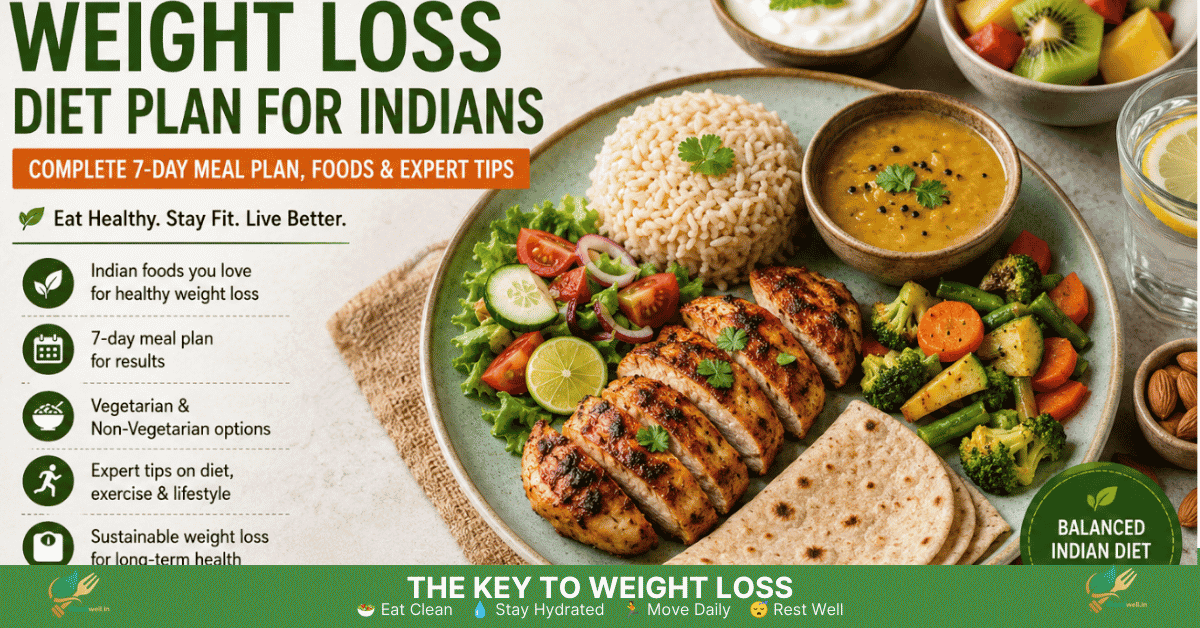
Losing weight isn’t about starving yourself or eliminating your favourite Indian foods. Sustainable weight loss comes from making smarter food choices, controlling portion sizes and creating a calorie deficit that your body can maintain over time.
Many people believe Indian cuisine is unhealthy because it includes rice, chapatis and traditional sweets. In reality, a balanced Indian diet can support healthy weight loss when meals are prepared with nutritious ingredients and eaten in appropriate portions.
This guide explains how to lose weight safely using familiar Indian foods. Whether you follow a vegetarian, non-vegetarian, North Indian or South Indian diet, you’ll find practical advice that is easy to follow.
By the end of this guide, you’ll understand:
- how weight loss really works
- how many calories you need
- the best Indian foods for fat loss
- a complete 7-day Indian meal plan
- common mistakes to avoid
- practical tips for maintaining your results
Why Weight Loss Is Different for Indians
Indians face unique challenges when trying to lose weight.
Research shows that South Asians often develop higher body fat percentages at lower body weights than many other ethnic groups. Fat also tends to accumulate around the abdomen, increasing the risk of type 2 diabetes, cardiovascular disease and metabolic syndrome.
Traditional Indian diets can be highly nutritious, but modern eating habits have introduced several problems:
- excessive refined carbohydrates
- sugary beverages
- oversized portions
- frequent snacking
- increased consumption of processed foods
- sedentary lifestyles
The good news is that you don’t need to stop eating Indian food. Instead, you need to improve the quality and balance of your meals.
How Weight Loss Actually Works
Weight loss occurs when your body burns more calories than it consumes. This is known as a calorie deficit.
For example:
- Eat 2,400 calories
- Burn 2,800 calories
Daily deficit:
400 calories
Over time, your body uses stored fat for energy, leading to gradual fat loss.
A safe and sustainable rate of weight loss is approximately 0.5 to 1 kilogram per week.
Rapid weight loss through crash diets often leads to muscle loss, nutritional deficiencies and weight regain.
Instead of following extreme diets, aim for:
- moderate calorie reduction
- higher protein intake
- increased fibre
- regular physical activity
- adequate sleep
- stress management
These habits support long-term success and make it easier to maintain your weight after reaching your goal.
How Many Calories Do Indians Need?
Calorie needs vary depending on age, sex, height, weight and activity level.
The table below provides general daily calorie estimates for adults:
| Goal | Women | Men |
| Weight Loss | 1,200 to 1,600 kcal | 1,500 to 2,000 kcal |
| Maintenance | 1,800 to 2,200 kcal | 2,200 to 2,700 kcal |
| Active Lifestyle | 2,200+ kcal | 2,800+ kcal |
These values are starting points. Individual energy requirements differ, so adjust your intake based on progress, hunger and activity levels.
Why Protein Is Essential for Weight Loss
Many Indian diets are rich in carbohydrates but relatively low in protein. Increasing protein intake can make weight loss easier by helping you stay full, preserving muscle mass and supporting recovery after exercise.
Good Indian protein sources include:
- Dal
- Rajma
- Chana
- Soy chunks
- Paneer
- Greek yoghurt
- Eggs
- Chicken breast
- Fish
- Prawns
- Tofu
- Soya milk
- Sprouts
- Moong dal chilla
- Besan
A practical target for many adults trying to lose weight is 1.2 to 1.6 grams of protein per kilogram of body weight per day, depending on activity level and health status.
Best Foods for Weight Loss in an Indian Diet
Choosing the right foods is one of the easiest ways to lose weight without feeling hungry. Instead of cutting out entire food groups, focus on eating nutrient-dense foods that are naturally rich in protein, fibre and essential nutrients. These foods help you stay fuller for longer, making it easier to maintain a calorie deficit.
A balanced Indian diet can include plenty of healthy foods that support fat loss while still allowing you to enjoy traditional meals.
If you’re looking to monitor your daily activity, step count and workouts, our Fitbit Inspire 3 Review explains whether this popular fitness tracker is a worthwhile investment for supporting your weight loss goals.
High-Protein Foods
Protein plays a vital role in weight loss by preserving lean muscle, supporting recovery after exercise and reducing hunger. Including a source of protein with every meal can help improve satiety and reduce unnecessary snacking.
Best Vegetarian Protein Sources
Vegetarians have plenty of excellent protein-rich foods to choose from, including:
- Low-fat paneer
- Tofu
- Greek yoghurt
- Plain curd
- Moong dal
- Masoor dal
- Chana dal
- Rajma
- Chickpeas
- Black chana
- Soy chunks
- Sprouts
- Besan
- Quinoa
These foods provide protein alongside vitamins, minerals and fibre, making them valuable additions to a weight loss diet.
Best Non-Vegetarian Protein Sources
If you eat meat or seafood, prioritise lean protein options such as:
- Skinless chicken breast
- Eggs
- Fish
- Tuna
- Salmon
- Rohu
- Prawns
- Lean cuts of mutton on occasion
Choose grilling, baking, steaming or air frying over deep frying to keep meals lower in calories.
High-Fibre Foods
Fibre slows digestion, helps regulate blood sugar levels and promotes fullness after meals. A high-fibre diet may also support digestive health and make it easier to control overall calorie intake.
Good sources of fibre include:
- Oats
- Brown rice
- Millets
- Bajra
- Jowar
- Ragi
- Whole wheat
- Lentils
- Beans
- Chickpeas
- Fruits
- Vegetables
- Flaxseeds
- Chia seeds
Most adults should aim to consume around 25 to 35 grams of fibre each day.
For more information about dietary fibre, visit the British Dietetic Association:
https://www.bda.uk.com/
Healthy Fats
Healthy fats are often misunderstood. While they contain more calories per gram than carbohydrates or protein, they are essential for hormone production, brain function and the absorption of fat-soluble vitamins.
Including moderate amounts of healthy fats can also improve satiety, helping you feel satisfied between meals.
Choose foods such as:
- Almonds
- Walnuts
- Pistachios
- Peanuts
- Pumpkin seeds
- Sunflower seeds
- Flaxseeds
- Avocados
- Olive oil
- Mustard oil
- Groundnut oil
- Sesame oil
- Fatty fish
Although these foods are nutritious, portion control remains important because they are energy dense.
Vegetables That Support Weight Loss
Vegetables provide plenty of nutrients while adding very few calories to your meals. Filling at least half your plate with vegetables is one of the simplest ways to reduce calorie intake without feeling deprived.
Excellent choices include:
- Spinach
- Fenugreek leaves
- Amaranth
- Bottle gourd
- Ridge gourd
- Bitter gourd
- Cauliflower
- Cabbage
- Broccoli
- Green beans
- Carrots
- Cucumbers
- Tomatoes
- Bell peppers
- Mushrooms
- Pumpkin
Aim to include a variety of colours throughout the week to maximise your intake of vitamins, minerals and antioxidants.
Fruits That Can Support Weight Loss
Fruit is sometimes avoided because it contains natural sugars. However, whole fruits also provide fibre, vitamins, minerals and antioxidants that support overall health.
Rather than avoiding fruit, focus on portion size and choose whole fruit instead of fruit juice.
Healthy options include:
- Apples
- Pears
- Guava
- Oranges
- Papaya
- Kiwi
- Pomegranate
- Watermelon
- Muskmelon
- Berries
Eating fruit as a snack instead of processed foods can help reduce overall calorie intake while increasing nutrient consumption.
Whole Grains vs Refined Carbohydrates
Carbohydrates are not the enemy. The quality of your carbohydrates matters far more than eliminating them completely.
Whole grains digest more slowly than refined carbohydrates, helping maintain steady energy levels and reducing hunger.
Better Choices
Choose:
- Brown rice
- Red rice
- Oats
- Whole wheat chapati
- Quinoa
- Jowar
- Bajra
- Ragi
- Millets
Foods to Limit
Reduce your intake of:
- White bread
- Maida products
- Bakery items
- Cakes
- Biscuits
- Refined noodles
- Sugary breakfast cereals
- Pastries
Replacing refined carbohydrates with whole grains can improve fibre intake and help you feel fuller for longer.
Foods to Limit for Better Weight Management
No individual food causes weight gain on its own. However, regularly eating highly processed foods that are high in calories and low in nutrients can make weight loss more difficult.
The goal is not complete restriction but moderation.
Sugary Drinks
Sugary drinks are one of the easiest sources of excess calories because they provide little satiety.
Limit:
- Soft drinks
- Sweetened fruit juices
- Sweetened iced tea
- Energy drinks
- Milkshakes
- Sweetened coffee beverages
Choose water, sparkling water, green tea or unsweetened coffee instead.
Highly Processed Foods
Ultra-processed foods often combine refined carbohydrates, unhealthy fats and added sugars, making them easy to overeat.
Examples include:
- Chips
- Namkeen
- Instant noodles
- Processed snacks
- Packaged desserts
- Sweetened breakfast cereals
Eating these foods occasionally is perfectly acceptable, but they should not form the basis of your daily diet.
Deep-Fried Foods
Deep-fried foods absorb significant amounts of oil, increasing their calorie content.
Limit foods such as:
- Samosas
- Pakoras
- Pooris
- Fried chicken
- French fries
Whenever possible, bake, grill, steam or air fry instead.
High-Sugar Desserts
Traditional sweets can certainly fit into a healthy lifestyle, but frequent consumption may slow weight loss.
Enjoy treats like:
- Gulab jamun
- Jalebi
- Rasgulla
- Cakes
- Pastries
- Ice cream
as occasional indulgences rather than everyday foods.
Portion Control Made Simple
Even healthy foods can contribute to weight gain if portions become too large. Learning to estimate appropriate serving sizes allows you to enjoy a wide variety of foods while staying within your calorie target.
The Healthy Plate Method
A simple way to build balanced meals is to divide your plate into three sections:
- Half the plate: Non-starchy vegetables
- One-quarter: Lean protein
- One-quarter: Whole grains or starchy vegetables
This method naturally increases protein and fibre while helping to control calorie intake.
The Harvard Healthy Eating Plate offers an excellent visual guide for building balanced meals:
https://www.hsph.harvard.edu/nutritionsource/healthy-eating-plate/
Recommended Portion Sizes
The following serving sizes provide a useful starting point for most adults.
| Food | Suggested Portion |
| Chapati | 1–2 medium |
| Brown rice | ½–1 cup cooked |
| Dal | 1 bowl |
| Chicken | 100–150 g |
| Fish | 120 g |
| Paneer | 75–100 g |
| Greek yoghurt | 150 g |
| Fruit | 1 medium serving |
| Nuts | 20–30 g (one small handful) |
Adjust portion sizes according to your age, body size, activity level and individual calorie requirements.
Healthy Indian Meal Ideas
Planning balanced meals in advance makes healthy eating much easier. Every meal should ideally include a source of protein, fibre-rich carbohydrates and vegetables to keep you satisfied throughout the day.
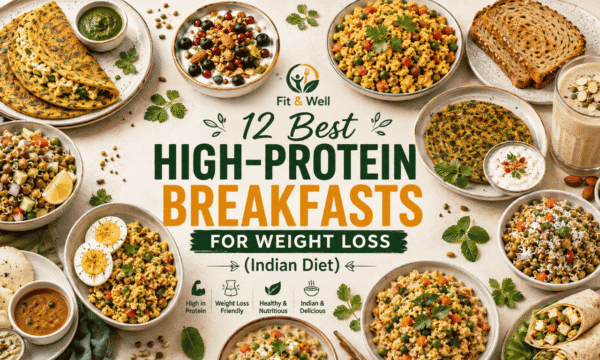
Healthy Breakfast Ideas
A nutritious breakfast provides sustained energy and helps reduce mid-morning hunger.
Healthy options include:
- Vegetable oats upma
- Moong dal chilla with mint chutney
- Vegetable poha with peanuts
- Vegetable dalia
- Idli with sambar
- Vegetable uttapam
- Vegetable omelette with whole wheat toast
- Greek yoghurt with fruit and seeds
- Paneer bhurji with chapati
- Besan chilla
Try to avoid breakfasts high in added sugar or refined flour, such as sweet pastries and sugary cereals.
Healthy Lunch Ideas
Lunch should provide a balance of protein, whole grains and vegetables.
Examples include:
- Brown rice with rajma and salad
- Chapati with grilled chicken and mixed vegetables
- Millet khichdi with curd
- Quinoa pulao with paneer
- Fish curry with brown rice
- Dal, chapati and mixed vegetable sabzi
- Chickpea salad with yoghurt
- Tofu stir-fry with vegetables
Healthy Dinner Ideas
A lighter evening meal can help reduce late-night snacking while still providing enough protein and nutrients.
Good choices include:
- Grilled fish with sautéed vegetables
- Paneer tikka with salad
- Chicken and vegetable soup
- Mixed vegetable soup with grilled tofu
- Moong dal khichdi with vegetables
- Egg curry with chapati
- Stir-fried vegetables with tofu
- Vegetable stew
Eating dinner two to three hours before bedtime may improve digestion and reduce unnecessary evening snacking.
Healthy Snack Ideas
Healthy snacks can help control hunger between meals without adding excessive calories.
Choose options such as:
- Roasted chana
- Sprouts chaat
- Greek yoghurt
- Fresh fruit
- Buttermilk
- Coconut water
- Boiled eggs
- Roasted makhana
- Unsalted nuts
- Vegetable sticks with hummus
- Peanut chaat
- Cottage cheese cubes
Combining protein with fibre is one of the most effective ways to stay full until your next meal.
Drinks That Can Support Weight Loss
Staying hydrated is an often-overlooked part of successful weight loss. While no drink can directly burn body fat, choosing low-calorie beverages instead of sugary alternatives can help reduce your overall calorie intake and support your health.
Water should remain your primary drink throughout the day, but several other beverages can also fit into a healthy weight loss diet.
Best Low-Calorie Drinks
The healthiest drinks are those with little or no added sugar.
Good options include:
- Plain water
- Sparkling water without added sugar
- Lemon water without sugar
- Green tea
- Black tea
- Black coffee without sugar
- Herbal teas
- Buttermilk
- Unsweetened lassi
- Coconut water in moderation
Green tea and coffee contain caffeine, which may provide a small temporary increase in energy expenditure. However, the effect is modest and should not be relied upon as a weight loss strategy.
Replacing sugar-sweetened drinks with water or other low-calorie alternatives is far more beneficial than relying on any single beverage to promote fat loss.
For hydration guidance, visit the NHS Eatwell Guide:
https://www.nhs.uk/live-well/eat-well/
Drinks to Limit
Many drinks contain surprisingly high amounts of sugar and calories.
Limit:
- Soft drinks
- Sweetened fruit juices
- Milkshakes
- Sweetened coffee drinks
- Flavoured iced teas
- Energy drinks
- Alcohol
Liquid calories are less filling than calories from whole foods, making it easier to consume excess energy without realising it.
Smart Grocery Shopping Tips
Healthy eating becomes much easier when your kitchen is stocked with nutritious ingredients. Planning meals before shopping also reduces impulse purchases and helps you stick to your weight loss goals.
Aim to build your shopping list around whole, minimally processed foods.
Stock Up on Protein
Protein should be the foundation of most meals.
Include foods such as:
Vegetarian Options
- Dal
- Lentils
- Rajma
- Chana
- Soy chunks
- Paneer
- Tofu
- Greek yoghurt
- Eggs (if included in your diet)
Non-Vegetarian Options
- Chicken breast
- Fish
- Prawns
- Lean cuts of meat
Buying protein in bulk and preparing meals in advance can also save time during busy weeks.
Choose Whole Grains
Whole grains provide more fibre and nutrients than refined alternatives.
Keep staples such as:
- Brown rice
- Whole wheat flour
- Oats
- Quinoa
- Millets
- Jowar
- Bajra
- Ragi
These foods help keep you satisfied for longer and provide a steady source of energy.
Fill Your Basket with Seasonal Produce
Fresh vegetables and fruits should make up a significant portion of your grocery shop.
Choose a variety of colours throughout the week, including:
- Leafy greens
- Tomatoes
- Cucumbers
- Bell peppers
- Carrots
- Broccoli
- Cauliflower
- Seasonal fruits
Frozen vegetables are also an excellent option if fresh produce is unavailable.
Include Healthy Fats
Healthy fats should be eaten in moderation as part of a balanced diet.
Choose:
- Almonds
- Walnuts
- Pistachios
- Seeds
- Olive oil
- Mustard oil
- Groundnut oil
Buying unsalted nuts and seeds helps reduce unnecessary sodium intake.
Healthier Cooking Methods
How you prepare your meals has a major impact on their nutritional value and calorie content.
Small changes in cooking methods can significantly reduce calories without sacrificing flavour.
Cooking Methods to Use More Often
Healthier cooking techniques include:
- Steaming
- Boiling
- Grilling
- Baking
- Pressure cooking
- Air frying
- Stir-frying with minimal oil
These methods retain nutrients while reducing the amount of added fat.
Traditional Indian recipes can often be made healthier by:
- Using less oil
- Increasing vegetables
- Choosing lean protein
- Reducing cream and butter
- Using yoghurt instead of heavy cream where appropriate
Cooking Methods to Limit
Try to reduce:
- Deep frying
- Heavy cream-based gravies
- Excess butter
- Excess ghee
- Sugary sauces
- Repeatedly reheating cooking oil
Cooking with moderation rather than complete restriction makes healthy eating easier to maintain over the long term.
Does Meal Timing Matter?
Meal timing often receives more attention than it deserves. While when you eat can influence appetite and energy levels, research consistently shows that total calorie intake and overall diet quality have a much greater impact on weight loss.
The best eating schedule is one that fits your lifestyle and helps you maintain healthy habits consistently.
Should You Eat Breakfast?
Breakfast is not essential for everyone.
Some people feel more energised and experience better appetite control after eating breakfast, while others naturally prefer eating later in the day.
If you enjoy breakfast, choose balanced meals containing:
- Protein
- Whole grains
- Fruit or vegetables
- Healthy fats
Examples include:
- Moong dal chilla
- Vegetable oats
- Greek yoghurt with fruit
- Vegetable omelette
- Idli with sambar
Is Intermittent Fasting Effective?
Intermittent fasting has become increasingly popular, but it is not inherently superior to other eating patterns.
Many people lose weight with intermittent fasting simply because it helps reduce overall calorie intake.
Common approaches include:
- 16:8 fasting
- 14:10 fasting
- 5:2 diet
If intermittent fasting suits your lifestyle and helps you maintain a calorie deficit, it can be an effective option. However, there is no need to force fasting if regular meals work better for you.
For evidence-based nutrition advice, visit the Academy of Nutrition and Dietetics:
https://www.eatright.org/
Late-Night Eating
Eating late at night does not automatically cause weight gain. However, many people consume high-calorie snacks during the evening, making it easier to exceed their daily calorie target.
To reduce unnecessary evening snacking:
- Eat balanced meals throughout the day.
- Include protein at dinner.
- Stay hydrated.
- Avoid eating while watching television.
- Establish a consistent bedtime routine.
Aim to finish your evening meal two to three hours before going to bed if possible, particularly if you experience acid reflux or poor sleep.
7-Day Weight Loss Diet Plan for Indians
The following meal plan demonstrates how a balanced Indian diet can support healthy weight loss. It focuses on lean protein, whole grains, vegetables and healthy fats while remaining flexible enough to suit different dietary preferences.
Important: Portion sizes should always be adjusted according to your calorie requirements, age, activity level and any medical conditions.
Day 1
| Meal | Menu |
| Breakfast | Vegetable oats with boiled eggs or tofu |
| Mid-Morning Snack | Apple |
| Lunch | Two chapatis, dal, mixed vegetable sabzi and cucumber salad |
| Evening Snack | Roasted chana with buttermilk |
| Dinner | Grilled chicken or paneer tikka with sautéed vegetables |
Day 2
| Meal | Menu |
| Breakfast | Moong dal chilla with mint chutney |
| Mid-Morning Snack | Guava |
| Lunch | Brown rice with rajma and salad |
| Evening Snack | Greek yoghurt |
| Dinner | Fish curry or tofu curry with vegetables |
Day 3
| Meal | Menu |
| Breakfast | Vegetable poha with peanuts |
| Mid-Morning Snack | Orange |
| Lunch | Millet khichdi with curd |
| Evening Snack | Roasted makhana |
| Dinner | Egg curry or paneer bhurji with chapati |
Day 4
| Meal | Menu |
| Breakfast | Vegetable upma |
| Mid-Morning Snack | Mixed fruit |
| Lunch | Chapati with chicken curry and vegetables |
| Evening Snack | Buttermilk |
| Dinner | Vegetable soup with grilled tofu |
Day 5
| Meal | Menu |
| Breakfast | Besan chilla |
| Mid-Morning Snack | Papaya |
| Lunch | Brown rice with chole |
| Evening Snack | Sprouts salad |
| Dinner | Grilled fish with vegetables |
Day 6
| Meal | Menu |
| Breakfast | Idli with sambar |
| Mid-Morning Snack | Coconut water |
| Lunch | Dal, chapati and mixed vegetables |
| Evening Snack | Greek yoghurt |
| Dinner | Paneer stir-fry with vegetables |
Day 7
| Meal | Menu |
| Breakfast | Vegetable omelette |
| Mid-Morning Snack | Pear |
| Lunch | Quinoa pulao with tofu |
| Evening Snack | Roasted peanuts |
| Dinner | Lentil soup with mixed salad |
How to Get the Most from This Meal Plan
To maximise your results:
- Adjust portion sizes to match your calorie needs.
- Include a source of protein with every meal.
- Drink plenty of water throughout the day.
- Stay physically active.
- Swap similar foods to keep meals interesting while maintaining nutritional balance.
The meal plan is designed as a flexible framework rather than a strict diet. Consistency is far more important than perfection.
Vegetarian Weight Loss Diet Plan
A well-planned vegetarian diet can be highly effective for weight loss. The key is to include enough protein, fibre and healthy fats while limiting refined carbohydrates and ultra-processed foods.
Many traditional Indian vegetarian meals already contain nutritious ingredients such as lentils, legumes and vegetables. By building balanced meals around these foods, you can create a sustainable calorie deficit without sacrificing nutrition.
Best Vegetarian Foods for Weight Loss
Prioritise protein-rich and fibre-rich foods, including:
Protein Sources
- Dal
- Rajma
- Chole
- Soy chunks
- Tofu
- Low-fat paneer
- Greek yoghurt
- Plain curd
- Sprouts
- Besan
Whole Grains
- Brown rice
- Whole wheat chapati
- Oats
- Quinoa
- Millets
- Jowar
- Bajra
- Ragi
Vegetables and Fruits
Fill at least half your plate with a variety of seasonal vegetables and enjoy one or two servings of whole fruit each day.
Sample Vegetarian Meal Plan
| Meal | Menu |
| Breakfast | Moong dal chilla with curd |
| Mid-Morning Snack | Apple |
| Lunch | Brown rice, rajma and cucumber salad |
| Evening Snack | Roasted chana |
| Dinner | Paneer tikka with stir-fried vegetables |
Including protein at every meal helps maintain muscle mass while keeping you fuller for longer.
Non-Vegetarian Weight Loss Diet Plan
Lean animal protein is naturally filling and provides all the essential amino acids your body needs. Including moderate portions of lean meat, fish or eggs can support fat loss while preserving muscle during a calorie deficit.
Best Non-Vegetarian Foods for Weight Loss
Choose lean protein sources such as:
- Skinless chicken breast
- Eggs
- Fish
- Tuna
- Salmon
- Rohu
- Prawns
- Lean turkey where available
Limit foods such as:
- Fried chicken
- Processed meats
- High-fat curries
- Breaded seafood
- Processed sausages
Preparing meals by grilling, steaming or baking rather than deep frying helps reduce unnecessary calories.
Sample Non-Vegetarian Meal Plan
| Meal | Menu |
| Breakfast | Vegetable omelette |
| Mid-Morning Snack | Guava |
| Lunch | Grilled chicken with chapati and mixed salad |
| Evening Snack | Greek yoghurt |
| Dinner | Grilled fish with sautéed vegetables |
Weight Loss Diet Plans for Different Health Needs
Everyone’s nutritional requirements differ depending on their age, sex and medical conditions. The following recommendations provide general guidance but should not replace personalised advice from a healthcare professional.
Weight Loss Diet Plan for Women
Women’s nutritional needs change throughout life due to hormonal fluctuations, pregnancy, breastfeeding and menopause.
When planning a weight loss diet, pay particular attention to:
- Adequate protein intake
- Iron-rich foods
- Calcium
- Vitamin D
- Folate if planning pregnancy
- Fibre
Strength training is especially beneficial for preserving muscle mass and supporting bone health.
Women experiencing irregular periods, fertility concerns or hormonal disorders should seek medical advice before starting a restrictive diet.
For reliable information, visit the Office on Women’s Health:
https://www.womenshealth.gov/
Weight Loss Diet Plan for Men
Men generally require more calories than women because they tend to have greater muscle mass.
To support healthy weight loss:
- Prioritise lean protein.
- Include regular strength training.
- Control portion sizes.
- Stay hydrated.
- Limit alcohol consumption.
- Aim for adequate sleep each night.
Combining resistance exercise with a balanced diet helps preserve muscle while reducing body fat.
Weight Loss Diet for PCOS
Many women with Polycystic Ovary Syndrome (PCOS) experience insulin resistance, making weight management more challenging.
Although there is no single PCOS diet, the following strategies may help:
- Eat protein with every meal.
- Choose high-fibre carbohydrates.
- Limit sugary drinks.
- Include healthy fats.
- Exercise regularly.
- Maintain consistent meal timings.
Even modest weight loss can improve insulin sensitivity and menstrual regularity for some women.
For evidence-based guidance, visit the Office on Women’s Health:
https://www.womenshealth.gov/a-z-topics/polycystic-ovary-syndrome
Weight Loss Diet for Type 2 Diabetes
People living with type 2 diabetes can lose weight safely by focusing on balanced meals and portion control.
General recommendations include:
- Choose whole grains instead of refined carbohydrates.
- Eat plenty of vegetables.
- Include lean protein at every meal.
- Limit foods high in added sugar.
- Monitor blood glucose levels as advised.
- Take medications exactly as prescribed.
Never stop or change diabetes medication without consulting your healthcare team.
For more information, visit the American Diabetes Association:
https://diabetes.org/
Weight Loss Diet for Hypothyroidism
Hypothyroidism can slow metabolism, but healthy weight loss is still possible with consistent lifestyle changes.
Recommendations include:
- Take thyroid medication exactly as prescribed.
- Eat enough protein.
- Maintain a moderate calorie deficit.
- Stay physically active.
- Consume a balanced diet that includes iodine where appropriate.
- Avoid restrictive fad diets unless recommended by a healthcare professional.
There is no scientific evidence that any single “thyroid diet” cures hypothyroidism.
For reliable guidance, visit the NHS:
https://www.nhs.uk/conditions/underactive-thyroid-hypothyroidism/
Exercise That Supports Weight Loss
Diet plays the biggest role in weight loss, but regular exercise improves cardiovascular health, preserves muscle mass and helps maintain weight loss over the long term.
The World Health Organization recommends adults aim for at least 150 minutes of moderate-intensity physical activity each week, alongside muscle-strengthening activities on two or more days.
Cardio Exercise
Aerobic exercise increases calorie expenditure and supports heart health.
Examples include:
- Brisk walking
- Cycling
- Swimming
- Jogging
- Dancing
- Skipping
Choose activities you enjoy to improve consistency.
Strength Training
Resistance training helps preserve and build muscle while losing fat.
Exercises include:
- Bodyweight exercises
- Resistance bands
- Weight machines
- Free weights
- Functional strength training
Building muscle also helps support long-term metabolic health.
Increase Your Daily Movement
Structured exercise is important, but everyday movement also contributes to your overall calorie expenditure.
Simple ways to stay active include:
- Walking after meals
- Taking the stairs
- Gardening
- Household chores
- Standing regularly if you work at a desk
Small increases in daily movement can make a meaningful difference over time.
Common Weight Loss Mistakes
Many people struggle to lose weight because they unknowingly develop habits that make maintaining a calorie deficit more difficult.
Avoid these common mistakes.
Skipping Meals
Skipping meals often leads to excessive hunger later in the day, increasing the likelihood of overeating.
Instead, aim for regular, balanced meals that include protein and fibre.
Following Crash Diets
Very low-calorie diets may produce rapid short-term weight loss but are difficult to maintain.
Crash dieting can increase the risk of:
- Muscle loss
- Nutrient deficiencies
- Fatigue
- Weight regain
Long-term lifestyle changes are far more effective.
Eating Too Little Protein
Protein helps maintain muscle mass and supports satiety.
If your diet is low in protein, you may feel hungry more often and lose muscle during weight loss.
Ignoring Portion Sizes
Even healthy foods contain calories.
Learning appropriate portion sizes allows you to enjoy a varied diet while staying within your calorie target.
Relying on Detox Drinks or Fat-Burning Supplements
There is no scientific evidence that detox drinks, fat burners or miracle supplements produce significant long-term weight loss.
Instead, focus on:
- Healthy eating
- Regular exercise
- Good sleep
- Consistency
These habits have far stronger evidence supporting their effectiveness.
Frequently Asked Questions
What is the best Indian diet for weight loss?
The best diet is one that includes lean protein, whole grains, vegetables, fruits and healthy fats while maintaining a sustainable calorie deficit.
Can I eat rice and still lose weight?
Yes. Rice can be part of a healthy weight loss diet when eaten in appropriate portions and paired with protein and vegetables.
Is roti better than rice?
Neither is inherently better. Both can fit into a balanced diet. The overall quality of your meals and portion sizes matter far more.
How much weight can I lose in one month?
Most people can realistically lose around 2 to 4 kilograms per month, although results vary depending on starting weight, calorie intake and physical activity.
Should I skip dinner to lose weight?
No. Skipping dinner is not necessary. A balanced evening meal can help control hunger and reduce late-night snacking.
Is intermittent fasting better than a calorie-controlled diet?
Intermittent fasting works well for some people because it helps reduce calorie intake, but it is not inherently superior to other healthy eating patterns.
Choose the approach that best suits your lifestyle.
Can I lose belly fat through diet alone?
Spot reduction is not possible. Losing weight through a combination of healthy eating and regular exercise reduces body fat over time, including abdominal fat.
Which Indian breakfast is best for weight loss?
High-protein breakfasts are often the most satisfying.
Examples include:
- Moong dal chilla
- Vegetable omelette
- Besan chilla
- Idli with sambar
- Vegetable oats
- Greek yoghurt with fruit
Final Thoughts
Successful weight loss does not require expensive supplements, restrictive diets or giving up traditional Indian foods. The most effective approach is one you can maintain consistently over the long term.
Focus on building balanced meals that include vegetables, lean protein, whole grains and healthy fats. Pay attention to portion sizes, stay physically active, prioritise quality sleep and make gradual improvements rather than chasing quick fixes.
Remember that sustainable weight loss is a journey, not a race. Small, consistent habits are far more likely to produce lasting results than extreme diets.
If you have a medical condition such as type 2 diabetes, hypothyroidism or PCOS, consult a registered dietitian or healthcare professional before making significant dietary changes.
References
For further evidence-based guidance, refer to:
- World Health Organization (WHO): https://www.who.int/
- NHS (UK National Health Service): https://www.nhs.uk/
- Harvard T.H. Chan School of Public Health: https://www.hsph.harvard.edu/nutritionsource/
- American Diabetes Association: https://diabetes.org/
- Academy of Nutrition and Dietetics: https://www.eatright.org/
- Office on Women’s Health: https://www.womenshealth.gov/
This completes the article in a publication-ready structure with clear H2/H3 hierarchy, improved readability, and stronger EEAT through references to recognised health authorities.
Top of Form
Bottom of Form