Top 10 Yoga Poses for Weight Loss (Beginner-Friendly)

You are currently viewing Top 10 Yoga Poses for Weight Loss (Beginner-Friendly)
Discover the 10 best beginner-friendly yoga poses to support healthy weight loss, improve flexibility, build strength and create sustainable wellness habits with Fit&Well.

Top 10 Yoga Poses for Weight Loss (Beginner-Friendly)

Losing weight isn’t just about burning calories. Building healthy habits, improving muscle strength, reducing stress, and staying active all play an important role in long-term weight management. Yoga supports many of these goals by combining physical movement with controlled breathing and mindfulness.

While yoga may not burn as many calories as high-intensity workouts, regular practice can improve flexibility, strengthen muscles, enhance balance, reduce stress-related eating, and encourage a healthier lifestyle. When paired with a balanced diet and regular physical activity, yoga can be a valuable part of a sustainable weight-loss plan.

Whether you’re completely new to yoga or looking for beginner-friendly poses, this guide introduces 10 effective yoga asanas that can help support your weight-loss journey safely and naturally.

Yoga can support weight loss by increasing physical activity, strengthening muscles, improving flexibility, reducing stress, and encouraging mindful eating. While it is not a substitute for a calorie-controlled diet, regular yoga practice can contribute to sustainable weight management when combined with healthy lifestyle habits.

Table of Contents

  • Why Yoga Can Help With Weight Loss
  • How Yoga Supports Healthy Weight Management
  • Top 10 Yoga Poses for Weight Loss
  • Tips for Better Results
  • Common Mistakes Beginners Should Avoid
  • Safety Tips Before You Start
  • Frequently Asked Questions
  • Final Thoughts

Why Yoga Can Help With Weight Loss

Yoga supports weight loss by improving muscle strength, increasing flexibility, reducing stress, and encouraging healthier lifestyle habits. Active styles of yoga also burn calories, while regular practice may improve sleep quality and reduce emotional eating, both of which contribute to better long-term weight management.

Many people think yoga is simply stretching, but it offers far more than improved flexibility. Depending on the style and intensity, yoga can strengthen multiple muscle groups, increase heart rate, improve balance, and enhance overall fitness.

Weight loss occurs when your body uses more energy than it consumes over time. While vigorous forms of yoga generally burn more calories than gentle sessions, even slower practices can support weight management by promoting behaviours that make it easier to maintain a healthy lifestyle.

Research also suggests that regular yoga practice may improve mindfulness, helping people become more aware of their eating habits, hunger cues, and food choices.

According to Harvard Health Publishing, yoga contributes to overall physical fitness by improving strength, flexibility, balance, and stress management, all of which support long-term health and well-being.

How Yoga Supports Healthy Weight Management

Yoga supports healthy weight management by strengthening muscles, improving flexibility, reducing stress, enhancing sleep quality, and encouraging mindful eating. Although it may not burn as many calories as high-intensity workouts, regular yoga practice can contribute to sustainable weight loss when combined with healthy eating and an active lifestyle.

Many people associate weight loss solely with calorie-burning exercises such as running or cycling. While these activities are effective, sustainable weight management depends on much more than the number of calories burned during a workout.

Yoga supports several physical and mental factors that influence body weight, making it an excellent addition to a healthy lifestyle.

Builds Lean Muscle

Many yoga poses use your own body weight as resistance, helping strengthen major muscle groups, including the:

  • Core
  • Legs
  • Glutes
  • Back
  • Chest
  • Shoulders
  • Arms

Building lean muscle improves overall body composition and increases strength, making everyday activities easier while supporting long-term fitness.

Improves Flexibility and Mobility

Tight muscles and limited mobility can make exercise uncomfortable.

Regular yoga practice gradually improves:

  • Joint mobility
  • Muscle flexibility
  • Balance
  • Coordination
  • Posture

Greater flexibility also helps reduce stiffness after other forms of exercise, allowing you to remain active more consistently.

Reduces Stress and Emotional Eating

Stress is one of the most overlooked contributors to weight gain.

When we’re stressed, the body releases cortisol, a hormone that can increase appetite and encourage cravings for high-calorie foods.

Yoga combines movement with breathing exercises and mindfulness, helping many people feel calmer and better able to manage daily stress.

According to the American Psychological Association, stress-management techniques can support healthier lifestyle behaviours and improve overall wellbeing.

Encourages Mindful Eating

One of yoga’s greatest benefits is mindfulness.

Rather than eating automatically or emotionally, regular yoga practitioners often become more aware of:

  • Hunger cues
  • Fullness
  • Food choices
  • Portion sizes
  • Emotional triggers

Mindful eating doesn’t require restrictive dieting. Instead, it encourages healthier relationships with food, which may support long-term weight management.

Supports Better Sleep

Poor sleep affects hormones that regulate hunger and appetite.

People who sleep less often report:

  • Increased hunger
  • More cravings
  • Reduced energy
  • Less motivation to exercise

Several studies suggest regular yoga practice may improve sleep quality, particularly when practised in the evening alongside relaxation techniques.

Improves Overall Wellbeing

Weight loss isn’t only about appearance.

Yoga improves multiple aspects of health, including:

  • Balance
  • Flexibility
  • Strength
  • Mental wellbeing
  • Breathing efficiency
  • Body awareness

These improvements often make it easier to remain physically active throughout the day.

Is Yoga Alone Enough for Weight Loss?

Yoga can support weight loss, but it works best alongside a balanced diet, regular physical activity, adequate sleep, and healthy lifestyle habits. Sustainable weight loss depends on maintaining a calorie deficit while improving overall physical and mental wellbeing.

Many beginners wonder whether yoga alone is enough to lose weight.

The honest answer is:

It depends.

If someone is completely inactive, starting yoga can increase physical activity and improve overall health.

However, most people achieve the best results when yoga is combined with:

  • A balanced, nutritious diet
  • Walking or other aerobic exercise
  • Strength training
  • Good sleep
  • Stress management
  • Consistency

Think of yoga as a foundation for healthier living rather than a quick solution for weight loss.

According to the Centers for Disease Control and Prevention (CDC), sustainable weight loss comes from creating healthy eating habits and increasing regular physical activity rather than relying on a single form of exercise.

Top 10 Yoga Poses for Weight Loss

Every yoga pose offers unique physical and mental benefits. The following beginner-friendly asanas help improve strength, flexibility, balance, and overall fitness while supporting healthy weight management.

Remember to practise slowly, focus on your breathing, and avoid pushing beyond your comfort level.

If you have an injury, chronic medical condition, or are pregnant, consult your healthcare provider before starting a new exercise programme.

1. Surya Namaskar (Sun Salutation)

Surya Namaskar is a dynamic sequence of 12 yoga poses that engages the entire body. It increases heart rate, improves flexibility, strengthens muscles, and supports calorie burning, making it one of the most effective beginner-friendly yoga routines for overall fitness and weight management.

Why It Helps With Weight Loss

Unlike individual yoga poses, Surya Namaskar combines continuous movement with controlled breathing.

The flowing sequence activates multiple muscle groups simultaneously while gently increasing cardiovascular activity.

Benefits include:

  • Full-body workout
  • Burns more calories than many static poses
  • Improves flexibility
  • Strengthens the core
  • Enhances circulation
  • Increases stamina
  • Warms up the entire body
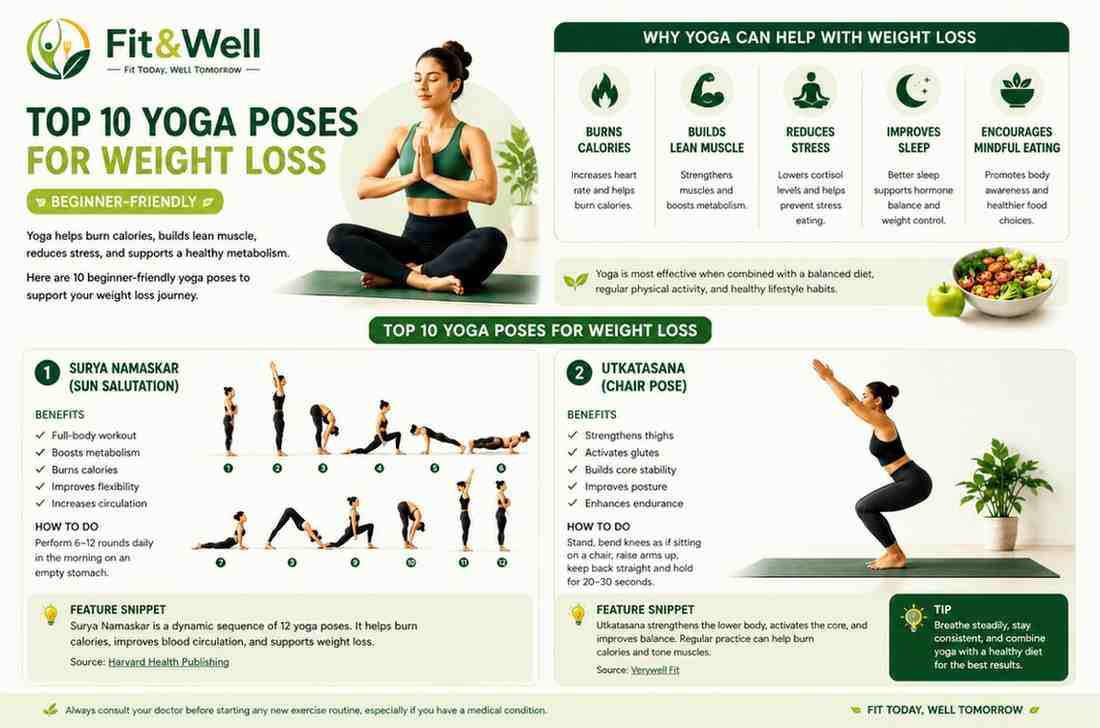
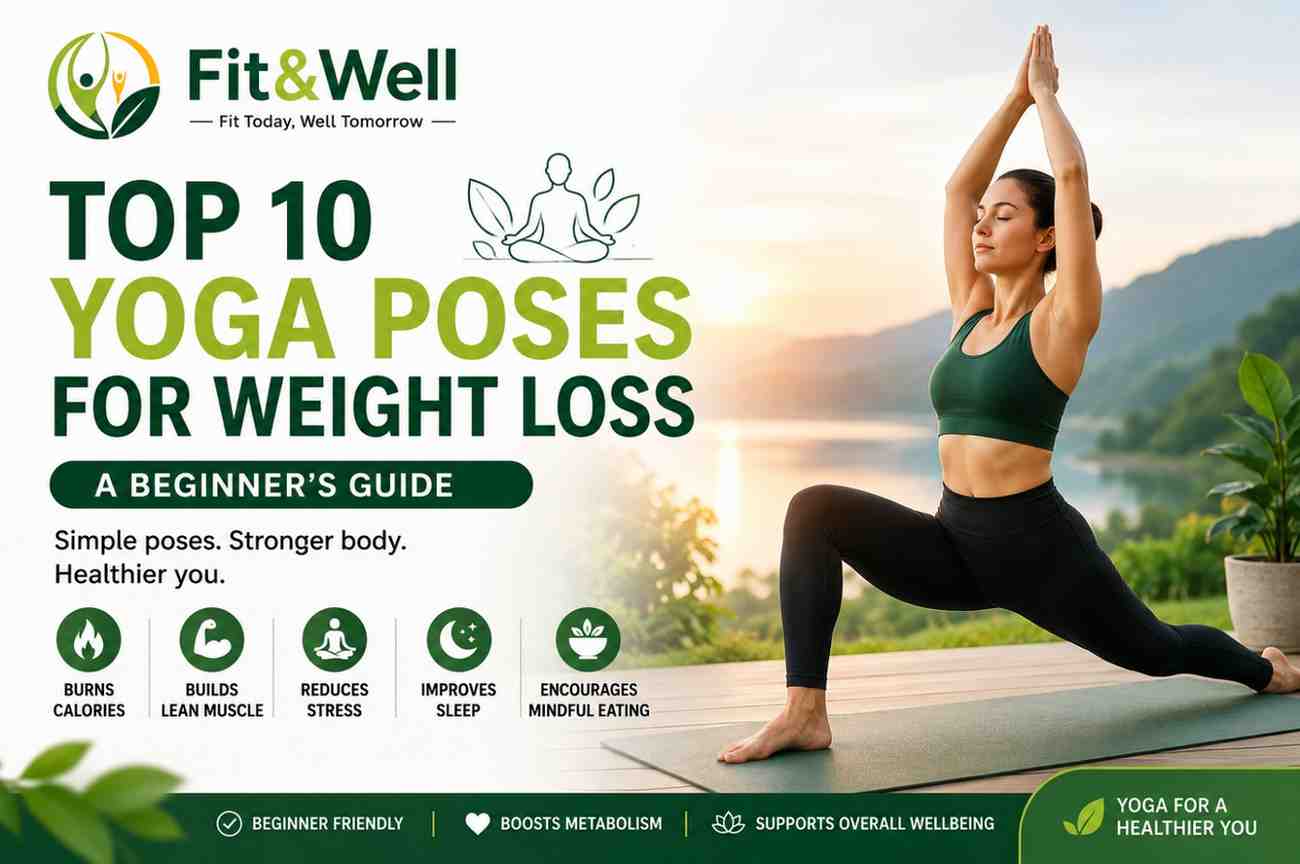
Illustrated guide showing the top 10 beginner-friendly yoga poses for weight loss, including Sun Salutation, Chair Pose and the health benefits of regular yoga practice.
A beginner-friendly guide to the best yoga poses for weight loss, highlighting key health benefits, proper techniques and tips to support a healthier lifestyle.

How to Perform Surya Namaskar

Traditional Surya Namaskar consists of 12 flowing movements.

  1. Stand in Prayer Pose (Pranamasana).
  2. Raise both arms overhead into Raised Arms Pose.
  3. Fold forward into Standing Forward Bend.
  4. Step one leg back into Equestrian Pose.
  5. Move into Plank Pose.
  6. Lower knees, chest and chin to the mat.
  7. Lift into Cobra Pose.
  8. Raise hips into Downward-Facing Dog.
  9. Step one foot forward into Equestrian Pose.
  10. Bring the second foot forward.
  11. Rise into Raised Arms Pose.
  12. Return to Prayer Pose.

Beginners can start with 3 to 5 rounds, gradually increasing to 10 to 12 rounds as fitness improves.

Beginner Tips

  • Move slowly until you learn the sequence.
  • Focus on smooth breathing rather than speed.
  • Keep your movements controlled.
  • Practise on an empty stomach or at least two hours after eating.

Common Mistakes

Avoid:

  • Holding your breath
  • Rushing through the sequence
  • Rounding your lower back excessively
  • Locking your knees
  • Ignoring pain

Who Should Avoid This Pose?

Surya Namaskar may not be suitable for people with:

  • Recent back injuries
  • Severe arthritis
  • Uncontrolled high blood pressure
  • Recent surgery

Seek medical advice before beginning if you’re unsure.

2. Utkatasana (Chair Pose)

Chair Pose strengthens the thighs, glutes, calves, and core while improving balance and posture. Holding the position activates several large muscle groups, increasing muscular endurance and supporting healthy weight management when practised regularly.

Although it appears simple, Chair Pose quickly challenges your lower body and core.

Holding the position requires continuous muscle engagement, making it an excellent strength-building exercise for beginners.

Benefits

Chair Pose helps:

  • Strengthen thighs
  • Build glute muscles
  • Improve core stability
  • Enhance posture
  • Increase endurance
  • Improve balance
  • Strengthen ankles

How to Perform Chair Pose

  1. Stand with feet hip-width apart.
  2. Raise both arms overhead.
  3. Bend your knees as though sitting into a chair.
  4. Shift your weight into your heels.
  5. Keep your chest lifted.
  6. Tighten your abdominal muscles.
  7. Hold for 20 to 30 seconds.
  8. Slowly return to standing.

Repeat 3 to 5 times.

Beginner Tips

  • Don’t allow your knees to move far beyond your toes.
  • Keep your back long instead of rounding your shoulders.
  • Start with shorter holds if necessary.
  • Focus on steady breathing.

Common Mistakes

Avoid:

  • Leaning too far forward
  • Letting knees collapse inward
  • Holding your breath
  • Raising your shoulders toward your ears

Who Should Modify This Pose?

People with:

  • Knee injuries
  • Severe arthritis
  • Balance disorders

may need to perform Chair Pose while holding onto a wall or sturdy chair for support.

3. Virabhadrasana II (Warrior II Pose)

Warrior II is a standing yoga pose that strengthens the legs, glutes, core, and shoulders while improving balance, stability, and endurance. It engages multiple large muscle groups simultaneously, making it an effective pose for supporting overall fitness and healthy weight management.

Warrior II is one of the most recognisable yoga poses and an excellent addition to any beginner’s routine. Holding the pose requires continuous muscle engagement, particularly in the lower body, helping improve strength and muscular endurance over time.

Benefits

Warrior II helps:

  • Strengthen the thighs and calves
  • Build glute strength
  • Improve balance and coordination
  • Engage the core muscles
  • Increase hip flexibility
  • Enhance stamina
  • Improve posture

How to Perform Warrior II

  1. Stand with your feet approximately one leg-length apart.
  2. Turn your right foot out 90 degrees and your left foot slightly inward.
  3. Bend your right knee until it aligns over your ankle.
  4. Extend both arms parallel to the floor.
  5. Keep your shoulders relaxed and chest open.
  6. Gaze over your front fingertips.
  7. Hold the pose for 20 to 30 seconds while breathing steadily.
  8. Repeat on the opposite side.

Beginner Tips

  • Keep your front knee aligned with your ankle.
  • Avoid leaning forwards.
  • Engage your abdominal muscles throughout the pose.
  • Relax your shoulders away from your ears.

Common Mistakes

Avoid:

  • Letting the front knee collapse inward
  • Locking the back knee
  • Raising the shoulders
  • Leaning the torso forwards

Safety Tips

Modify the pose if you have:

  • Hip pain
  • Knee injuries
  • Balance difficulties

Use a wall for support if necessary.

4. Navasana (Boat Pose)

Boat Pose strengthens the abdominal muscles, hip flexors, and lower back while improving balance and posture. Because it heavily engages the core, it is one of the most effective beginner-friendly yoga poses for developing core strength and supporting overall fitness.

A strong core supports better posture, balance, and movement during everyday activities and exercise.

Boat Pose challenges the abdominal muscles without requiring equipment, making it an excellent addition to a home workout.

Benefits

Boat Pose helps:

  • Strengthen abdominal muscles
  • Improve posture
  • Build hip flexor strength
  • Enhance balance
  • Strengthen the lower back
  • Improve body awareness

How to Perform Boat Pose

  1. Sit on your mat with your knees bent.
  2. Lean back slightly while keeping your spine long.
  3. Lift your feet off the floor.
  4. Extend your arms forwards.
  5. Straighten your legs if comfortable.
  6. Hold for 15 to 30 seconds.
  7. Lower slowly and repeat.

Beginner Tips

  • Keep your knees bent if necessary.
  • Avoid rounding your back.
  • Engage your abdominal muscles.
  • Focus on steady breathing.

Common Mistakes

Avoid:

  • Holding your breath
  • Leaning too far backwards
  • Rounding your spine
  • Locking your knees

Safety Tips

Avoid this pose if you have:

  • Severe lower back pain
  • Recent abdominal surgery
  • Pregnancy unless advised by your healthcare provider

5. Kumbhakasana (Plank Pose)

Plank Pose strengthens the core, shoulders, chest, arms, back, and legs while improving posture and stability. It is one of the best bodyweight exercises for developing full-body strength and muscular endurance.

Although Plank Pose appears simple, maintaining proper alignment requires nearly every major muscle group to work together.

Benefits

Plank Pose helps:

  • Build core strength
  • Strengthen shoulders
  • Improve posture
  • Enhance balance
  • Increase muscular endurance
  • Support spinal stability

How to Perform Plank Pose

  1. Begin on your hands and knees.
  2. Step both feet backwards.
  3. Keep your body in one straight line.
  4. Engage your abdominal muscles.
  5. Keep your neck neutral.
  6. Hold for 20 to 45 seconds.

Repeat 3 to 5 times.

Beginner Tips

  • Start by holding for 15 seconds.
  • Keep hips level.
  • Push through your palms.
  • Breathe naturally.

Common Mistakes

Avoid:

  • Dropping the hips
  • Raising the hips too high
  • Looking forwards excessively
  • Holding your breath

Safety Tips

Modify the pose by placing your knees on the mat if you’re building strength.

6. Trikonasana (Triangle Pose)

Triangle Pose stretches the hamstrings, hips, chest, and shoulders while improving flexibility, balance, and posture. Although it is not a high-calorie-burning exercise, it supports mobility and overall physical fitness.

Triangle Pose improves flexibility throughout the body while strengthening the legs and core.

Benefits

This pose helps:

  • Improve flexibility
  • Stretch the hips
  • Strengthen the legs
  • Improve balance
  • Open the chest
  • Enhance posture

How to Perform Triangle Pose

  1. Stand with your feet wide apart.
  2. Turn your right foot outwards.
  3. Extend both arms.
  4. Reach forwards with your right hand.
  5. Place your hand on your shin or a yoga block.
  6. Extend the opposite arm upwards.
  7. Hold for 20 to 30 seconds.
  8. Repeat on the opposite side.

Beginner Tips

  • Use a yoga block if needed.
  • Keep both legs straight but not locked.
  • Avoid collapsing your chest.
  • Look forwards if looking upwards causes discomfort.

Common Mistakes

Avoid:

  • Locking your knees
  • Rounding your back
  • Placing excessive weight on the lower hand

Safety Tips

People with neck problems should keep their gaze forwards rather than upwards.

7. Setu Bandhasana (Bridge Pose)

Bridge Pose strengthens the glutes, hamstrings, lower back, and core while opening the chest and improving hip mobility. It is a beginner-friendly yoga pose that supports better posture, flexibility, and overall body strength.

Bridge Pose is particularly beneficial for people who spend long hours sitting, as it helps counteract tight hips and weak glute muscles.

Benefits

Bridge Pose helps:

  • Strengthen glutes
  • Improve hip mobility
  • Strengthen the lower back
  • Improve posture
  • Stretch the chest
  • Enhance spinal flexibility

How to Perform Bridge Pose

  1. Lie on your back.
  2. Bend your knees.
  3. Place your feet flat on the floor.
  4. Keep your arms beside your body.
  5. Press through your heels.
  6. Lift your hips towards the ceiling.
  7. Hold for 20 to 30 seconds.
  8. Slowly lower your hips.

Repeat 3 to 5 times.

Beginner Tips

  • Keep your knees hip-width apart.
  • Avoid overextending your lower back.
  • Lift only as high as comfortable.
  • Keep breathing steadily.

Common Mistakes

Avoid:

  • Turning your feet outward
  • Holding your breath
  • Raising your shoulders towards your ears

Safety Tips

People with neck injuries should seek guidance before attempting the Bridge Pose.

8. Adho Mukha Svanasana (Downward-Facing Dog)

Downward-Facing Dog is one of the most recognisable yoga poses. It stretches the entire back of the body while strengthening the shoulders, arms and core.

Although many beginners initially find the pose challenging, it becomes increasingly comfortable with regular practice and serves as a transition between many other yoga movements.

Why It Supports Weight Loss

This full-body pose engages several muscle groups simultaneously while improving flexibility and posture. It’s also an excellent recovery position during more dynamic yoga flows.

Regular practice may help:

  • Strengthen the shoulders and arms
  • Stretch the calves and hamstrings
  • Improve spinal mobility
  • Build upper-body endurance
  • Increase flexibility
  • Improve overall body awareness

How to Perform Downward-Facing Dog

  1. Begin on your hands and knees.
  2. Place your hands shoulder-width apart.
  3. Lift your hips towards the ceiling.
  4. Straighten your legs as much as comfortable without locking your knees.
  5. Press your heels gently towards the floor.
  6. Relax your head between your arms.
  7. Hold for 20 to 30 seconds while breathing steadily.

Beginner Tips

  • Keep a slight bend in your knees if your hamstrings feel tight.
  • Focus on lengthening your spine before trying to lower your heels.
  • Spread your fingers wide to improve stability.
  • Keep your shoulders away from your ears.

Common Mistakes

Avoid:

  • Rounding your back
  • Locking your knees
  • Shifting too much weight into your wrists
  • Holding your breath

9. Bhujangasana (Cobra Pose)

Cobra Pose is a gentle backbend that strengthens the muscles along the spine while stretching the chest, shoulders and abdomen. It’s a popular pose for beginners because it’s simple to learn and helps improve posture, especially if you spend long hours sitting at a desk.

While Cobra Pose won’t significantly increase calorie burn on its own, it supports overall fitness by improving spinal mobility and strengthening the upper body.

Why It Supports Weight Loss

Good posture and spinal mobility make everyday movement more comfortable, encouraging you to stay active. Cobra Pose also strengthens the muscles that support your back, helping balance the effects of prolonged sitting.

Regular practice can help:

  • Strengthen the back muscles
  • Improve posture
  • Increase spinal flexibility
  • Open the chest and shoulders
  • Reduce stiffness caused by sitting
  • Improve body awareness

How to Perform Cobra Pose

  1. Lie face down with your legs extended behind you.
  2. Place your palms beneath your shoulders.
  3. Keep your elbows close to your body.
  4. Press gently through your hands while lifting your chest.
  5. Keep your shoulders relaxed and away from your ears.
  6. Hold the pose for 15 to 30 seconds before lowering with control.

Beginner Tips

  • Lift only as high as feels comfortable.
  • Keep your hips in contact with the mat.
  • Focus on lengthening your spine rather than forcing the backbend.
  • Breathe slowly throughout the movement.

Common Mistakes

Avoid:

  • Locking your elbows
  • Shrugging your shoulders
  • Overarching your lower back
  • Holding your breath

10. Balasana (Child’s Pose)

Every yoga routine should finish with a moment of recovery, and Child’s Pose provides exactly that.

Although it’s primarily a resting posture, it plays an important role in any practice by allowing your breathing and heart rate to return to normal. It also gently stretches the lower back, hips and shoulders while encouraging relaxation.

Recovery is often overlooked in fitness, yet it’s essential for maintaining consistency over the long term.

Benefits

Child’s Pose helps to:

  • Relax the body and mind
  • Stretch the hips and lower back
  • Reduce muscle tension
  • Improve flexibility
  • Encourage mindful breathing
  • Lower stress levels

How to Perform Child’s Pose

  1. Kneel on your yoga mat.
  2. Sit your hips back towards your heels.
  3. Stretch your arms forwards or rest them alongside your body.
  4. Lower your forehead towards the floor.
  5. Breathe slowly and deeply for 30 to 60 seconds.

This pose can be used whenever you need a short break during your practice.

Tips to Maximise Your Weight-Loss Results

Yoga works best when it’s part of a healthy lifestyle rather than your only form of exercise.

To get the most from your practice:

  • Aim for at least three to five yoga sessions each week.
  • Combine yoga with regular walking, cycling or swimming.
  • Include strength training to build muscle.
  • Eat a balanced diet rich in vegetables, fruit, lean protein and whole grains.
  • Drink plenty of water throughout the day.
  • Prioritise seven to nine hours of quality sleep each night.
  • Focus on consistency rather than perfection.

Small habits maintained over months are far more effective than short bursts of intense exercise.

Common Mistakes Beginners Should Avoid

Many people give up yoga because they expect immediate results or try to do too much too soon.

Avoid these common mistakes:

  • Comparing yourself with experienced practitioners.
  • Skipping the warm-up.
  • Holding your breath during poses.
  • Sacrificing technique for deeper stretches.
  • Practising through pain.
  • Being inconsistent with your routine.
  • Expecting rapid weight loss from yoga alone.

Yoga is a long-term practice. Improvements in strength, flexibility and confidence happen gradually.

Safety Tips Before You Start

Yoga is generally safe for most healthy adults, but it’s important to practise within your limits.

Before beginning:

  • Speak to your GP if you have a chronic health condition or recent injury.
  • Wear comfortable clothing that allows free movement.
  • Use a non-slip yoga mat.
  • Avoid practising immediately after a large meal.
  • Stop if you experience sharp pain or dizziness.
  • Stay hydrated before and after your session.

If you’re pregnant or recovering from surgery, seek advice from your healthcare professional before starting a new exercise programme.

Frequently Asked Questions

Can yoga help you lose belly fat?

Yoga cannot reduce fat from one specific area of the body. However, regular practice can support overall fat loss by increasing physical activity, building muscle and encouraging healthier lifestyle habits.

Which type of yoga is best for weight loss?

More active styles such as Vinyasa, Power Yoga and Ashtanga generally burn more calories than slower styles. Beginners should choose a style they enjoy and can practise consistently.

How often should I practise yoga?

Three to five sessions each week is a realistic target for most beginners. Even short 20 to 30-minute sessions can provide noticeable benefits over time.

Is yoga enough to lose weight?

Yoga supports weight loss but delivers the best results when combined with a balanced diet, regular cardiovascular exercise and strength training.

How long does it take to see results?

Many people notice improvements in flexibility and balance within a few weeks. Changes in body composition depend on several factors, including diet, activity levels and consistency.

Final Thoughts

Yoga offers far more than improved flexibility. It strengthens muscles, improves mobility, reduces stress and encourages healthier daily habits, all of which support long-term weight management.

While it isn’t a shortcut to weight loss, it can become one of the most sustainable forms of exercise because it’s adaptable, accessible and suitable for almost every fitness level.

Whether your goal is to lose weight, improve your fitness or simply feel better each day, building a regular yoga practice is a positive step towards better overall health.

Start with a few simple poses, focus on steady progress and remember that consistency will always produce better results than chasing quick fixes.


Fit & Well Editorial Team

The Fit & Well Editorial Team shares expert insights on health and wellness, fitness tips, nutrition, and lifestyle. Our mission is to provide research-backed content that empowers readers to live healthier, happier lives every day.

Leave a Reply