
Yoga Nidra for Sleep and Stress Relief is becoming one of the most widely recommended relaxation practices for people struggling with poor sleep, chronic stress, and an overactive mind. Rooted in ancient yogic traditions and increasingly supported by modern research, it offers a simple, accessible way to calm the nervous system and promote deeper rest.
Sleep has become one of the biggest casualties of modern living. Many people spend the day under pressure and the night replaying conversations, worrying about tomorrow, or scrolling through their phones in the hope that tiredness will eventually arrive. Even after eight hours in bed, waking up refreshed can feel frustratingly out of reach.
At the same time, chronic stress has become so common that many people accept constant tension, mental fatigue, and restless sleep as part of everyday life. The problem is that prolonged stress and poor sleep often reinforce each other. Stress makes it harder to fall asleep, while inadequate sleep leaves the body less equipped to cope with stress the following day.
This is where Yoga Nidra offers something different.
Unlike traditional meditation, which often asks you to sit upright and maintain focused attention, Yoga Nidra invites you to lie down comfortably while following a guided meditation that gradually relaxes both body and mind. The goal is not to fall asleep but to enter a state of conscious relaxation where the body rests deeply while awareness remains gently present.
Although Yoga Nidra has its roots in ancient yogic traditions, modern research has renewed interest in its therapeutic potential. Studies published through PubMed and journals such as the International Journal of Yoga suggest that regular practice may improve sleep quality, reduce stress, ease anxiety, and support emotional well-being. Organisations, including the National Centre for Complementary and Integrative Health (NCCIH), also recognise meditation and relaxation techniques as valuable complementary approaches for managing stress and improving overall health.
Whether you’re struggling with insomnia, feeling overwhelmed by daily pressures, or simply looking for a natural way to unwind, Yoga Nidra may become one of the most accessible tools you can add to your wellbeing routine.
What Is Yoga Nidra?
Yoga Nidra, often translated as “yogic sleep,” is a guided meditation technique that induces profound relaxation in the body while the mind remains quietly aware. Rather than encouraging physical movement or breath control, the practice focuses on systematic relaxation through guided awareness.
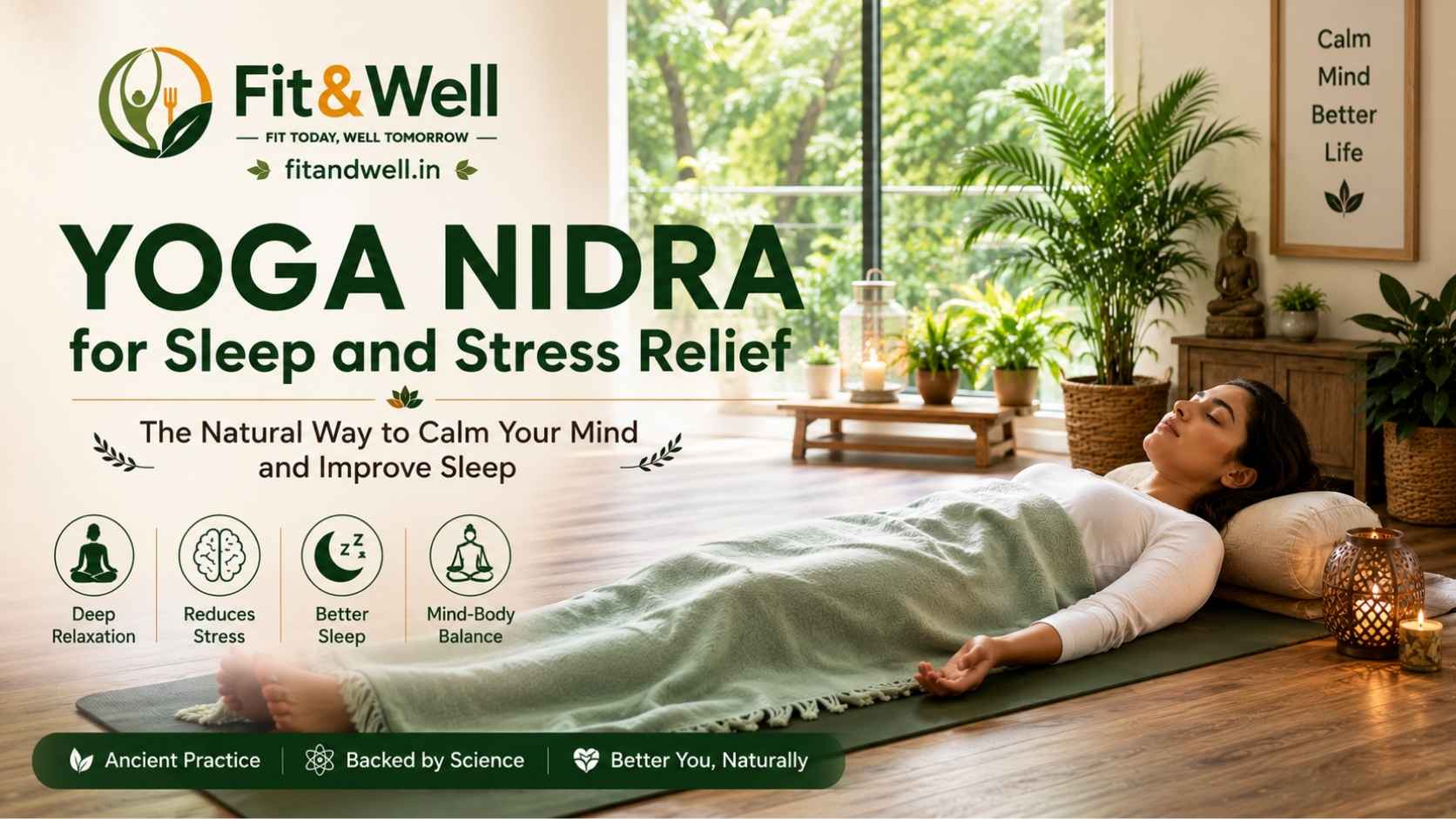
During a typical session, you’ll lie comfortably on your back in Savasana (Corpse Pose) while listening to a teacher or recorded guidance. Attention gradually moves through different parts of the body, the breath, emotions, and visualisations. This process encourages the nervous system to shift away from its stress response and towards a deeply restorative state.
Despite its name, Yoga Nidra is not simply taking a nap.
People often hover between wakefulness and sleep, entering a unique state where the body experiences deep rest without losing conscious awareness altogether. Many practitioners describe finishing a 20 to 30-minute session feeling as though they have enjoyed several hours of restorative rest, although Yoga Nidra should not be considered a replacement for normal sleep.
One of its greatest strengths is accessibility. You don’t need flexibility, previous yoga experience, or advanced meditation skills. Because the practice is performed lying down, it can be suitable for beginners, older adults, and individuals with limited mobility.
Does Yoga Nidra Really Help with Sleep?
Research suggests it can.
Yoga Nidra helps improve sleep by reducing mental and physical arousal before bedtime. As the body relaxes, breathing naturally slows, muscle tension decreases, and the nervous system shifts into a calmer state. This makes it easier to fall asleep and may also improve sleep quality over time when practised consistently.
For people whose minds become more active the moment their head touches the pillow, Yoga Nidra provides a gentle structure. Instead of trying to force sleep, attention follows guided instructions that gradually reduce mental chatter and encourage relaxation.
Unlike sleep medication, Yoga Nidra doesn’t induce sleep chemically. Instead, it supports the body’s own natural transition towards rest.
The Science Behind Yoga Nidra
Interest in Yoga Nidra has expanded significantly over the last two decades as researchers continue exploring how relaxation practices influence the brain and nervous system.
Although more large-scale clinical trials are still needed, current evidence paints a promising picture.
Several studies have found that regular Yoga Nidra practice may contribute to:
- Improved sleep quality
- Lower perceived stress
- Reduced anxiety
- Better emotional regulation
- Increased mindfulness
- Enhanced cognitive performance
- Improved overall wellbeing
Researchers believe these benefits stem from several interconnected physiological changes rather than one single mechanism.
Activating the Parasympathetic Nervous System
When you’re stressed, your sympathetic nervous system prepares the body for action. Heart rate increases, muscles tighten, breathing becomes shallow, and cortisol production rises.
While this response is essential during genuine danger, remaining in this heightened state for long periods can contribute to poor sleep, anxiety, fatigue, and burnout.
Yoga Nidra encourages the opposite response.
By slowing breathing and promoting deep relaxation, the body shifts towards the parasympathetic nervous system, often referred to as the “rest and digest” state. Heart rate slows, muscles release tension, and physiological recovery becomes possible.
This transition is one reason many people notice they feel calmer after even a short Yoga Nidra session.
Supporting Healthy Stress Hormone Regulation
Stress isn’t inherently harmful. The problem arises when the body never fully switches it off.
Persistently elevated cortisol has been associated with disrupted sleep, reduced concentration, increased anxiety, and impaired immune function.
Relaxation techniques such as Yoga Nidra may help regulate the body’s stress response over time, particularly when practised regularly alongside healthy sleep habits and stress-management strategies.
Changes in Brain Activity
Electroencephalogram (EEG) studies suggest that Yoga Nidra encourages brainwave patterns associated with relaxation and the early stages of sleep.
During practice, brain activity often shifts from active beta waves towards slower alpha and theta waves. These patterns are commonly associated with calm attention, meditation, creativity, and deep relaxation.
Some experienced practitioners may briefly enter delta-wave activity while remaining partially aware, although this varies between individuals.
These neurological changes help explain why many people finish Yoga Nidra feeling mentally refreshed despite not actually sleeping.
How Yoga Nidra Reduces Stress
Stress affects far more than mood.
It influences hormone production, immune function, cardiovascular health, digestion, memory, concentration, and sleep quality. Over time, chronic stress can contribute to physical exhaustion as well as emotional burnout.
Yoga Nidra addresses stress from multiple directions rather than focusing on a single symptom.
It Calms Mental Overactivity
One of the most common reasons people struggle to relax is persistent thinking.
The brain naturally reviews unfinished tasks, future worries, and emotional experiences, particularly during quiet moments before sleep.
Yoga Nidra gently interrupts this cycle by giving the mind a sequence of simple points of focus. Instead of becoming trapped in repetitive thoughts, attention shifts towards bodily sensations, breathing, and guided imagery.
The result isn’t the absence of thoughts but a reduced emotional attachment to them.
It Releases Physical Tension
Stress isn’t only experienced mentally.
Many people unknowingly carry tension in their shoulders, neck, jaw, lower back, or abdomen throughout the day.
The structured body awareness used during Yoga Nidra helps identify and release these areas of muscular tension, creating a feeling of physical lightness that many practitioners notice immediately after a session.
It Builds Emotional Resilience
One of the less discussed benefits of Yoga Nidra is its ability to strengthen emotional awareness without encouraging rumination.
Rather than suppressing difficult emotions, practitioners learn to observe thoughts and feelings without immediately reacting to them.
Over time, this may improve emotional resilience, helping people respond more calmly to everyday stressors instead of becoming overwhelmed by them.