

Health Hazards of Prolonged Sitting: How to Avoid It
We spend a lot of time sitting each day – at work, in the car, or while using our phones and computers. While it will seem harmless, it’s not. Extended periods of sitting can be detrimental to your health. Doctors even say it’s as unhealthy as smoking. It weakens your heart, slows down your metabolism, and can lead to back pain. The damage builds up gradually, so we rarely realise the harm until it’s already done.
This article explores the “Health Hazards of Prolonged Sitting”. We’ll explore the science behind its risks and share practical ways to reduce harm without quitting your desk job.
Why Prolonged Sitting is a Silent Health Threat
Sitting has become our default position. We sit during commutes, at work, while eating dinner, and then while watching Netflix. Our ancestors had to move constantly to survive, but today, technology keeps us glued to our chairs.
The WHO reports that inactivity is a top global killer, causing millions of preventable deaths each year.
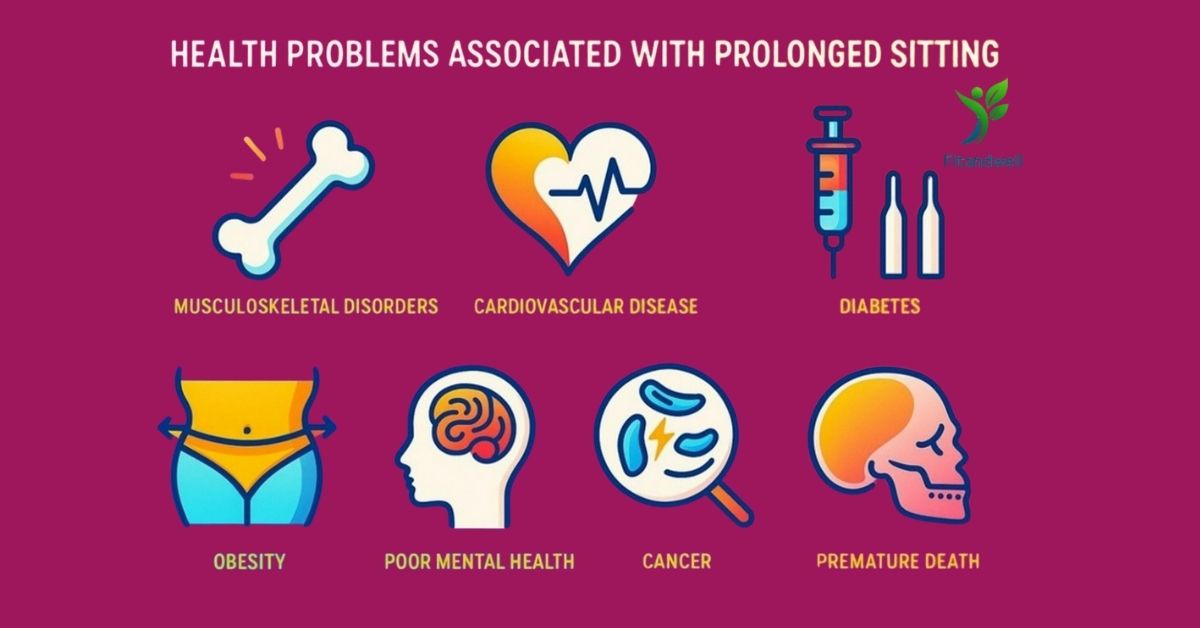
Long sitting hours increase the risk of obesity, heart disease, diabetes, and even certain cancers. Research shows that sitting for more than 8 hours daily raises mortality risk by 60%, putting it in the same category as smoking or obesity.
To learn more about what defines a sedentary lifestyle, its key characteristics, and detailed effects on health, you can explore this comprehensive overview here
The Science Behind Health Hazards of Prolonged Sitting
Let’s discuss the science behind the “Health Hazards of Prolonged Sitting”
Impact on Metabolism
Sitting shuts down your body’s calorie-burning engine. Just 30 minutes of sitting can slow metabolism by 90%. As a result, your body starts storing calories as fat instead of burning them. Hormone production also gets disrupted, making you feel hungry when you don’t need food.
Cardiovascular Risks
Your heart suffers when you sit too long. Blood flow decreases, cholesterol levels rise, and blood pressure increases. Research from the American Heart Association found that people who sit over 6 hours a day have a 20% higher death rate. Blood clots such as deep vein thrombosis (DVT) are another serious risk.
Musculoskeletal Problems
Sitting increases spinal pressure by 40% when compared to standing. The hip flexors tighten, the glutes weaken, and posture worsens. Back and neck pain affects nearly 80% of office workers, and prolonged sitting can cause the body to adapt to the chair.
Common Health Conditions Linked to Prolonged Sitting
- Type 2 Diabetes: Risk increases by 7% for every 2 hours of sitting.
- Obesity: Sitting burns 50 fewer calories per hour, totalling 400 extra calories daily.
- Deep Vein Thrombosis (DVT): Dangerous clots form in the legs because of poor circulation.
- Varicose Veins: Veins enlarge and become painful from poor blood flow.
- Mental Health Issues: Anxiety and depression increase with physical inactivity.
- Cancer Risks: Links found with colon, breast, and endometrial cancers.
Warning Signs Your Body is Affected
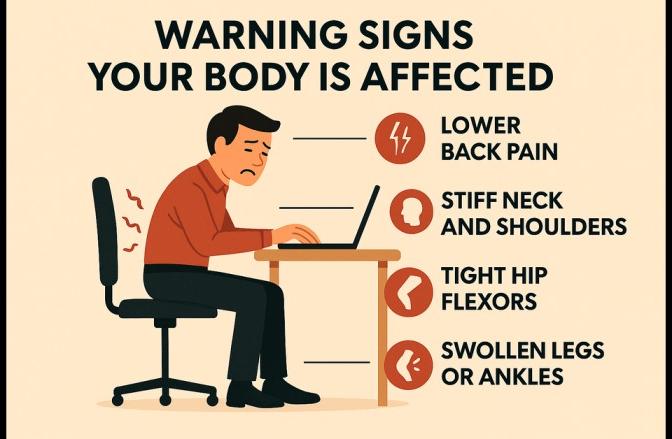
Early warning signs can include lower back pain, a stiff neck, frequent fatigue, swollen feet, brain fog, and digestive issues. Pain is essentially your body’s way of signalling that something isn’t right.
Many people ignore these early signals, which is often why most people fail to get healthy despite their best intentions.
Solutions to Reduce Sitting Hazards
Incorporate Movement Breaks
- Stand up every 30 minutes.
- Try the 20-8-2 rule: 20 minutes sitting, 8 minutes standing, 2 minutes moving.
- Take walking meetings or stretch during phone calls.
Workstation Modifications
- Use ergonomic chairs with lumbar support.
- Adjust monitors to eye level to prevent neck strain.
- Try sit-stand desks or under-desk bikes.
Daily Lifestyle Adjustments
- Walk for 10 minutes after meals to regulate blood sugar.
- Limit evening screen time and stay active during TV breaks.
- Start your day with light stretching or a short walk.
How Long Is Too Long to Sit?
Experts recommend standing up every 30 minutes. Sitting for over six hours a day increases health risks. This is true even with exercise. About 6 hours a day is the “sitting disease” threshold.
Prolonged Sitting vs Regular Exercise: Can Workouts Fix the Damage?
Exercise is beneficial, but it can’t undo the harm of sitting. Even marathoners, who exercise regularly, face health risks if they spend over eight hours a day sitting. Therefore, exercise and minimising sitting are distinct needs for good health.
Action Plan: Small Changes for Big Health Benefits
- Week 1: Set hourly reminders and stand during phone calls.
- Week 2: Add desk exercises and posture stretches.
- Week 3: Improve your workstation setup.
- Week 4: Extend movement breaks and track progress with an app.
The Bottom Line: Protect Yourself from Sitting Hazards
Prolonged sitting is not just a habit. It’s a serious health risk. But small lifestyle shifts like standing more, walking often, and upgrading your workspace can protect your long-term health. Start with one small change today—your future self will thank you.
Real-World Data and Sources
- WHO: 1.8 billion adults at risk due to inactivity.
- Sitting more than 8 hours daily is as harmful as smoking.
- Inactivity is linked to 3.2 million deaths worldwide each year.
Ready to Take Action?
How many hours do you sit in a day on average? Have you tried sit-stand desks or active breaks at work? What strategies work best for you to stay active during long workdays?




Pingback: Top 10 Scientifically Proven Weight Loss Strategies - Fitandwell – Fitness, Nutrition & Wellness Made Simple
Pingback: Top 10 Foods to Manage Diabetes in India 2025 - FitandWell.in – Wellness for Everyday India