

If you are reading this, you know what it feels like when anxiety takes over. That tightness in the chest, the restless thoughts that won’t stop, and the way even small things feel overwhelming.
I know exactly how that feels because I have been there myself. You are not alone in this.
Millions of people in India, over 45 million according to the World Health Organisation, struggle with anxiety. But I want to tell you that there is hope. Meditation offers a simple and gentle way to calm your mind. And this is not just ancient wisdom; modern science proves that meditation can really help ease anxious feelings and bring peace.
If you’re wondering how meditation helps anxiety, this article is for you. I know you’re tired of feeling overwhelmed and looking for real solutions, not confusing spiritual jargon.
You’ll find practical insights backed by scientific research and ancient Indian wisdom that actually work in daily life. Whether anxiety keeps you up at night or leaves you constantly on edge, understanding how meditation helps anxiety is your first step toward genuine relief.
Let’s explore what really works.
How Meditation Helps Anxiety: Why It Feels So Overwhelming
I’m about to tell you something that will shock you. Your anxiety isn’t a character flaw or weakness. It’s your brain protecting you, just in a way that doesn’t work well in modern life.
Anxiety triggers your body’s “fight or flight” response, which leads to a cascade of physiological changes. For example, your heart races and your breathing becomes rapid and shallow. Furthermore, your mind constantly scans for potential problems. This reaction can leave you feeling drained and stuck.
Think of your mind like your phone’s notification system. Critical alerts, such as emergency calls, can save you. But most of the time, it is buzzing for every email, every app update, and every random promotion. That is precisely how anxiety works.
Your brain is built to protect you, but the filter is not precise. A work deadline, a traffic jam, or even an overflowing inbox can trigger the same alarm system that once kept our ancestors alive when facing wild animals. The wiring has not caught up with the world we live in today.
The actual change comes when you recognise this for what it is. Your mind is working correctly. It is just running an old program on modern problems. Meditation helps you reset those settings. It does not silence the alarms completely, but it teaches you how to pause, check your surroundings, and respond only when it truly matters.
How Meditation Actually Changes Your Brain
Meditation helps by training your body and mind to respond differently. It slows down your breathing, calming your nervous system. Studies show that meditation reduces activity in the part of your brain that triggers fear and stress. It also lowers stress hormones like cortisol while encouraging the release of mood-lifting chemicals.
Chronic stress doesn’t just disturb the mind; it can also impact metabolism and weight. That’s why combining mindfulness with scientifically proven weight-loss strategies can create a more holistic approach to health.”
Understanding meditation’s effects on the brain involves some scientific terms. Words like “neuroplasticity,” “amygdala,” and “prefrontal cortex” may sound complex. I’m using them because they help explain what really happens inside your brain when you meditate.
Neuroplasticity means your brain can reshape itself by forming new connections. This ability allows your brain to change how it functions based on what you do regularly. The amygdala is the brain’s alarm system. It processes fear and stress signals, often triggering anxious reactions. The prefrontal cortex, on the other hand, is like your brain’s manager. It helps you focus, make decisions, and control your emotions.
Meditation strengthens the prefrontal cortex. This means you can better manage your feelings and stay calm under pressure. At the same time, meditation reduces the activity and even the size of the amygdala. When the amygdala quiets, your brain sends fewer fear signals, making you feel less anxious.
Besides that, meditation improves the connections between different brain areas. White matter pathways grow stronger, helping communication inside your brain. This supports emotional control and stress management. Important regions like the anterior cingulate cortex and hippocampus also adapt, improving memory and emotional balance.
These benefits don’t take years to appear. Brain scans show changes after just a few weeks of daily meditation. Your brain waves shift toward more calming alpha and theta waves. At the same time, stressful beta waves decrease. This rewiring helps you stay focused, alert, and calm, even when life gets tough.
By understanding these brain changes, you can appreciate why meditation is such a powerful tool against anxiety. It’s training your brain to handle stress better every day.
Three Indian Meditation Methods That Can Help Calm Anxiety
Here are three meditation styles from India that are easy to try and have solid evidence behind them.
1. Vipassana Meditation– Noticing Your Mind and Body
Vipassana means “insight.” It teaches you to watch your feelings and body sensations without trying to change them.
Why try it? Because it helps you stop fighting anxiety. Instead, you learn to observe it gently, which makes it lose its grip.
I remember the first time someone explained this to me. They said, “Imagine you’re sitting by a river, watching the water flow by. Your thoughts and feelings are like the water—you don’t need to jump in and get swept away. You can sit on the bank and watch.”
Research shows that people who practised Vipassana reduced anxiety and stress significantly after just a short retreat. But you don’t need to go to a retreat centre to get started.
To try at home, sit quietly for 5 minutes and notice your breath and the sensations in your body. If your mind wanders, that is normal. Bring your attention back again and again.
Basic Vipassana Practice Steps:
Sit comfortably with your eyes closed. Start by noticing your breath—not controlling it, just watching it. Then expand your awareness to include your whole body. Maybe you notice tension in your shoulders, or warmth in your hands, or the feeling of your feet on the floor.
When anxious thoughts come up, don’t push them away. Just notice them like you’d see a cloud in the sky. “Oh, there’s that worried thought about work again.” Then gently bring your attention back to your body.
The magic isn’t in having a tranquil mind. It’s in learning to be okay with whatever is there, including anxiety.
2. Pranayama – Using Breath to Find Calm
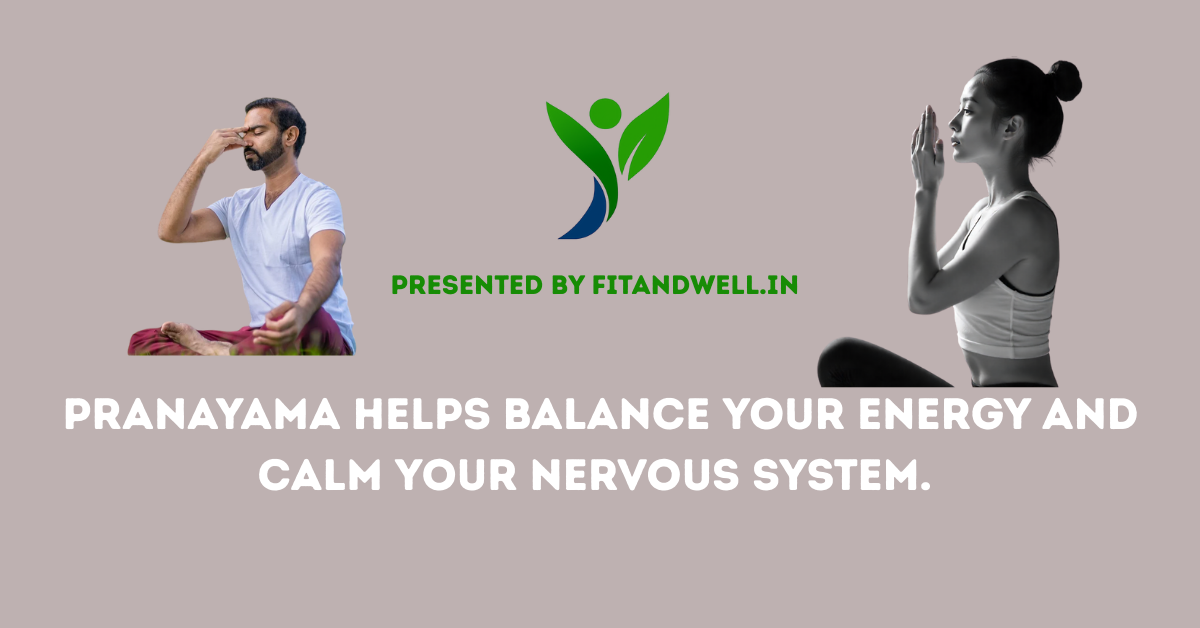
Pranayama is a breathing practice from yoga that helps balance your energy and calm your nervous system.
Your breath is fantastic because it’s the one part of your nervous system that you can directly control. When you’re anxious, your breathing usually becomes shallow and quick. When you slow it down on purpose, you send a signal to your brain that it’s safe to relax.
Bhramari pranayama, or humming bee breath, has been scientifically validated to reduce anxiety and stress rapidly. A controlled study involving COVID-19 patients in home isolation demonstrated significant decreases in anxiety, depression, and stress after daily practice for 15 days, along with improved sleep quality.
This breathing technique activates the parasympathetic nervous system, promoting relaxation and mental calm. Given its simplicity and effectiveness, Bhramari pranayama is recognised as a valuable tool for anxiety management in clinical and everyday settings.
Three Breathing Techniques You Can Try Right Now:
Basic Calming Breath: Breathe in slowly through your nose for 4 seconds, hold for 4 seconds, and breathe out for 6 seconds. The longer exhale is key—it activates your body’s relaxation response. Repeat this for 10 breaths and feel yourself relax.
Bhramari (Humming Bee Breath): This one might feel silly at first, but it works incredibly well. Close your eyes and put your thumbs in your ears, your index fingers above your eyebrows, and your remaining fingers over your closed eyes. Take a deep breath in, then hum as you breathe out, like a bee. The vibration calms your nervous system almost immediately.
Box Breathing: This is what Navy SEALs use to stay calm under pressure. Breathe in for 4, hold for 4, out for 4, hold for 4. Imagine drawing a box with your breath—up one side, across the top, down the other side, across the bottom.
The beautiful thing about breathing techniques is that you can use them anywhere. Stuck in traffic? Try box breathing. Nervous before a meeting? Do a few rounds of the 4-4-6 breath. No one even needs to know you’re doing it.
3. Trataka – Focusing the Mind by Gazing at a Candle
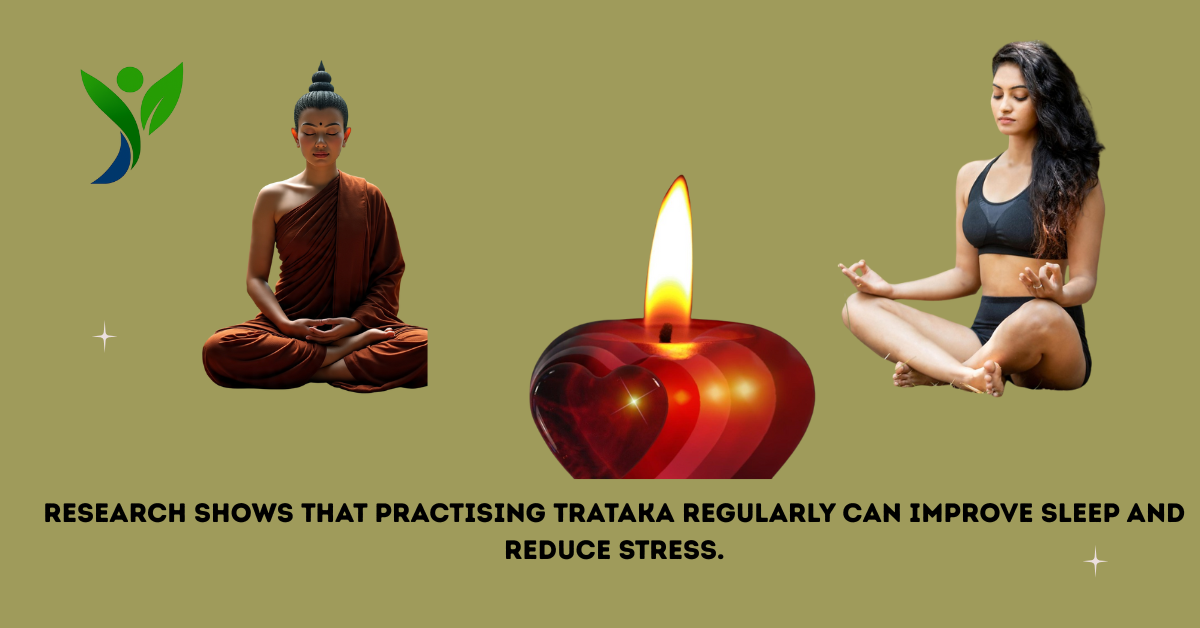
Trataka involves fixing your gaze on a small point, such as a candle flame, then closing your eyes and visualising it.
This practice is perfect if your mind tends to race with anxious thoughts. It gives your mind something specific to focus on, which can break the cycle of worry.
Research shows that practising trataka regularly can improve sleep and reduce stress. Many people find it easier to focus on their breath than to try to calm their anxiety, especially when they’re feeling very anxious.
How to Practice Trataka at Home:
Light a candle and place it about three feet away from you. Sit comfortably and gaze at the flame softly—don’t strain your eyes. Try not to blink too much, but don’t force it. Just look at the flame with gentle attention.
When your eyes start to water or feel tired (usually after 1-3 minutes), close them gently and try to see the flame in your mind’s eye. You might see it clearly, or remember what it looked like. Both are fine.
If your mind wanders while you’re gazing at the flame, that’s okay. Just bring your attention back to the light. There’s something very calming about focusing on a single, steady point of light. It’s like giving your scattered mind a place to rest.
How to Make Meditation a Simple 10-Minute Daily Habit
If you are new to meditation, try this easy routine. It fits into any day and takes just 10 minutes. I’ve designed it to be simple but effective, combining elements from all the practices we’ve discussed.
Minutes 1-3: Settling In and Basic Breathing
Find a comfortable seat with your back straight. You don’t need to sit cross-legged on the floor—a chair works perfectly fine. The important thing is that your spine is upright but not rigid.
Begin with slow, deep breathing. Place one hand on your chest and one on your belly. Try to breathe so that the hand on your belly moves more than the one on your chest. This engages your diaphragm and sends a signal to your nervous system that it’s time to relax.
Don’t worry about counting or timing yet. Just focus on making your exhales longer than your inhales. This simple shift can start calming your anxiety within the first minute.
Minutes 4-5: Adding a Mantra
Now, silently repeat the mantra “So Hum” with your breath. “So” as you breathe in, “Hum” as you breathe out. This Sanskrit phrase means “I am,” but don’t worry about the meaning. Just use it as a gentle anchor for your attention.
If Sanskrit doesn’t feel comfortable, you can use any calming phrase. “Peace” and “calm,” or “let” and “go,” or even just counting “one” and “two.” The words aren’t magic—they just give your mind something to do instead of worrying.
Minutes 6-8: Body and Mind Awareness
Spend these minutes noticing your body and your thoughts without judgment. Start with your body—are your shoulders tense? Is there tightness anywhere? You don’t need to fix anything, just notice.
Then expand to include your thoughts and emotions. Maybe anxiety is there, maybe frustration, perhaps boredom. That’s all perfectly normal. The practice is simply noticing without getting caught up in the story your mind wants to tell.
If you notice anxiety, you might think something like, “Oh, there’s anxiety. It feels tight in my chest. My mind is telling me stories about everything that could go wrong. That’s what minds do when they’re anxious.” Then gently return to your breath.
Minutes 9-10: Gratitude and Intention
End by placing your hands on your heart and feeling thankful for taking this time to care for yourself. This isn’t about having to feel happy; it’s about realising you did something nice for yourself.
Set a simple intention for your day. It’s “I choose to respond rather than react,” or “I trust that I can handle whatever comes up,” or “May I be kind to myself today.”
Even if your mind feels busy or distracted during the whole practice, you’ve still succeeded. Meditation is a skill, and the more you practice, the easier it becomes. But the benefits start from day one.
Why do most people struggle to get healthy? It’s not just about motivation or discipline. There are deeper patterns, blind spots, and everyday choices that quietly sabotage progress.
If you’re ready to understand what really holds people back, this blog offers a fresh and honest perspective.
Read the full article to explore the reasons and learn how to move forward with clarity.
Frequently Asked Questions about Anxiety and Meditation
Can I stop my busy mind?
No, but that’s not the goal. Your mind thinks—that’s its job. Meditation helps you change your relationship with your thoughts. Instead of being swept away by every anxious thought, you learn to watch them come and go.
Think of it like this: you can’t stop the waves in the ocean, but you can learn to surf. Guided meditations in your language can be helpful, especially when you’re starting out. There’s something comforting about a gentle voice guiding you through the process.
What if I don’t have enough time?
This is the most common excuse, and I get it. Life is busy. But here’s the thing—anxiety is also stealing your time. How much time do you spend worrying, lying awake at night, or dealing with the physical effects of stress?
Start with just 2 minutes a day. Seriously, just two minutes. It’s better to be consistent with short sessions than to do nothing. You can meditate while your coffee is brewing, right before checking your phone in the morning, or during your lunch break.
Most people find that once they start, they naturally want to do more because it feels so good. But even if you never go beyond two minutes, that’s still beneficial.
Is meditation religious?
Meditation is for everyone. While many meditation techniques come from spiritual traditions, meditation itself is a mental tool to help you feel better. It’s not tied to any particular religion or belief system.
You don’t need to believe anything special or change your religious views. You’re just training your mind to be calmer and more focused. Think of it like going to the gym for your brain.
What if I fall asleep during meditation?
If this happens occasionally, don’t worry about it. It probably means you needed the rest. If it happens every time, try meditating in a different position, such as sitting up instead of lying down, with your eyes slightly open, or at a time when you’re less tired.
I feel more anxious when I meditate. Is that normal?
Yes, this can happen, especially at first. When you slow down and pay attention, you might notice anxiety that was already there but that you were distracting yourself from. This is actually a good sign—it means you’re becoming more aware.
If the anxiety feels overwhelming, try opening your eyes, or focusing on sounds around you instead of your breath, or doing some gentle movement. You can always start with very short sessions and work your way up.
When Is the Best Time to Meditate for Anxiety?
The best time is whenever you can be consistent. But here are some options that work well for different people:
Morning meditation sets a calm tone for your whole day. Even five minutes before you check your phone or start your usual routine can make a big difference. You’re training your nervous system to start the day in a peaceful state, rather than immediately jumping into stress mode.
Evening meditation helps you process the day and prepare for better sleep. Many people find that meditation helps them fall asleep more easily and sleep more deeply.
Midday meditation can be a great reset if you work in a stressful environment. Even a few minutes in your car during lunch break or in a quiet corner of your office can help.
Emergency meditation is using breathing techniques or brief mindfulness moments when anxiety spikes. This might be three deep breaths before a difficult conversation, or a minute of focusing on your feet on the ground when you feel overwhelmed.
Use meditation daily to build strength over time. You can also meditate before stressful events or during moments of anxiety to calm yourself. But remember—meditation is a helpful companion, not a replacement for medical care. If your anxiety is severe or interfering with your daily life, please consult a mental health professional.
Different Types of Anxiety and How Meditation Can Help
Social Anxiety
If you get nervous around people or worry about being judged, loving-kindness meditation can be beneficial. This practice involves sending good wishes to yourself and others. It helps you feel more connected and less isolated.
Try this: During your meditation, silently repeat phrases like “May I be happy, may I be peaceful, may I be free from anxiety.” Then extend those wishes to people you love, people you feel neutral about, and even people you have difficulty with.
Work and Performance Anxiety
If your anxiety centres around work, deadlines, or performance, meditation can help you approach challenges with more clarity and less reactivity. The breathing techniques are instrumental right before stressful situations.
Many of my friends who work in high-pressure jobs do a few minutes of meditation before important meetings or presentations. It helps them think more clearly and feel more confident.
Health Anxiety
If you worry a lot about your health or body sensations, body scan meditation can help you distinguish between normal sensations and anxiety-amplified fears. When you regularly tune into your body in a calm state, you become better at recognising what’s actually happening versus what anxiety is telling you.
Generalized Anxiety
If you’re a chronic worrier who finds something to be anxious about no matter what, mindfulness meditation that focuses on the present moment can be incredibly helpful. Most anxiety is about things that haven’t happened yet or things we can’t control.
The practice of gently returning your attention to the here-and-now—your breath, your body, the sounds around you—helps break the habit of constant future-focused worry.
Building Your Support System
Meditation is excellent, but it doesn’t have to be a solo journey. Here are some ways to get support:
Find a meditation buddy. Having someone to practice with, even if you’re not in the exact location, can help you stay consistent. You can check in with each other about how your practice is going.
Join online communities. There are many Facebook groups and forums where people share their meditation experiences and support each other.
Try meditation apps. While they’re not necessary, some people find guided meditations helpful, especially when starting. Many apps have specific programs for anxiety.
Consider a local class. Many yoga studios, community centres, and hospitals offer meditation classes. Learning with others can be encouraging and help you feel less alone in dealing with anxiety.
What to Do When Meditation Feels Hard
Some days meditation will feel easy and peaceful. Other days it will feel difficult or frustrating. Both are completely normal.
On hard days, remember that you’re not trying to achieve a particular state of mind. You’re just practising being present with whatever is there. If anxiety is there, that’s okay. If frustration is there, that’s okay, too.
Sometimes the most valuable meditation sessions are the ones that feel difficult. You’re learning to be with discomfort without immediately trying to escape it. This skill translates directly to handling anxiety in daily life.
If meditation feels really challenging, try shortening your sessions, switching to a different technique, or meditating with your eyes open. No rule says meditation has to look a certain way.
Why This Means a Lot to Me
I’m sharing this because I want you to feel better. Meditation has helped me, and I have seen it help many others. It gives you the chance to respond calmly to life’s challenges instead of feeling overwhelmed.
I remember the first time I realised that I had gone through an entire day without that familiar knot of anxiety in my stomach. It wasn’t that nothing stressful happened—it was that I could handle the stress without it taking over my whole system.
That’s what I want for you. Not a perfect life without challenges, but the inner resources to meet whatever comes with more peace and confidence.
You don’t need special skills or expensive equipment. You need to start where you are, with whatever time you have available.
The wisdom of India’s meditation practices is real, and science agrees. Thousands of years of human experience, combined with modern research, all point to the same conclusion: regular meditation practice can significantly reduce anxiety and improve your overall quality of life.
You can find peace, one breath at a time.
Take the First Step Today
If you’ve been waiting for the right moment or permission to begin, this is it. You don’t need to wait until you have more time, or less stress, or until you feel more motivated. You can start right now, exactly as you are.
Start small. Be kind to yourself. Remember that every expert was once a beginner. Every person who has found peace through meditation started with that first awkward, uncertain session where they weren’t sure they were doing it right.
Meditation is a gift you can give yourself every day. It’s a few minutes where you get to step out of the rushing river of daily life and just be. In a world that constantly demands your attention, meditation is radical self-care.
I’m here with you in this. Somewhere as you’re reading this, I hope you feel less alone in your struggle with anxiety. Millions of people around the world are taking deep breaths, sitting quietly, and choosing inner peace over inner chaos. You’re part of that community now.
Your anxiety has told you various stories about why you can’t meditate, why it won’t work for you, and why you don’t have time. But anxiety isn’t good at telling the truth about what’s possible. The only way to discover what meditation can do for you is to try it.
I hope this guide helps you find the calm you deserve.
Keep your journey to better health going. Explore more expert articles and tips now at https://fitandwell.in



Pingback: Getting Healthy in 2025: Fitness, Food & Lifestyle - FitandWell.in – Wellness for Everyday India
Pingback: Top 10 Foods to Manage Diabetes in India 2025 - FitandWell.in – Wellness for Everyday India