
Best Sources of Protein for Vegetarians in India (2026 Complete Guide)
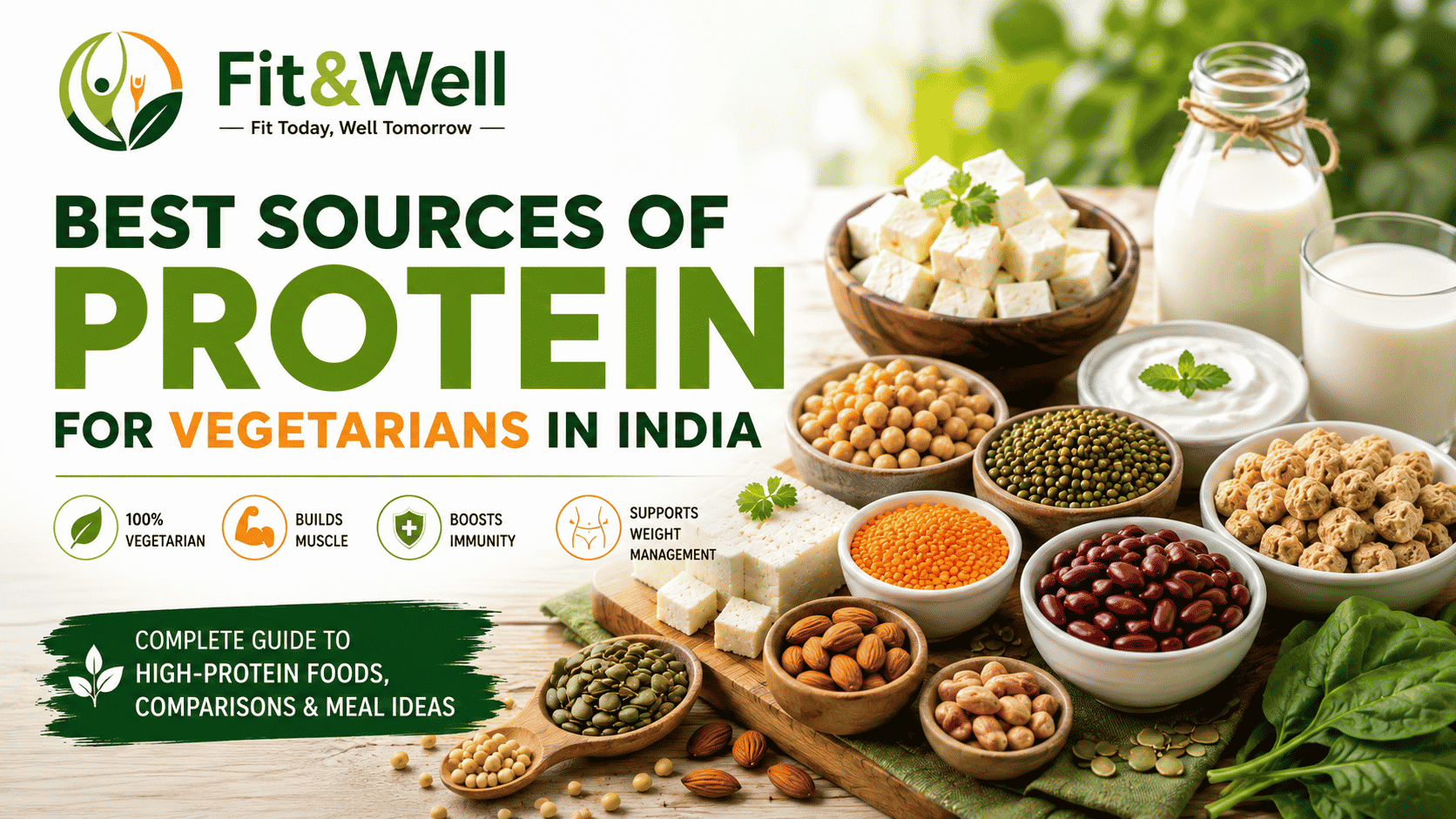
The best protein sources for vegetarians in India include soy chunks, paneer, tofu, lentils (dal), chickpeas (chana), kidney beans (rajma), milk, curd, Greek yoghurt, peanuts, pumpkin seeds and sprouts. Among these, soy chunks provide the highest protein content per 100 g, while dairy products such as paneer and milk are complete proteins containing all nine essential amino acids. Traditional Indian meals that combine cereals and pulses, such as dal with rice or roti with chana, further improve protein quality and help meet daily nutritional requirements.
Best Vegetarian Protein Sources at a Glance
| Food | Approx. Protein* | Protein Quality | Best For |
|---|---|---|---|
| Soy chunks (dry) | 52 g/100 g | Complete | Muscle gain, budget meals |
| Paneer | 18 g/100 g | Complete | Everyday meals |
| Tofu | 8-16 g/100 g | Complete | Vegan diets |
| Greek yoghurt | 9-10 g/100 g | Complete | Weight management |
| Milk | 3.2 g/100 ml | Complete | Daily nutrition |
| Moong dal (dry) | 24 g/100 g | Incomplete | Everyday cooking |
| Rajma (dry) | 24 g/100 g | Incomplete | Lunch and dinner |
| Chickpeas (dry) | 20 g/100 g | Incomplete | Curries and salads |
| Peanuts | 26 g/100 g | Incomplete | Healthy snacks |
| Pumpkin seeds | 30 g/100 g | Incomplete | Salads and smoothies |
*Values are approximate and may vary depending on the variety, processing and cooking method.
Why Protein Matters More Than Ever
Protein is far more than a nutrient associated with bodybuilding. Every cell in your body relies on protein to function properly. It supports muscle repair, strengthens bones, helps produce enzymes and hormones, contributes to immune health and promotes satiety after meals.
Despite India’s rich culinary tradition, many vegetarians worry that they are not consuming enough protein. This concern is understandable, but it is often based on myths rather than evidence. A well-planned vegetarian diet that includes a variety of pulses, dairy products, soy foods, nuts, seeds and whole grains can provide sufficient protein for most healthy adults.
The latest ICMR-NIN Dietary Guidelines for Indians (2024) recommend obtaining protein primarily from whole foods and emphasise combining cereals with pulses to improve overall protein quality. The guidelines also encourage dietary diversity instead of relying on a single food or protein supplement.
What You’ll Learn in This Guide
Unlike many articles that simply list high-protein foods, this guide explains which foods are genuinely worth eating and why.
You’ll discover:
- The highest-protein vegetarian foods available in India.
- How much protein do you actually need each day?
- Which foods offer the best value for money?
- Complete versus incomplete proteins are explained simply.
- Smart Indian meal combinations that naturally improve protein quality.
- The best protein sources for muscle gain, weight loss and everyday health.
- Common mistakes vegetarians make when trying to increase protein intake.
- A practical one-day high-protein vegetarian meal plan using affordable Indian foods.
Every recommendation in this guide is based on current nutrition guidance and practical dietary habits rather than passing food trends.
At a Glance: Which Protein Source Is Best?
If you’re short on time, here’s a quick summary.
| Goal | Recommended Food |
|---|---|
| Highest protein | Soy chunks |
| Best complete protein | Paneer |
| Best vegan protein | Tofu |
| Cheapest protein | Chana dal |
| Best for muscle gain | Soy chunks + dairy |
| Best for weight management | Greek yoghurt + moong dal |
| Best everyday protein | Mixed dals, milk and curd |
No single food is perfect. The healthiest vegetarian diet includes a variety of protein sources throughout the day. This approach not only increases your total protein intake but also improves the balance of essential amino acids and provides important nutrients such as calcium, iron, zinc, folate and vitamin B12 (from dairy).
Expert Tip: Instead of trying to consume all your protein at dinner, include a good source of protein in every main meal. Spreading protein intake across breakfast, lunch and dinner supports muscle maintenance and helps you stay full for longer.
Why This Guide Is Different
Most articles focus only on the amount of protein in different foods.
That tells only part of the story.
Choosing the best vegetarian protein source also depends on:
- Protein quality
- Amino acid profile
- Digestibility
- Cost
- Availability in India
- Ease of cooking
- Suitability for different health goals
For example, almonds are often promoted as a high-protein snack. While nutritious, they provide much more fat than protein and are relatively expensive as a protein source. In contrast, soy chunks, dals and chickpeas offer significantly more protein per rupee while also contributing fibre and essential minerals.
Throughout this guide, we’ll compare foods not just by protein content but also by affordability, nutritional quality and practical use in Indian kitchens.
How Much Protein Do You Need Each Day?
One of the biggest misconceptions about protein is that everyone needs the same amount. In reality, your daily protein requirement depends on several factors, including your age, body weight, activity level and overall health.
For most healthy adults, the Recommended Dietary Allowance (RDA) is approximately 0.8 grams of protein per kilogram of body weight per day. However, people who exercise regularly, older adults and those recovering from illness often benefit from a higher protein intake. The ICMR-NIN Dietary Guidelines for Indians (2024) also emphasise obtaining protein from a variety of whole foods, including pulses, dairy products, nuts, seeds and whole grains, rather than relying on supplements.
Daily Protein Requirements by Activity Level
The table below provides general guidance based on current nutrition recommendations. Individual requirements may vary depending on medical conditions, pregnancy, breastfeeding or advice from a registered dietitian.
| Person | Approximate Daily Protein Requirement |
|---|---|
| Sedentary adult | 0.8 g per kg body weight |
| Recreationally active adult | 1.0-1.2 g per kg |
| Regular strength training | 1.2-1.7 g per kg |
| Endurance athlete | 1.2-1.6 g per kg |
| Older adults (60+) | 1.0-1.2 g per kg* |
*Higher intakes may help support muscle maintenance as people age. Evidence from the International Society of Sports Nutrition (ISSN) Position Stand on Protein and Exercise and other expert bodies supports increased protein intake for physically active individuals.
Protein Requirements: Practical Examples
Understanding protein needs becomes much easier when you apply them to real-life examples.
| Body Weight | Sedentary Adult | Active Adult | Strength Training |
|---|---|---|---|
| 50 kg | ~40 g | 50-60 g | 60-85 g |
| 60 kg | ~48 g | 60-72 g | 72-102 g |
| 70 kg | ~56 g | 70-84 g | 84-119 g |
| 80 kg | ~64 g | 80-96 g | 96-136 g |
These figures are intended as practical estimates rather than strict targets. Your ideal intake depends on your goals, overall calorie intake and the quality of the protein you consume.
Is It Better to Eat All Your Protein at Dinner?
No.
A common mistake is eating very little protein during breakfast and lunch, then consuming most of it at dinner. While total daily protein intake matters, research suggests that distributing protein evenly across meals may support muscle protein synthesis more effectively than eating it all at once.
For example:
- Breakfast: Greek yoghurt with fruit and seeds or vegetable besan chilla.
- Lunch: Dal, brown rice, curd and a vegetable curry.
- Evening snack: Roasted chana or buttermilk.
- Dinner: Paneer bhurji with whole wheat roti and salad.
This approach not only helps maintain muscle but can also improve satiety, making it easier to manage appetite throughout the day.
Expert Tip: Aim to include 20-30 g of protein in each main meal, where practical. This is often easier and more effective than trying to reach your daily target in one sitting.
Can You Get Enough Protein Without Supplements?
For most healthy vegetarians, the answer is yes.
A balanced Indian diet that includes pulses, dairy products, soy foods, legumes, nuts and seeds can usually provide sufficient protein without the need for powders or shakes. Supplements may be useful in certain situations, such as for competitive athletes, people with increased protein requirements or those who struggle to meet their needs through food alone. However, they should complement a healthy diet rather than replace it.
If you’re unsure whether you’re meeting your protein requirements, keeping a food diary for a few days or consulting a registered dietitian can provide a clearer picture.
Signs You May Not Be Getting Enough Protein
True protein deficiency is uncommon in healthy adults who consume enough calories, but consistently low protein intake may contribute to:
- Reduced muscle strength or loss of muscle mass.
- Slower recovery after exercise.
- Increased hunger between meals.
- Poor wound healing.
- Brittle hair or nails.
- Fatigue when combined with an overall inadequate diet.
These symptoms are not specific to protein deficiency and can have many other causes. If they persist, it’s important to seek medical advice rather than self-diagnosing.
Key Takeaways
Before choosing the best vegetarian protein foods, remember these principles:
Your protein requirement depends on your body weight and activity level.
Most healthy adults can meet their needs through a varied vegetarian diet.
Protein quality is just as important as quantity.
Spread protein intake across the day instead of relying on a single high-protein meal.
Whole foods should form the foundation of your diet, with supplements used only when genuinely needed.
Now that you know how much protein you need, the next step is understanding which vegetarian foods provide the best combination of protein, nutrition, affordability and practicality.
Why Protein Quality Matters: It’s Not Just About the Numbers
When comparing protein-rich foods, most people focus only on the number of grams of protein per 100 g. While this is useful, it doesn’t tell the whole story. The quality of protein is just as important as the quantity.
Protein quality refers to how well a food provides the nine essential amino acids your body cannot produce on its own. These amino acids are needed to build and repair muscles, produce enzymes and hormones, support immune function and maintain healthy tissues.
A food that contains all nine essential amino acids in sufficient amounts is known as a complete protein. Foods that are low in one or more essential amino acids are called incomplete proteins.
The good news is that a vegetarian diet doesn’t need to rely solely on complete proteins. Eating a variety of plant foods throughout the day provides all the essential amino acids most healthy adults need.
According to the ICMR-NIN Dietary Guidelines for Indians (2024), combining cereals with pulses is a simple and effective way to improve the quality of dietary protein, making traditional Indian meals naturally well-balanced.
Complete vs Incomplete Proteins
Understanding the difference between complete and incomplete proteins makes it much easier to plan a healthy vegetarian diet.
Complete Proteins
Complete proteins contain all nine essential amino acids in adequate amounts.
For Indian vegetarians, the most common complete protein sources include:
- Milk
- Curd
- Greek yoghurt
- Paneer
- Cheese
- Soybeans
- Soy chunks
- Tofu
- Tempeh
These foods are particularly valuable because they provide high-quality protein without requiring additional food combinations.
Incomplete Proteins
Most plant-based protein sources are naturally lower in one or more essential amino acids.
Examples include:
- Lentils
- Chickpeas
- Rajma
- Black gram
- Green gram
- Peanuts
- Almonds
- Pumpkin seeds
- Sesame seeds
- Oats
- Brown rice
- Whole wheat
This doesn’t mean these foods are inferior. They are excellent sources of protein, fibre, vitamins and minerals. They simply work best as part of a varied diet.
Why Traditional Indian Meals Work So Well
Long before nutrition science explained amino acids, Indian cuisine had already solved the problem.
Many traditional meals naturally combine foods that complement each other’s amino acid profiles.
Examples include:
| Meal Combination | Why It Works |
|---|---|
| Dal + Rice | Pulses provide lysine, while rice contributes methionine, creating a more balanced protein profile. |
| Rajma + Rice | A classic combination that improves overall protein quality. |
| Khichdi | Rice and lentils complement each other’s amino acids while being easy to digest. |
| Idli + Sambar | Fermented rice and lentils provide a nutritious, balanced meal. |
| Chole + Roti | Wheat and chickpeas create a more complete amino acid profile. |
| Peanut Chutney + Dosa | Legumes and cereals complement one another nutritionally. |
This concept is known as protein complementarity.
Modern research shows that you don’t have to combine complementary proteins within the same mouthful or even the same meal. As long as you eat a varied diet over the course of the day, your body can effectively utilise amino acids from different foods. The Harvard T.H. Chan School of Public Health Nutrition Source explains that consuming a variety of plant protein sources across the day is sufficient for most healthy people.
Expert Insight: You don’t need to obsess over pairing every meal perfectly. Focus on eating a diverse range of protein-rich foods throughout the day, and your body will do the rest.
What About Protein Digestibility?
Not all protein is absorbed equally.
Protein digestibility refers to how efficiently your body can digest and use the protein in a particular food.
Animal proteins and soy generally have higher digestibility than many raw legumes or cereals. However, this doesn’t make plant proteins inadequate. Traditional cooking methods used in Indian households significantly improve digestibility.
Simple practices such as:
- Soaking lentils
- Sprouting legumes
- Fermenting batters
- Pressure cooking pulses
- Cooking beans thoroughly
help reduce naturally occurring compounds such as phytates and certain enzyme inhibitors that can interfere with digestion and mineral absorption.
These methods have been used in Indian kitchens for generations and remain some of the best ways to improve the nutritional quality of vegetarian meals.
Is Soy Really the Best Plant Protein?
Among commonly available vegetarian foods in India, soy products stand out for both protein quantity and quality.
Soybeans contain all nine essential amino acids, making them one of the few plant foods classified as a complete protein. Products such as soy chunks, tofu and tempeh are also versatile, affordable and widely available.
Despite persistent myths, current evidence indicates that moderate consumption of whole soy foods is safe for most healthy people. The Harvard T.H. Chan School of Public Health Nutrition Source: Soy notes that soy foods can be part of a healthy diet and do not appear to increase the risk of hormone-related cancers in the general population.
That said, soy doesn’t need to become your only protein source. A varied diet that includes dairy, pulses, legumes, nuts and seeds offers a broader range of nutrients while making meals more enjoyable.
Common Myths About Vegetarian Protein
Before exploring the best protein-rich foods, it’s worth clearing up a few misconceptions.
Myth: Vegetarians Can’t Build Muscle
False.
Muscle growth depends on consuming enough total protein, eating sufficient calories and following a progressive strength-training programme. Many successful athletes and bodybuilders follow vegetarian diets.
Myth: You Need Protein Powder Every Day
Not necessarily.
Most healthy adults can meet their protein requirements through whole foods. Protein supplements are convenient but are not essential for everyone.
Myth: Nuts Are the Best Source of Protein
Nuts contain protein, but they are primarily a source of healthy fats. Foods such as soy chunks, paneer, lentils and chickpeas provide significantly more protein per serving.
Myth: One Food Can Meet All Your Protein Needs
No single food provides every nutrient your body needs.
The healthiest vegetarian diet includes a variety of dairy products, legumes, soy foods, nuts, seeds and whole grains.
Key Takeaways
Before comparing individual foods, remember these evidence-based principles:
- Protein quality matters as much as protein quantity.
- Complete proteins naturally contain all essential amino acids.
- Most plant proteins become nutritionally stronger when eaten as part of a varied diet.
- Traditional Indian meal combinations already provide excellent protein complementarity.
- Soy is one of the highest-quality plant proteins available, but dietary diversity remains the best long-term strategy.
- Simple cooking techniques such as soaking, sprouting and fermenting improve digestibility and nutrient availability.
Now that you understand how protein quality works, it’s time to compare the best vegetarian protein sources available in India, ranked by protein content, affordability, nutritional value and practical everyday use.
Best Sources of Protein for Vegetarians in India (Compared)
Now that you understand how much protein you need and why protein quality matters, let’s compare the best vegetarian protein sources available in India.
This comparison goes beyond simply listing protein content. It also considers protein quality, affordability, digestibility, versatility and suitability for different health goals.
Comparison Table: Best Vegetarian Protein Sources
| Food | Protein (per 100 g)* | Calories | Complete Protein | Approx. Cost (India) | Best For |
|---|---|---|---|---|---|
| Soy chunks (dry) | 52 g | 345 kcal | ✓ | ₹18-25 | Muscle gain, budget diets |
| Pumpkin seeds | 30 g | 559 kcal | ✗ | ₹70-100 | Healthy snacks, salads |
| Peanuts | 26 g | 567 kcal | ✗ | ₹18-30 | Affordable snacks |
| Moong dal (dry) | 24 g | 347 kcal | ✗ | ₹15-25 | Everyday meals |
| Rajma (dry) | 24 g | 333 kcal | ✗ | ₹20-35 | Lunch and dinner |
| Masoor dal (dry) | 24 g | 352 kcal | ✗ | ₹15-25 | Daily cooking |
| Chana dal (dry) | 21 g | 360 kcal | ✗ | ₹12-20 | Budget-friendly protein |
| Chickpeas (dry) | 20 g | 364 kcal | ✗ | ₹18-30 | Curries, salads |
| Paneer | 18 g | 265 kcal | ✓ | ₹45-70 | Muscle gain, family meals |
| Tofu | 8-16 g | 76-144 kcal | ✓ | ₹35-60 | Vegan diets |
| Greek yoghurt | 9-10 g | 95-110 kcal | ✓ | ₹30-50 | Weight management |
| Curd | 3-4 g | 60-70 kcal | ✓ | ₹10-20 | Everyday meals |
| Milk | 3.2 g/100 ml | 60-70 kcal | ✓ | ₹6-8 per 100 ml | Daily nutrition |
*Values are approximate and vary depending on the variety, brand and preparation method.
How We Ranked These Foods
A food isn’t “best” simply because it contains the most protein.
To rank these protein sources fairly, we considered five important factors:
- Total protein content.
- Protein quality (complete vs incomplete protein).
- Cost and accessibility in India.
- Ease of cooking and everyday use.
- Overall nutritional value, including fibre, vitamins and minerals.
For example, soy chunks contain more protein than paneer, but paneer provides calcium and is easier for many people to include in daily meals. Similarly, lentils offer slightly less protein than soy but contribute fibre, iron and folate while forming the foundation of many traditional Indian diets.
The best choice depends on your dietary preferences, budget and health goals rather than protein content alone.
The Top 10 Vegetarian Protein Sources in India
1. Soy Chunks
If your goal is to maximise protein while keeping costs low, soy chunks are difficult to beat.
Made from defatted soybean flour, they contain around 52 g of protein per 100 g (dry weight) and provide all nine essential amino acids. They are also inexpensive, shelf-stable and widely available across India.
Best for:
- Muscle gain
- High-protein diets
- Students
- Budget-conscious families
Pros
- Highest protein among commonly available vegetarian foods.
- Complete protein.
- Very affordable.
- Low in saturated fat.
- Easy to store.
Things to consider
- Must be soaked before cooking.
- Some people dislike the texture until prepared correctly.
Best ways to eat
- Soy chunk curry
- Soy pulao
- Soy keema
- Stir-fries
- High-protein salads
Expert Tip: Marinate boiled soy chunks with spices, lemon juice and yoghurt before cooking. This improves both flavour and texture.
2. Paneer
Paneer is one of the most popular protein-rich foods in Indian households.
Unlike many plant foods, paneer contains complete protein while also providing calcium and phosphorus for healthy bones.
Its versatility makes it suitable for breakfast, lunch, dinner and snacks.
Best for
- Families
- Children
- Muscle building
- High-calorie diets
Pros
- Complete protein.
- Rich in calcium.
- Highly satisfying.
- Easy to cook.
- Widely available.
Things to consider
- Higher in saturated fat than tofu.
- Calorie-dense, so portion size matters if you’re trying to lose weight.
Best ways to eat
- Paneer bhurji
- Grilled paneer
- Paneer tikka
- Palak paneer
- Paneer wraps
3. Tofu
Often described as the vegan alternative to paneer, tofu deserves recognition in its own right.
Made from soybeans, tofu is naturally rich in high-quality protein while being lower in calories and saturated fat than paneer.
Firm tofu works well in Indian curries, stir-fries and grilled dishes, while silken tofu can be blended into smoothies and desserts.
Best for
- Vegan diets
- Weight management
- Heart-conscious eating
Pros
- Complete protein.
- Lower in calories than paneer.
- Rich in iron.
- Versatile in cooking.
Things to consider
- Mild flavour means it benefits from marination.
- Texture varies between brands.
Best ways to eat
- Tofu bhurji
- Tofu tikka
- Stir-fried tofu
- Tofu curry
- Smoothies using silken tofu
Which Protein Source Should You Choose?
If you’re looking for a single winner, there isn’t one.
Instead, choose according to your goal.
| Goal | Best Choice |
|---|---|
| Highest protein | Soy chunks |
| Best complete protein | Paneer |
| Best vegan option | Tofu |
| Best value for money | Chana dal |
| Best everyday food | Mixed dals |
| Best snack | Roasted chana or Greek yoghurt |
| Best for weight management | Greek yoghurt, tofu and moong dal |
Rather than depending on a single food, aim to include a mix of dairy products, soy foods, pulses, legumes, nuts and seeds throughout the week. This approach provides a broader range of nutrients while helping you meet your daily protein target.
In the next section, we’ll take a closer look at dairy-based protein sources, including paneer, milk, curd and Greek yoghurt, explaining how they compare, who they suit best and the smartest ways to include them in an Indian vegetarian diet.
Dairy Protein Sources: The Foundation of a High-Protein Vegetarian Diet
For millions of vegetarians in India, dairy products are among the easiest and most reliable ways to increase protein intake. Unlike most plant-based foods, dairy naturally contains complete protein, meaning it provides all nine essential amino acids required for muscle growth, tissue repair and overall health.
Dairy products are also rich in calcium, phosphorus and vitamin B12, making them valuable additions to a balanced vegetarian diet. The ICMR-NIN Dietary Guidelines for Indians (2024) recommend including milk and milk products as part of a healthy dietary pattern.
1. Paneer
Paneer remains one of the most popular vegetarian protein sources in India for good reason. It is versatile, filling and easy to incorporate into everyday meals.
| Nutrition (Approx. per 100 g) | Value |
|---|---|
| Protein | 18 g |
| Calories | 265 kcal |
| Calcium | High |
| Protein Quality | Complete |
Why Paneer Is a Great Choice
- Rich in high-quality protein.
- Excellent source of calcium for bone health.
- Keeps you feeling full for longer.
- Suitable for children, adults and older people.
- Easily available throughout India.
Best Ways to Include Paneer
- Paneer bhurji
- Paneer tikka
- Palak paneer
- Grilled paneer salad
- Stuffed whole wheat wraps
Expert Tip
Choose homemade or low-fat paneer if you’re trying to reduce calorie intake while maintaining a high-protein diet.
2. Milk
Milk is often overlooked because it contains less protein per serving than paneer, but it remains one of the most convenient complete protein sources available.
A single glass of milk contributes not only protein but also calcium, vitamin B12, riboflavin and potassium.
| Nutrition (Approx. per 250 ml) | Value |
|---|---|
| Protein | 8 g |
| Calories | 150 kcal (whole milk) |
| Protein Quality | Complete |
Why Drink Milk?
- Convenient breakfast option.
- Supports bone health.
- Easy to combine with oats, smoothies and cereals.
- Suitable for growing children and active adults.
Best Ways to Consume Milk
- Plain milk
- Protein smoothies
- Overnight oats
- Homemade shakes with fruit
- Turmeric milk
Expert Tip: If you’re lactose intolerant, you may tolerate yoghurt or lactose-free milk better than regular milk.
3. Curd (Yoghurt)
Curd is a staple in Indian households and provides much more than cooling comfort during summer.
It contains beneficial bacteria that support gut health while supplying complete protein and calcium.
| Nutrition (Approx. per 100 g) | Value |
|---|---|
| Protein | 3-4 g |
| Calories | 60-70 kcal |
| Protein Quality | Complete |
Benefits of Curd
- Supports digestive health.
- Provides probiotics.
- Complements Indian meals perfectly.
- Easy to digest for many people.
Best Ways to Eat Curd
- Plain curd with lunch
- Vegetable raita
- Fruit yoghurt bowls
- Curd rice
- High-protein dips
4. Greek Yoghurt
Greek yoghurt has become increasingly popular because it contains significantly more protein than regular curd.
During production, much of the whey is removed, creating a thicker texture and higher protein concentration.
| Nutrition (Approx. per 100 g) | Value |
|---|---|
| Protein | 9-10 g |
| Calories | 95-110 kcal |
| Protein Quality | Complete |
Why Greek Yoghurt Stands Out
- High protein with relatively few calories.
- Excellent snack for weight management.
- Keeps hunger under control.
- Rich in calcium.
Best Ways to Enjoy Greek Yoghurt
- Fresh fruit bowls
- Smoothies
- Breakfast parfaits
- Healthy desserts
- Dips and dressings
Which Dairy Protein Source Is Best?
Each dairy product serves a different purpose.
| Goal | Best Choice |
|---|---|
| Highest protein | Paneer |
| Weight management | Greek yoghurt |
| Everyday nutrition | Milk |
| Gut health | Curd |
| Muscle building | Paneer + milk |
Rather than choosing only one, include a variety of dairy foods throughout the week to benefit from their different nutritional strengths.
Are Full-Fat or Low-Fat Dairy Products Better?
The answer depends on your health goals.
If you’re trying to gain muscle or increase calorie intake, full-fat dairy products can be an excellent choice because they provide additional energy alongside protein.
If your goal is weight management or reducing saturated fat intake, low-fat milk, low-fat curd and reduced-fat paneer may be more suitable while still providing high-quality protein.
Current evidence suggests that dairy foods can be part of a healthy diet when consumed in appropriate portions. Focus on your overall eating pattern rather than labelling individual foods as “good” or “bad”.
Expert Advice: Don’t Rely Only on Dairy
Although dairy products provide complete protein, they shouldn’t be your only source of protein.
A balanced vegetarian diet should also include:
- Lentils
- Beans
- Soy foods
- Whole grains
- Nuts
- Seeds
This variety improves your intake of fibre, iron, magnesium, zinc and many other nutrients that dairy alone cannot provide.
Next, we’ll explore soy-based protein sources, including soy chunks, tofu, tempeh and edamame, and explain why they are considered some of the highest-quality plant proteins available.
Frequently Asked Questions
Which vegetarian food has the highest protein in India?
Among commonly available vegetarian foods, soy chunks provide the highest protein content, with approximately 52 g of protein per 100 g (dry weight). They are also one of the most affordable high-protein options, making them an excellent choice for students, families and fitness enthusiasts.
Is paneer better than tofu?
Both are excellent sources of complete protein, but the better choice depends on your goals.
- Choose paneer if you want a richer source of protein and calcium and don’t mind the extra calories.
- Choose tofu if you’re vegan or looking for a lower-calorie, lower-saturated-fat alternative.
Including both in your diet can add variety and improve overall nutrient intake.
Which dal contains the most protein?
Several lentils provide similar amounts of protein. Moong dal, masoor dal and urad dal typically contain around 24 g of protein per 100 g (dry weight), while chana dal provides around 21 g. Since protein content varies only slightly, it’s better to eat a variety of dals rather than relying on just one.
Can vegetarians build muscle without protein powder?
Yes. Most healthy vegetarians can build muscle through a balanced diet that includes adequate protein, enough calories and regular strength training. Foods such as soy chunks, paneer, tofu, milk, curd, lentils and chickpeas can easily contribute to your daily protein requirements. Protein powders are convenient but are not essential for everyone.
Is soy safe to eat every day?
Current scientific evidence suggests that moderate consumption of whole soy foods, such as tofu, soy chunks and edamame, is safe for most healthy adults. If you have a medical condition, such as a soy allergy or a thyroid disorder, seek personalised advice from your healthcare professional.
Are nuts the best source of protein?
Nuts are nutritious, but they are primarily a source of healthy fats rather than protein. Foods such as soy chunks, paneer, lentils and chickpeas provide significantly more protein per serving and are generally more economical sources of protein.
Do I need to combine rice and dal in every meal?
No. While combining cereals and pulses improves the overall amino acid profile, you don’t need to pair them at every meal. Eating a varied diet that includes different protein-rich foods throughout the day is sufficient for most healthy adults.
Final Thoughts
Meeting your protein needs as a vegetarian in India is much easier than many people believe. From affordable pantry staples like lentils and chickpeas to complete protein sources such as paneer, tofu and soy chunks, there are plenty of nutritious options that fit different budgets, lifestyles and health goals.
Rather than searching for a single “perfect” protein food, focus on building balanced meals with a variety of protein-rich ingredients. Traditional combinations such as dal with rice, roti with chana, idli with sambar and khichdi have stood the test of time because they provide both nourishment and a complementary amino acid profile.
If you’re aiming to build muscle, lose weight or simply improve your overall diet, consistency matters more than perfection. Include a good source of protein in every main meal, choose minimally processed foods where possible and enjoy a diverse range of legumes, dairy products, soy foods, nuts and seeds throughout the week.
By following these simple principles, you’ll not only meet your daily protein requirements but also benefit from a diet that’s rich in fibre, vitamins, minerals and long-term health benefits.
References
- ICMR-NIN Dietary Guidelines for Indians (2024)
- Harvard T.H. Chan School of Public Health – Nutrition Source: Protein
- Harvard T.H. Chan School of Public Health – Nutrition Source: Soy
- International Society of Sports Nutrition Position Stand: Protein and Exercise
- USDA FoodData Central
Frequently Asked Questions
Which vegetarian food has the highest protein in India?
Among commonly available vegetarian foods, soy chunks provide the highest protein content, with approximately 52 g of protein per 100 g (dry weight). They are also one of the most affordable high-protein options, making them an excellent choice for students, families and fitness enthusiasts.
Is paneer better than tofu?
Both are excellent sources of complete protein, but the better choice depends on your goals.
- Choose paneer if you want a richer source of protein and calcium and don’t mind the extra calories.
- Choose tofu if you’re vegan or looking for a lower-calorie, lower-saturated-fat alternative.
Including both in your diet can add variety and improve overall nutrient intake.
Which dal contains the most protein?
Several lentils provide similar amounts of protein. Moong dal, masoor dal and urad dal typically contain around 24 g of protein per 100 g (dry weight), while chana dal provides around 21 g. Since protein content varies only slightly, it’s better to eat a variety of dals rather than relying on just one.
Can vegetarians build muscle without protein powder?
Yes. Most healthy vegetarians can build muscle through a balanced diet that includes adequate protein, enough calories and regular strength training. Foods such as soy chunks, paneer, tofu, milk, curd, lentils and chickpeas can easily contribute to your daily protein requirements. Protein powders are convenient but are not essential for everyone.
Is soy safe to eat every day?
Current scientific evidence suggests that moderate consumption of whole soy foods, such as tofu, soy chunks and edamame, is safe for most healthy adults. If you have a medical condition, such as a soy allergy or a thyroid disorder, seek personalised advice from your healthcare professional.
Are nuts the best source of protein?
Nuts are nutritious, but they are primarily a source of healthy fats rather than protein. Foods such as soy chunks, paneer, lentils and chickpeas provide significantly more protein per serving and are generally more economical sources of protein.
Do I need to combine rice and dal in every meal?
No. While combining cereals and pulses improves the overall amino acid profile, you don’t need to pair them at every meal. Eating a varied diet that includes different protein-rich foods throughout the day is sufficient for most healthy adults.
Final Thoughts
Meeting your protein needs as a vegetarian in India is much easier than many people believe. From affordable pantry staples like lentils and chickpeas to complete protein sources such as paneer, tofu and soy chunks, there are plenty of nutritious options that fit different budgets, lifestyles and health goals.
Rather than searching for a single “perfect” protein food, focus on building balanced meals with a variety of protein-rich ingredients. Traditional combinations such as dal with rice, roti with chana, idli with sambar and khichdi have stood the test of time because they provide both nourishment and a complementary amino acid profile.
If you’re aiming to build muscle, lose weight or simply improve your overall diet, consistency matters more than perfection. Include a good source of protein in every main meal, choose minimally processed foods where possible and enjoy a diverse range of legumes, dairy products, soy foods, nuts and seeds throughout the week.
By following these simple principles, you’ll not only meet your daily protein requirements but also benefit from a diet that’s rich in fibre, vitamins, minerals and long-term health benefits.
Want to build healthier eating habits? Explore more science-backed nutrition guides, healthy meal plans, and expert wellness advice in the FitandWell Nutrition section. Whether you’re looking to improve gut health, manage diabetes, lose weight, or boost immunity, you’ll find practical resources to support your health journey.
References
- ICMR-NIN Dietary Guidelines for Indians (2024)
- Harvard T.H. Chan School of Public Health – Nutrition Source: Protein
- Harvard T.H. Chan School of Public Health – Nutrition Source: Soy
- International Society of Sports Nutrition Position Stand: Protein and Exercise
- USDA FoodData Central



Fantastic guide! Many people think it’s difficult for vegetarians to meet their daily protein needs, but this article clearly shows there are plenty of nutritious options available. The practical tips and food suggestions make it easy to build a balanced, high-protein diet
Thank you Ishan