
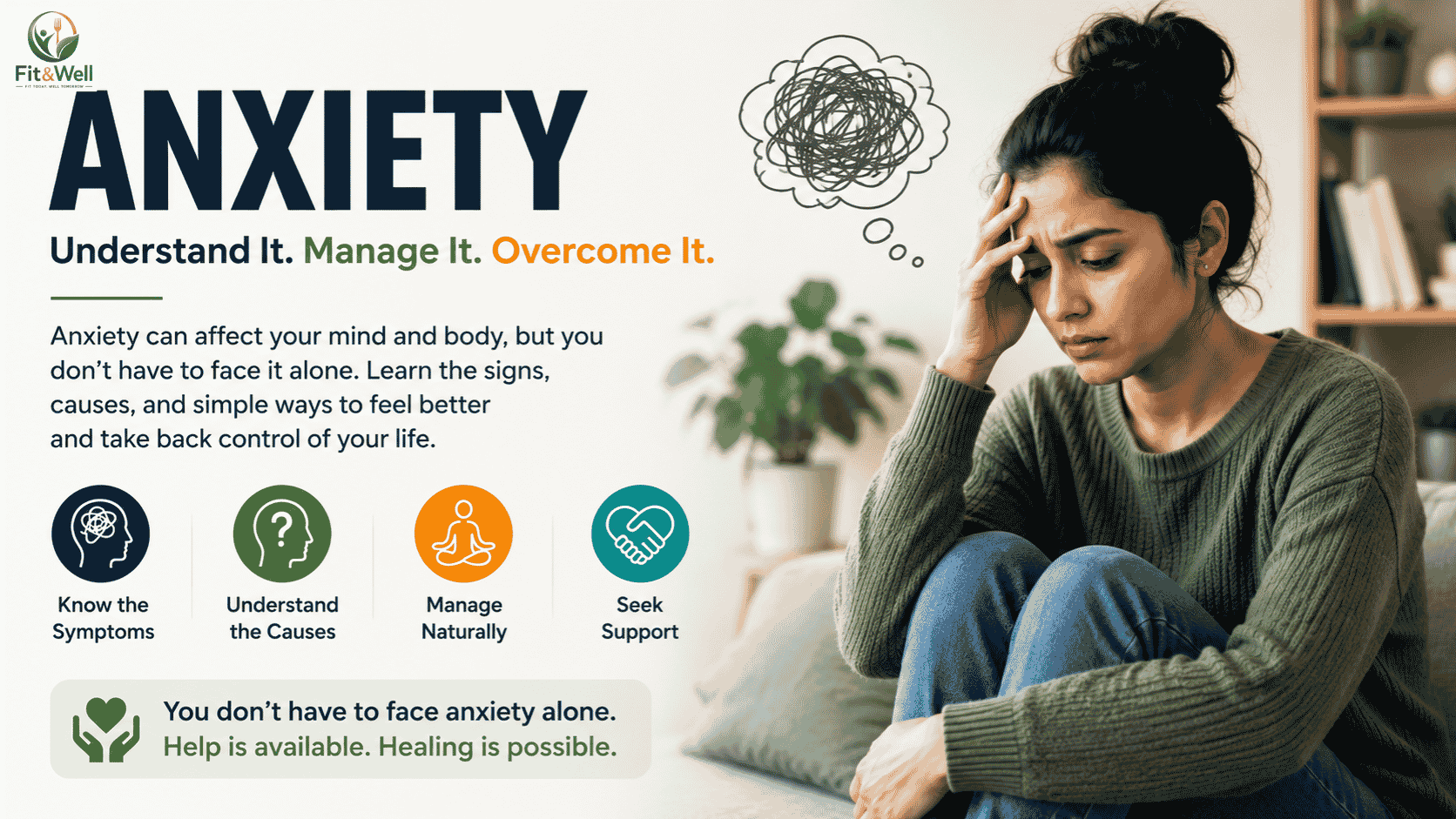
Feeling anxious before an exam, a job interview, or a major life event is a normal part of being human. But when anxiety becomes persistent, overwhelming, or starts interfering with daily life, it may signal an anxiety disorder that deserves attention and care.
Anxiety is one of the most common mental health concerns worldwide, affecting millions of people across all age groups. In India, growing academic pressure, demanding workplaces, financial uncertainty, relationship challenges, and the fast pace of modern life have made anxiety an increasingly important public health issue. Despite this, many people continue to suffer in silence due to stigma, lack of awareness, or uncertainty about where to seek help.
The good news is that anxiety is highly treatable. With the right understanding, coping strategies, and professional support when needed, most people can effectively manage their symptoms and lead fulfilling lives.
This guide explains what anxiety is, how it differs from everyday stress, its symptoms, causes, treatment options, and where to find help in India.
What Is Anxiety?
Anxiety is your body’s natural response to stress or perceived danger. It activates your “fight, flight, or freeze” response, preparing you to react to situations that require attention or action.
Feeling anxious occasionally is completely normal. For example, you may experience anxiety before:
- A job interview
- Public speaking
- College examinations
- Medical tests
- Financial decisions
- Important life events
In these situations, anxiety can actually improve focus and performance.
However, anxiety becomes a concern when it:
- Occurs frequently without a clear reason
- Persists for weeks or months
- Feels difficult to control
- Causes intense worry that disrupts daily life
- Affects work, studies, relationships, or physical health
When these symptoms are significant and persistent, they may indicate an anxiety disorder rather than everyday anxiety.
Anxiety: Some Statistics
The National Mental Health Survey executed by the National Institute of Mental Health and Neurosciences established a definitive baseline; roughly 10.6% of Indian adults require active clinical intervention for mental health conditions, a reality documented across the official epidemiological profiles within the National Mental Health Survey repository. Data published by The Lancet Psychiatry via the India State-Level Disease Burden Initiative corroborated this structural crisis.
Their data sets, preserved in the comprehensive IHME global burden of mental disorders across Indian states tracker, confirmed that over 44 million Indians concurrently navigate the exhausting, volatile terrain of clinical anxiety. The individual experiences behind these numbers are not distant anomalies. They are playing out inside overcrowded local trains in Mumbai, during midnight corporate calls in Bengaluru, and within the quiet, suffocating confines of traditional family drawing rooms across Delhi.
Anxiety vs. Stress: What’s the Difference?
Although people often use the terms interchangeably, stress and anxiety are not the same.
| Stress | Anxiety |
| Usually triggered by a specific situation | May occur even without an obvious trigger |
| Often ends once the stressful event passes | Can continue long after the situation ends |
| Temporary | May become chronic |
| Related to external pressures | Often involves persistent internal worry |
For example:
Stress may result from an approaching work deadline.
Anxiety may continue even after the project is completed, with ongoing fears about future performance or potential problems.
Common Symptoms of Anxiety
Anxiety affects the mind, body, emotions, and behaviour.
Emotional Symptoms
- Excessive or uncontrollable worrying
- Feeling restless or constantly “on edge”
- Irritability
- Difficulty relaxing
- Feeling overwhelmed
- Persistent fear that something bad will happen
Physical Symptoms
Many people are surprised that anxiety can cause physical symptoms.
Common signs include:
- Rapid heartbeat
- Chest tightness
- Shortness of breath
- Sweating
- Trembling or shaking
- Muscle tension
- Dizziness
- Nausea
- Stomach discomfort
- Headaches
- Fatigue
These symptoms can sometimes resemble other medical conditions, which is why persistent symptoms should be evaluated by a healthcare professional.
Cognitive Symptoms
- Racing thoughts
- Difficulty concentrating
- Constant overthinking
- Trouble making decisions
- Feeling mentally exhausted
Behavioural Symptoms
People experiencing anxiety may begin to:
- Avoid social situations
- Delay important tasks
- Seek frequent reassurance
- Withdraw from family or friends
- Experience changes in sleep or eating habits
What Causes Anxiety?
There is rarely a single cause. Anxiety usually develops through a combination of biological, psychological, and environmental factors.
Genetics
People with a family history of anxiety or other mental health conditions may have a higher risk.
Brain Chemistry
Neurotransmitters such as serotonin, dopamine, and gamma-aminobutyric acid (GABA) help regulate mood and emotions. Imbalances may contribute to anxiety disorders.
Personality
Individuals who naturally tend to worry, overthink, or strive for perfection may be more vulnerable.
Life Experiences
Traumatic events, abuse, neglect, grief, chronic illness, or major life transitions can increase the risk of anxiety.
Everyday Stressors
Common triggers include:
- Workplace pressure
- Academic competition
- Financial uncertainty
- Relationship conflicts
- Parenting responsibilities
- Health concerns
- Social media comparisons
Types of Anxiety Disorders
Anxiety disorders include several different conditions.
Generalised Anxiety Disorder (GAD)
Persistent and excessive worry about multiple aspects of life, often lasting six months or longer.
Panic Disorder
Characterised by recurring panic attacks—sudden episodes of intense fear accompanied by symptoms such as chest pain, dizziness, breathlessness, or a racing heart.
Social Anxiety Disorder
An intense fear of being judged, embarrassed, or criticised in social situations.
Specific Phobias
Extreme fear of a particular object or situation, such as heights, flying, injections, or animals.
Separation Anxiety Disorder
Although commonly associated with children, adults can also experience intense anxiety related to separation from loved ones.
Anxiety: Scientific Perspective
Living with anxiety in India is a strange trap. We live close together in big families and warm communities, yet this same closeness creates huge pressure. People constantly compare school marks. Workers face extreme stress and burnout at the office.
Society judges anyone who shows weakness, making people hide their pain. This kind of anxiety is far worse than simple everyday worry. It is a real medical state that changes how your brain works, speeds up your heart, and hurts your physical health.
Much of India’s wellness conversation stops at the surface. Breathing exercises and gratitude journals get treated as complete solutions, borrowed wholesale from Western self-help culture and dropped onto a very different set of pressures. That approach misses the real weight people carry here: joint-family expectations, exam-driven childhoods, salaries that don’t stretch, and a culture that still reads emotional struggle as personal failure.
A five-minute breathing technique cannot undo years of that pressure. It can help in the moment, but only alongside a fuller understanding of what’s actually driving the anxiety.