
Last reviewed: August 2026
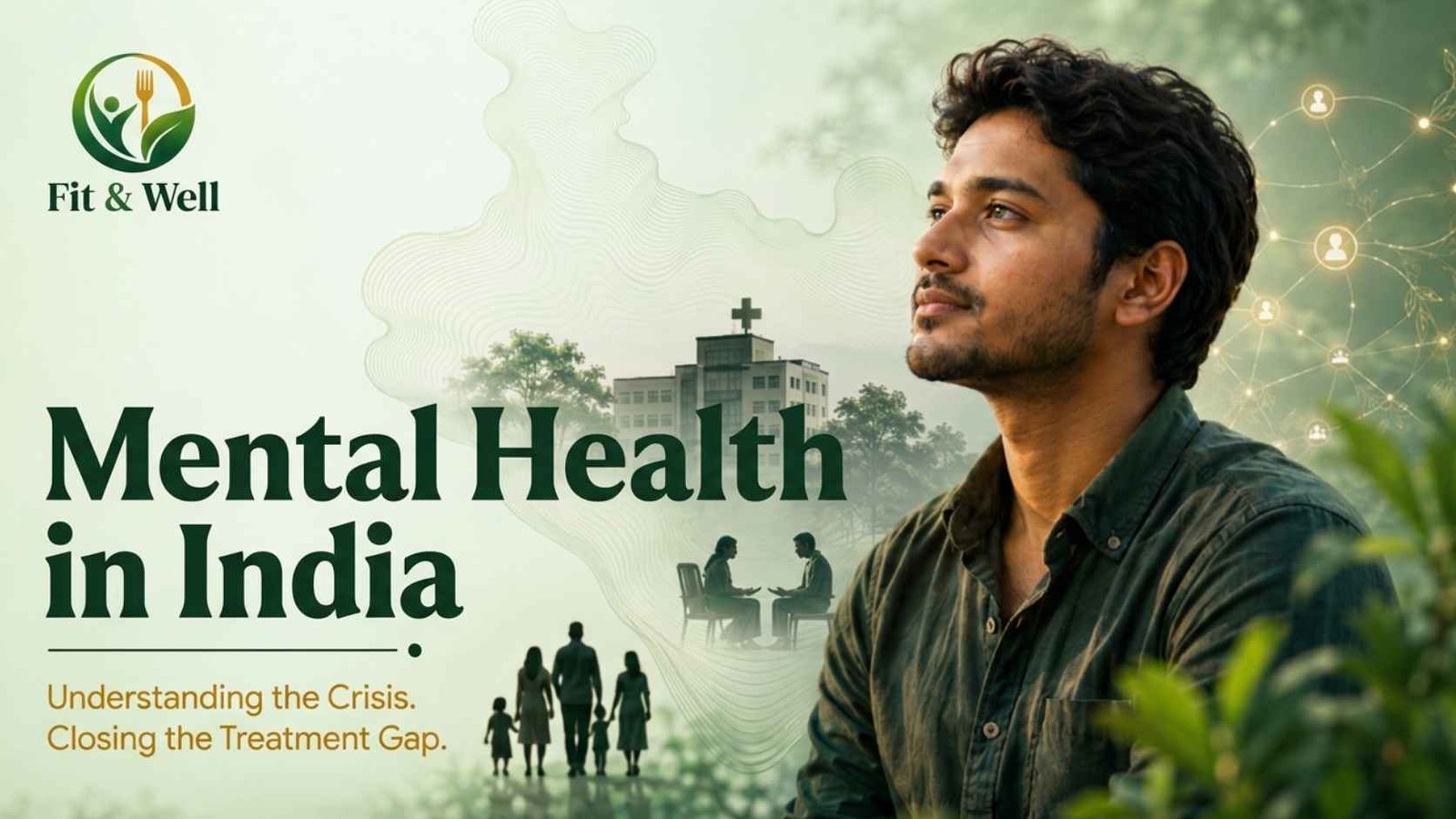
Mental health in India is a major public-health concern, but the country still lacks a regularly updated national prevalence survey. India’s main nationally representative study, conducted in 12 states during 2015–16, found that about one in ten adults had a current mental disorder and that approximately 84.5% of people with mental morbidity were not receiving adequate care.
These figures remain an important national baseline, but they should not be treated as an exact estimate of India’s mental-health situation in 2026. This article explains what the available data shows, why so many people do not receive treatment, what Indian law provides, and where people can find free mental-health support.
How common is mental illness in India?
The National Mental Health Survey of India was conducted by the National Institute of Mental Health and Neuro Sciences (NIMHANS) during 2015–16 across 12 states. It interviewed 34,802 people and remains India’s principal nationally representative survey of mental morbidity and treatment gaps.
The survey reported:
- Current mental morbidity among adults: 10.56%.
- Lifetime mental morbidity among adults: 13.67%.
- Estimated number of Indians requiring mental-health care: nearly 150 million, or approximately 15 crore people, based on the survey’s population estimates.
In simple terms, roughly one in ten adults met the survey’s criteria for a current mental-health condition, while nearly one in seven had experienced mental morbidity at some point in their life.
The most commonly reported categories were:
- Mental and behavioural problems related to psychoactive substance use.
- Mood disorders, including depressive and bipolar disorders.
- Neurotic and stress-related disorders, including anxiety conditions.
The reported prevalence of psychoactive-substance-use disorders was 22.44% among the relevant category estimates, followed by mood disorders at 5.61% and neurotic and stress-related disorders at 3.70%. These category figures should not be added together because individuals may have more than one condition and the categories use different survey denominators.
The survey found important differences by age, sex, education, income and location. Mental morbidity was generally higher among men, middle-aged adults, people with less formal education, lower-income households and residents of urban metropolitan areas.
A limitation of the data
NMHS 2015–16 is a historical baseline, not a 2026 prevalence estimate. It was nationally representative but did not cover every Indian state and union territory. Social conditions, public awareness, population structure, diagnostic practices and access to services may all have changed since the survey was conducted.
A second national survey, NMHS-2, has been conducted, and some updated mental-health workforce and programme figures are now available. However, the 2015–16 estimates should not be replaced or combined with newer figures until the relevant NMHS-2 prevalence results, methods and definitions are clearly published.
What is India’s treatment gap?
The treatment gap is the proportion of people with a mental-health condition who do not receive appropriate or adequate care.
NMHS estimated India’s overall treatment gap at 84.5%. In practical terms, fewer than one in six people with a mental disorder received some form of treatment or care. The gap varied by condition, but it was above 60% for almost every category except epilepsy.
The gap was approximately 85% for common mental disorders overall. The survey reported a treatment gap of about 85.2% for major depressive disorder and 84.0% for anxiety disorder, so it is more accurate to say that the gap was around 85% for these conditions rather than claiming that it exceeded 85% for both.
The treatment gap includes people who:
- Never contact a health professional.
- Seek help only after symptoms become severe.
- Receive inadequate or incomplete treatment.
- Consult informal providers without receiving evidence-based care.
- Stop treatment because of cost, distance, stigma or a lack of follow-up services.
The estimated figure of nearly 15 crore people needing care refers to mental morbidity identified through the survey’s definitions. It does not mean that every person had the same severity of illness or required specialist psychiatric treatment. Some people may have needed community-based support, counselling or primary-care treatment, while others may have required specialist or hospital care.
Why is the treatment gap so large?
India’s treatment gap results from several overlapping problems. A shortage of specialists is important, but it is not the only reason people remain untreated.
Shortage of mental-health professionals
India has approximately 0.75 psychiatrists per lakh population, according to parliamentary and policy reporting. Indian policy discussions commonly cite a benchmark of about three psychiatrists per lakh population. A Parliamentary Standing Committee report referred to approximately 9,000 psychiatrists in the country, compared with an estimated requirement of nearly 36,000.
Clinical psychologists, psychiatric social workers, psychiatric nurses and trained counsellors are also unevenly distributed. Mental-health services are concentrated in large cities, medical colleges and tertiary hospitals, while many rural and semi-urban areas have limited access to specialist care.
Training more psychiatrists is necessary, but it will not solve the problem by itself. India also needs stronger primary-care services, community mental-health teams, rehabilitation workers, crisis services, supervision systems and referral pathways.
Limited and difficult-to-measure public funding
Mental-health funding is distributed across several programmes, institutions and ministries, which makes comparisons difficult. In a 2025–26 parliamentary reply, the Ministry of Health and Family Welfare reported ₹1,180 crore earmarked for mental health, approximately 1.18% of its total budget.
Figures may differ when estimates include autonomous mental-health institutions, medical education, district programmes, insurance schemes or allocations under other ministries. Any budget comparison should therefore specify:
- The financial year.
- The ministry or department included.
- Whether the figure covers direct mental-health programmes only.
- Whether capital and institutional spending are included.
Even with these qualifications, public investment remains small compared with the population requiring care and the infrastructure needed to implement the Mental Healthcare Act.
Unequal access between cities and districts
Specialist services are concentrated in metropolitan areas and major government hospitals. People living in smaller towns and villages may have to travel long distances for psychiatric consultations, psychological assessments or hospital admission.
This creates additional costs involving transport, lost wages, accommodation and repeated visits. Women, older adults, people with disabilities, socially marginalised communities and people living in poverty may face further barriers.
Stigma and low awareness
Many people delay treatment because they fear being judged, labelled or excluded. Families may interpret depression, addiction, psychosis or severe anxiety as a character defect, spiritual problem or lack of willpower rather than a health condition.
Stigma can also affect people after they begin treatment. Concerns about marriage, employment, education, insurance, confidentiality and family reputation may lead individuals to hide symptoms or discontinue care.
Cost and continuity of care
A first consultation is not the only expense. Medicines, follow-up appointments, tests, travel and hospitalisation can make long-term treatment unaffordable. Public services may be free or subsidised, but availability, waiting times and continuity vary considerably between locations.
Which mental-health conditions are common?
NMHS grouped mental morbidity into broad diagnostic categories. The most prominent categories included substance-use disorders, mood disorders and neurotic and stress-related disorders. The survey also examined conditions such as:
- Major depressive disorder.
- Bipolar affective disorder.
- Generalised anxiety disorder.
- Panic disorder.
- Social anxiety disorder.
- Post-traumatic stress disorder.
- Schizophrenia and other psychotic disorders.
- Epilepsy and related neurological conditions.
These conditions differ in symptoms, severity, causes, treatment and risk. A person should not use prevalence statistics to diagnose themselves or another person. Persistent changes in mood, sleep, appetite, concentration, behaviour, substance use or functioning warrant discussion with a qualified health professional.
Suicide and mental-health crisis
Suicide is associated with mental illness, acute psychological distress and a range of social, economic, interpersonal and health-related factors. It should not be explained as the inevitable result of untreated mental illness.
The National Crime Records Bureau recorded 1,70,924 suicides in India in 2022, with a reported suicide rate of 12.4 per lakh population. NCRB figures are based on registered reports and may not capture every death accurately because suicide remains under-reported or misclassified in some settings.
If someone is in immediate danger, has attempted suicide, has seriously self-harmed, has overdosed or cannot remain safe, call 112 or go to the nearest hospital emergency department. Do not leave the person alone.
What does Indian law say?
The Mental Healthcare Act, 2017 replaced the Indian Lunacy Act, 1912, and introduced a rights-based framework for mental healthcare. It came into force on 29 May 2018.
Section 18 recognises the right to access affordable, good-quality and geographically accessible mental healthcare and treatment from services run or funded by the appropriate government.
The Act also protects the:
- Dignity and autonomy of people with mental illness.
- Right to confidentiality.
- Right to access medical records, subject to the law.
- Right to community living.
- Right to legal aid.
- Right to protection from cruel, inhuman or degrading treatment.
- Rights relating to advance directives and nominated representatives.
Section 31 directs the appropriate governments to make efforts to meet internationally accepted staffing guidelines within ten years of the Act’s commencement. This is better understood as a statutory duty to work towards adequate human resources, not as proof that the staffing target has already been achieved.
The Act also decriminalised attempted suicide in most circumstances by creating a presumption of severe stress, while placing a duty on the government to provide care, treatment and rehabilitation to people who attempt suicide.
Implementation remains uneven. The law establishes rights and responsibilities, but effective implementation depends on state-level funding, trained personnel, mental-health establishments, community services and accessible grievance mechanisms.
What is India doing to close the gap?
National Mental Health Programme
The National Mental Health Programme supports the development of mental-health services within the public-health system. Its district-level component aims to provide basic mental-health services through district hospitals, community-health centres and primary-care structures.
The model is important because most people cannot access a tertiary psychiatric hospital. Integrating mental-health care with general healthcare can make screening, referral, medicines and follow-up more accessible.
Tele-MANAS
Tele-MANAS is the government’s national tele-mental-health service, launched on 10 October 2022. It can be reached at:
- 14416
- 1800-89-14416
According to a Ministry of Health and Family Welfare update, as of 2 February 2026, 53 Tele-MANAS cells had been established across all 36 states and union territories. The service was available in 20 languages and had handled more than 32.84 lakh calls since its launch.
Tele-MANAS can provide an accessible first point of contact, emotional support, information, counselling and referral. A helpline cannot replace emergency medical treatment, ongoing psychotherapy or specialist psychiatric care when those services are required.
The number of calls demonstrates substantial demand for low-cost, low-stigma support. However, call volume alone does not establish that long-term treatment outcomes or continuity of care have improved.
Medical college and workforce expansion
The government has also supported additional psychiatry training capacity, upgrades to mental-health institutions and expansion of district-level services. These measures may improve specialist availability over time, but workforce growth must be accompanied by better distribution, retention in underserved areas and investment in non-specialist mental-health workers.
Why does stigma stop people seeking help?
Stigma can operate at several levels:
- Personal stigma: Believing that needing help reflects weakness.
- Family stigma: Fearing that a diagnosis will affect marriage, employment or social standing.
- Institutional stigma: Experiencing discrimination in schools, workplaces, hospitals or public services.
- Self-stigma: Internalising negative beliefs after receiving a diagnosis.
In India, stigma and misinformation can discourage people from recognising symptoms, discussing emotional distress or contacting a mental-health professional. Research has linked poor awareness, discriminatory attitudes and fear of judgement with delayed help-seeking and reduced use of mental-health services.pmc.ncbi.nlm.nih+1
Depression and anxiety may be especially likely to remain untreated because people often dismiss them as ordinary stress or a failure to cope. At the same time, severe mental disorders may be hidden because families fear social exclusion, discrimination or damage to their reputation.
A supportive response does not require diagnosing someone. It can begin with a simple statement such as:
“I have noticed that you have not seemed like yourself lately. Would you like to talk about what has been happening?”
Listen without judgement, avoid forcing disclosure and encourage professional help when symptoms persist, worsen or interfere with daily life.
For a detailed guide to recognising mental-health stigma, starting difficult conversations and supporting someone afraid to seek help, read our guide: Understanding and Overcoming Mental Health Stigma in India.
If someone is in immediate danger, has attempted suicide, has seriously self-harmed, has overdosed or cannot remain safe, call 112 or go to the nearest hospital emergency department. Do not leave the person alone.
Frequently asked questions
How many people in India have a mental illness?
The NMHS found current mental morbidity among 10.56% of adults and lifetime mental morbidity among 13.67% of adults. It estimated that nearly 150 million Indians required mental-health care at the time of the survey. These are 2015–16 estimates, not exact 2026 figures.
What is India’s mental-health treatment gap?
NMHS estimated the overall treatment gap at 84.5%. This means that fewer than one in six people with mental morbidity received adequate care. The treatment gap was approximately 85% for common mental disorders overall.
How many psychiatrists are there in India?
Parliamentary and policy sources have cited approximately 9,000 psychiatrists, equivalent to about 0.75 psychiatrists per lakh population. Indian policy discussions commonly use three psychiatrists per lakh as a benchmark.
What does the Mental Healthcare Act, 2017 guarantee?
The Act recognises a right to access affordable, good-quality and geographically accessible mental healthcare. It also protects dignity, autonomy, confidentiality, community living and other rights of people with mental illness.
Is Tele-MANAS free?
Tele-MANAS is a government-run telephone mental-health service available at 14416 and 1800-89-14416. It is intended to provide accessible support, counselling and referral. Confirm current language availability and service details through the official Tele-MANAS portal before publication.
Why do many Indians avoid treatment?
The main barriers include stigma, lack of awareness, cost, distance, shortage of professionals, fear of discrimination, inadequate follow-up and limited availability of services outside major cities.
Where to get mental-health help in India
Verify all numbers and operating hours immediately before publication because helpline services can change.
Tele-MANAS
Phone: 14416 or 1800-89-14416
Availability: Government tele-mental-health support; service availability and language coverage may vary by programme update.
Website: Tele-MANAS official portal
Vandrevala Foundation
Phone or WhatsApp: +91 9999 666 555
Availability: Free crisis and mental-health support, listed by the foundation as available 24/7.
Website: Vandrevala Foundation
iCALL, Tata Institute of Social Sciences
Phone: +91 9152 987 821
Availability: Monday to Saturday, 10 a.m. to 8 p.m.
Website: iCALL
KIRAN helpline
Phone: 1800-599-0019
This number and its current operating status should be confirmed through the latest official Department of Social Justice and Empowerment information before publication.
Immediate emergency
If there is immediate danger, serious self-harm, a suicide attempt, overdose or another medical emergency:
- Call 112.
- Go to the nearest hospital emergency department.
- Stay with the person and remove immediate means of harm if it is safe to do so.
- Contact a trusted family member, friend or caregiver.
You do not need a formal diagnosis to ask for help. Reaching out early can make it easier to access support before a situation becomes a crisis.
Further reading and sources
- National Mental Health Survey of India, 2015–16: Summary, NIMHANS
- National Mental Health Survey: Prevalence, socio-demographic correlates and treatment gap
- National Mental Health Survey results, NIMHANS
- Mental Healthcare Act, 2017, India Code
- Tele-MANAS, Ministry of Health and Family Welfare
- Accidental Deaths and Suicides in India, NCRB 2022
This article provides general information and does not replace assessment or treatment by a qualified mental-health professional.