
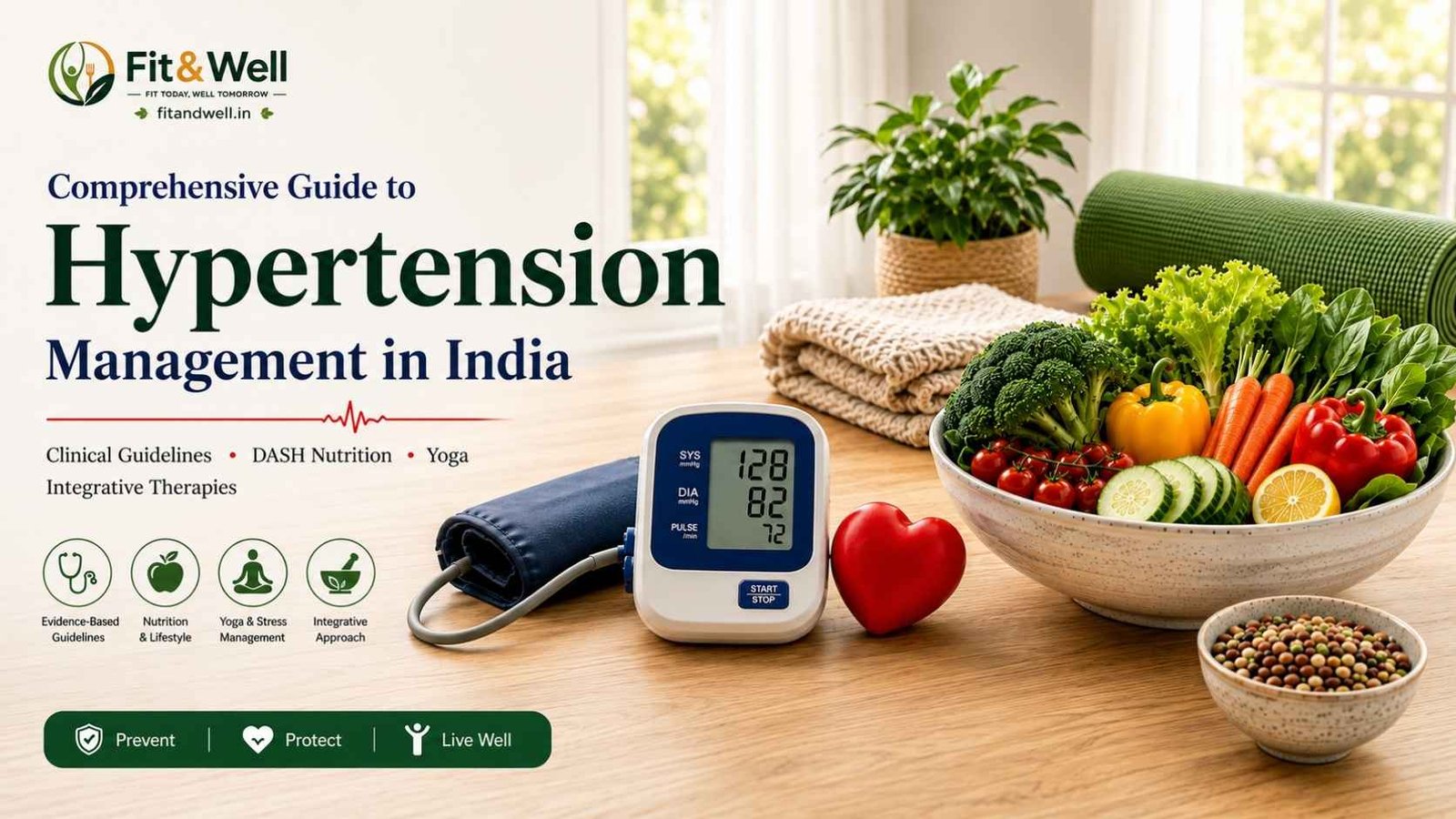
Hypertension Management in India has become a major public health priority as millions of adults are living with high blood pressure. Early diagnosis, lifestyle changes, and evidence-based treatment can significantly reduce the risk of heart disease, stroke, and kidney complications.
Hypertension, or high blood pressure, is a growing health crisis in India, affecting nearly one in three adults. Often called the “silent killer”, it leads to severe complications like heart disease, stroke, and kidney failure if left untreated. This guide provides practical, evidence-based strategies for ypertension Management in India
Clinical Guidelines, DASH Nutrition, Yoga & Integrative Therapies for Hypertension Management in India
Before you read on: This guide mixes prescription drug information, dietary guidance, breathing exercises, and herbal supplements. None of it replaces individualized medical advice — always consult a qualified physician before starting, stopping, or changing any treatment. Throughout this guide, we’ve tried to flag the strength of evidence behind each claim: clinical/peer-reviewed evidence (drug protocols, DASH targets, yoga meta-analyses), traditional practice with limited modern trial data (most Ayurvedic herbs), and single-source or anecdotal material (e.g., one instructor’s routine), so you can weigh each section accordingly.
Executive Summary & Epidemiological Context on
Hypertension (high blood pressure) is the leading modifiable risk factor for cardiovascular disease, stroke, and premature death in India. Drawing on data from the Indian Council of Medical Research (ICMR), the Ministry of Health and Family Welfare (MoHFW), and the India Hypertension Control Initiative (IHCI), the scale of the problem breaks down as follows:
| Metric | Figure |
|---|---|
| Prevalence | Roughly 1 in 4 Indian adults (~25%) has hypertension |
| Awareness gap | National surveys put awareness anywhere from 27% to under half of hypertensives — a large share don’t know they have it |
| Control rate | Only about 1 in 10 (10%) hypertensive Indians have their blood pressure controlled below 140/90 mmHg |
India’s 2025 NCD Targets
Aligned with the WHO Global Monitoring Framework, India’s national targets are:
- A 25% relative reduction in the prevalence of raised blood pressure
- A 25% relative reduction in overall cardiovascular disease mortality
- A 30% relative reduction in mean population salt intake (target: <5 g/day)
This guide brings together official Indian clinical protocols, an India-adapted DASH diet, evidence-based yoga and pranayama practices, and a safety framework for commonly used Ayurvedic herbs.
1. ICMR Diagnostic Criteria & Treatment Workflow
1.1 Diagnosis & Classification
A diagnosis of hypertension requires elevated readings on at least two separate visits — unless the initial reading is already severe (SBP ≥160 mmHg or DBP ≥100 mmHg), in which case one visit is sufficient.
Hypertension is diagnosed when: Systolic BP (SBP) ≥ 140 mmHg and/or Diastolic BP (DBP) ≥ 90 mmHg
| Category | Systolic (mmHg) | Diastolic (mmHg) | Recommended Action | |
|---|---|---|---|---|
| Normal | <120 | AND | <80 | Annual re-check; reinforce lifestyle advice |
| Elevated / Prehypertension | 120–139 | AND/OR | 80–89 | Lifestyle modification; re-evaluate in 3–6 months |
| Stage 1 Hypertension | 140–159 | AND/OR | 90–99 | Lifestyle modification + first-line monotherapy |
| Stage 2 Hypertension | 160–179 | AND/OR | 100–109 | Prompt initiation of dual-drug therapy |
| Hypertensive Crisis (Stage 3) | ≥180 | AND/OR | ≥110 | Immediate emergency evaluation and referral |
If SBP and DBP fall into different categories, the higher category determines management.
1.2 Target Blood Pressure Goals
Targets vary by patient risk profile:
- General adults (<65 years): SBP <140 and DBP <90 mmHg (optimal: <130/80 if well tolerated)
- High-risk groups (diabetes, chronic kidney disease, established CVD): SBP <130 and DBP <80 mmHg
- Elderly (≥80 years): SBP <150 and DBP <90 mmHg
- Orthostatic check: Standing vs. sitting BP should be assessed at every visit in patients ≥65 years to catch postural hypotension
1.3 Red-Flag Signs: When to Seek Emergency Care
If blood pressure ≥180/110 mmHg is accompanied by any of the following, this is a hypertensive emergency requiring immediate medical attention:
- Neurological: Sudden severe headache, confusion, seizures, or stroke-like symptoms
- Cardiovascular: Chest pain (possibly radiating to arm/back), breathlessness, swelling in the legs
- Ocular: Sudden vision loss or blurred vision
- Renal: Very low urine output, blood in urine, rapidly worsening kidney function
- Obstetric: In pregnancy, BP ≥140/90 mmHg plus protein in urine or swelling (possible pre-eclampsia)
1.4 First-Line Medications (ICMR / IHCI Protocol)
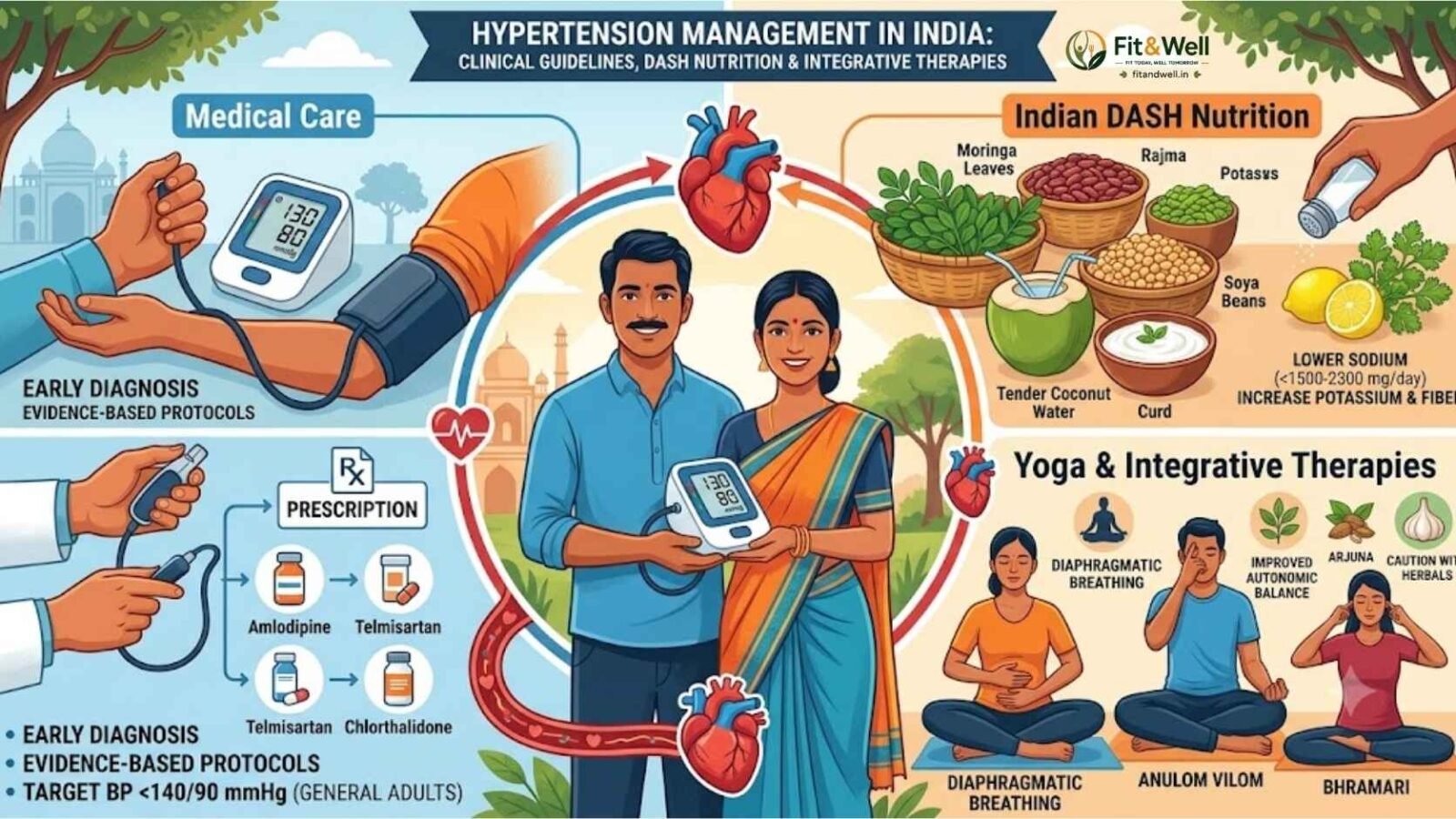
India’s public-sector hypertension programs — including the IHCI drug- and dose-specific treatment protocol — are typically built around amlodipine, telmisartan, and chlorthalidone or a similar diuretic, escalated in a stepwise fashion.
| Drug Class | Typical Agents & Dosing | Key Indications | Main Contraindications | Common Side Effects |
|---|---|---|---|---|
| ARB | Telmisartan 20–80 mg OD | Diabetes, CKD, heart failure | Pregnancy, bilateral renal artery stenosis | Hyperkalemia, dizziness |
| ACE Inhibitor | Enalapril 5–40 mg; Ramipril 2.5–10 mg | Post-MI, diabetes, LV dysfunction | Pregnancy, prior angioedema | Dry cough, hyperkalemia |
| CCB | Amlodipine 2.5–10 mg OD | Elderly, isolated systolic HTN | Severe aortic stenosis | Ankle swelling, flushing |
| Thiazide Diuretic | Chlorthalidone 12.5–25 mg; HCTZ 12.5–25 mg | Elderly, heart failure risk | Gout, severe hyponatremia | Low potassium/sodium |
| Beta-Blocker | Metoprolol 50–100 mg; Nebivolol 2.5–10 mg | Post-MI, angina, arrhythmia | Asthma, heart block | Fatigue, cold extremities |
| Aldosterone Antagonist | Spironolactone 25 mg OD | Resistant hypertension | Severe renal impairment | Hyperkalemia, gynecomastia |
Medication choice and dosing should always be individualized by a treating physician — this table is a reference, not a prescription.
2. The Indian DASH Diet Blueprint
The DASH (Dietary Approaches to Stop Hypertension) eating plan, adapted for Indian food patterns, centres on cutting sodium while boosting potassium, magnesium, and calcium.
2.1 Daily Targets
- Sodium: Under 1,500–2,300 mg/day (roughly ½–1 level teaspoon of salt)
- Potassium: At least 3,500 mg/day from food (unless kidney function is significantly impaired)
- Fibre: 30 g/day or more, from whole grains, pulses, and vegetables
2.2 Potassium-Rich Indian Foods
Potassium-dense foods help lower vascular resistance and support sodium excretion. Approximate values per 100 g:
| Food | Approx. Potassium (mg/100g) |
|---|---|
| Drumstick leaves (Moringa) | ~600+ |
| Rajma (kidney beans, raw) | ~500–600 |
| Soya beans | ~500 |
| Amaranth leaves (Chaulai) | ~450–500 |
| Spinach (Palak) | ~450 |
| Tender coconut water (200 ml) | ~400–500 |
| Sweet potato | ~300–350 |
| Banana (1 medium) | ~350 |
| Low-fat yogurt/curd | ~250–300 |
Other good sources by category:
- Greens: Moringa, amaranth, spinach, fenugreek (methi), radish greens
- Pulses: Rajma, chana, moong dal, masoor dal
- Vegetables/tubers: Sweet potato, yam, raw banana, ridge gourd, bottle gourd
- Fruits: Coconut water, banana, guava, pomegranate, orange, muskmelon
- Nuts/seeds: Flaxseeds, chia seeds, pumpkin seeds, unsalted roasted chana, almonds, walnuts
(Values are approximate and vary by variety, ripeness, and preparation — the Indian Food Composition Tables 2017 from the National Institute of Nutrition is the authoritative source for precise figures.)
2.3 Cutting Hidden Salt
| High-Sodium Traps to Avoid | Healthy Flavour Substitutes |
|---|---|
| Commercial pickles (achar) | Fresh lemon/lime juice |
| Papads and fryums | Raw mango powder (amchur) |
| Packaged namkeens & bhujia | Pomegranate seed powder (anardana) |
| Bottled sauces & chutneys | Tamarind paste (imli) |
| Bakery biscuits, toast, khari | Fresh coriander, mint, curry leaves |
| Processed cheese & butter | Cumin, mustard, and ajwain seeds |
2.4 Sample 7-Day Indian DASH Meal Plan
This plan aims to keep sodium under ~1,500 mg/day, potassium above ~3,500 mg/day, and calories around 1,400–1,600 kcal/day.
| Day | Breakfast | Lunch | Evening Snack | Dinner |
|---|---|---|---|---|
| Mon | Oats vegetable upma + skimmed milk | Multigrain roti + rajma curry + steamed lauki + low-fat curd | Green tea + roasted makhana | Vegetable khichdi + cucumber salad |
| Tue | Ragi idlis + low-salt coconut chutney | Brown rice + moong dal + low-fat palak paneer + tomato salad | Coconut water + almonds | Jowar roti + mixed veg sabzi + dal |
| Wed | Methi missi roti + curd | Bajra roti + lobia + turai sabzi + curd | Chamomile tea + roasted chana | Grilled tofu/paneer tikka + green salad |
| Thu | Moong dal cheela with spinach + mint chutney | Brown rice + fish curry or chana masala + bhindi | Apple/guava + pumpkin seeds | Multigrain roti + baingan bharta + arhar dal |
| Fri | Vegetable poha with peanuts & lemon | Jowar roti + sprouts curry + methi-aloo + low-fat chaas | Roasted kurmura with cucumber & tomato | Steamed dalia pilaf + cucumber raita |
| Sat | Vegetable oats chilla + curd | Brown rice + light dal makhani + palak sabzi | Lemon water + walnuts | Ragi roti + soya chunk curry + salad |
| Sun | Whole wheat paneer paratha (unsalted dough) | Multigrain roti + lean chicken curry or kadai paneer + salad | Herbal tea + fruit salad | Homemade veg soup (no added salt) + oats roti + lauki chana dal |
3. Yoga & Pranayama for Blood Pressure
3.1 What the Evidence Shows
A 2025 systematic review and meta-analysis of 30 randomised controlled trials found that yoga meaningfully lowers systolic and diastolic blood pressure compared with waitlist controls, likely through reduced sympathetic activity and improved parasympathetic (vagal) tone. The authors note the certainty of evidence is still low, and larger, higher-quality trials are needed — but the direction of effect has been consistent across multiple independent reviews.
3.2 A 15-Minute Daily Follow-Along Routine
This five-part sequence — based on a popular follow-along pranayama routine by yoga trainer Saurabh Bothra — can be done seated comfortably (Sukhasana or Padmasana) with a straight spine.
| Time | Practice | Focus |
|---|---|---|
| 0–3 min | Diaphragmatic (abdominal) breathing | Parasympathetic activation |
| 3–6 min | Anulom Vilom (alternate nostril breathing) | Autonomic balance |
| 6–9 min | Bhramari (humming bee breath) | Nitric oxide release, calming |
| 9–12 min | Sheetali/Sheetkari (cooling breath) | Lowering anxiety response |
| 12–15 min | Physiological sigh (double inhale, slow exhale) | Acute stress and BP reduction |
3.3 Step-by-Step Instructions
- Diaphragmatic breathing (3 min): Place a hand on your belly. Inhale slowly through the nose, letting the stomach rise; exhale slowly, letting it fall. Aim for a roughly 4-second inhale and 6-second exhale. This stimulates the vagus nerve and can slow the heart rate.
- Anulom Vilom / Nadi Shodhana (3 min): Close the right nostril with your thumb and inhale through the left. Close the left nostril with your ring finger, release the thumb, and exhale through the right. Then inhale right, exhale left. This alternating pattern is thought to help balance sympathetic and parasympathetic activity.
- Bhramari Pranayama (3 min): Place your index fingers gently on the tragus (the small cartilage flap in front of your ear canal). Inhale deeply, then make a continuous low humming sound on a slow exhale. A well-known 2002 study in the American Journal of Respiratory and Critical Care Medicine found that humming increases nasal nitric oxide roughly 15-fold compared with quiet exhalation, and nitric oxide is a known vasodilator.
- Sheetali / Sheetkari (3 min): Roll your tongue into a tube and inhale through it; close your mouth and exhale slowly through the nose. (If you can’t roll your tongue, inhale through clenched teeth instead — this is Sheetkari.) This is generally described as a calming, cooling practice.
- Physiological sigh (3 min): Take a deep inhale through the nose, followed immediately by a second short “top-up” inhale, then a long, relaxed exhale through the mouth. This double-inhale pattern helps offload CO₂ and can quickly lower heart rate and stress.
Important: Yoga and pranayama are complementary practices, not replacements for prescribed medication. Never stop or change antihypertensive drugs without talking to your doctor first.
For guided routines, workout plans, and more fitness content to pair with a heart-healthy lifestyle, browse Fit&Well India’s fitness section.
4. Ayurvedic Herbs: Benefits & Safety Cautions
Several Ayurvedic botanicals have documented cardiovascular effects — but they can also interact with prescription medication, so they should only be used under medical supervision.
| Herb | Primary Action | Caution |
|---|---|---|
| Arjuna (Terminalia arjuna) | Cardioprotective, mild inotropic effect | Can add to the effect of beta-blockers |
| Sarpagandha (Rauwolfia serpentina) | Central sympatholytic (contains reserpine) | High risk — linked to depression, peptic ulcers, bradycardia |
| Ashwagandha (Withania somnifera) | Lowers cortisol, calming | Can amplify sedatives and antihypertensives |
| Brahmi (Bacopa monnieri) | Neuroprotective, calming | Mild bradycardia risk |
| Lahsuna / Garlic (Allium sativum) | Boosts nitric oxide, mild vasodilator | Increases bleeding risk with blood thinners |
| Shankhpushpi (Convolvulus pluricaulis) | Central nervous system sedative | Can lower phenytoin levels |
| Jatamansi (Nardostachys jatamansi) | Calcium-channel-blocking activity | Additive hypotensive effect |
4.1 Herbs Worth Flagging in Detail
- Sarpagandha contains reserpine, which depletes catecholamines from nerve endings. It has a genuinely high-risk profile — historical use has been linked to severe depression and bradycardia — and should never be self-administered.
- Ashwagandha can affect thyroid hormone levels and may cause excess sedation if combined with CNS depressants.
- Garlic (Lahsuna) has an antiplatelet effect and is generally advised to be stopped 1–2 weeks before elective surgery.
5. India’s Primary-Care Hypertension System (IHCI)
The India Hypertension Control Initiative is a joint effort by MoHFW, ICMR, state governments, WHO India, and Resolve to Save Lives, aiming to standardise hypertension care at the primary care level across 100+ districts.
5.1 The Continuum of Care
- Screening — Community or facility-level BP checks
- Diagnosis & protocol drugs — Standardised ICMR-style treatment steps
- Registration — Patients are enrolled with a BP tracking card/app record
- Uninterrupted drug refills — 30–60 day medication supply
- Follow-up visits — Regular nurse/health-worker check-ins
- Quarterly evaluation — Tracking against the <140/90 mmHg control target
5.2 Key Monitoring Tools
- A patient-held BP tracking card linked to a digital record for quick history retrieval by health workers
- Facility-level hypertension registers to track follow-ups and drop-off
- Quality indicators such as the quarterly control rate (share of patients reaching <140/90 mmHg within 3–6 months) and the annual coverage rate (share of estimated hypertensive people in a catchment area who are enrolled and controlled)
Key Takeaways
- Screen early — routine BP checks for all adults 18+ at every health facility visit
- Follow standardised protocols — e.g., amlodipine ± telmisartan combinations per ICMR/IHCI treatment steps
- Adopt the Indian DASH diet — cut salt below 5 g/day and lean on Moringa, rajma, curd, and coconut water for potassium
- Practice daily pranayama — even 15 minutes of structured breathing (Bhramari, Anulom Vilom, diaphragmatic breathing) has measurable benefits
- Be cautious with herbal supplements — especially Sarpagandha — and never substitute them for prescribed medication without medical guidance
This guide is for general educational purposes and does not replace individualised medical advice. Please consult a qualified physician for diagnosis and treatment decisions.