
What Is PCOS?
PCOS stands for polycystic ovary syndrome. It is a hormonal and metabolic condition that affects how a woman’s ovaries work. In a typical menstrual cycle, the ovaries release one mature egg roughly once a month, a process called ovulation, which is regulated by a careful balance of hormones.
In PCOS, this hormonal balance becomes disrupted. The ovaries may produce too many androgens, hormones that are present in all women but usually at lower levels. Higher androgen levels can interfere with egg development and ovulation. As a result, eggs may not mature or be released regularly.
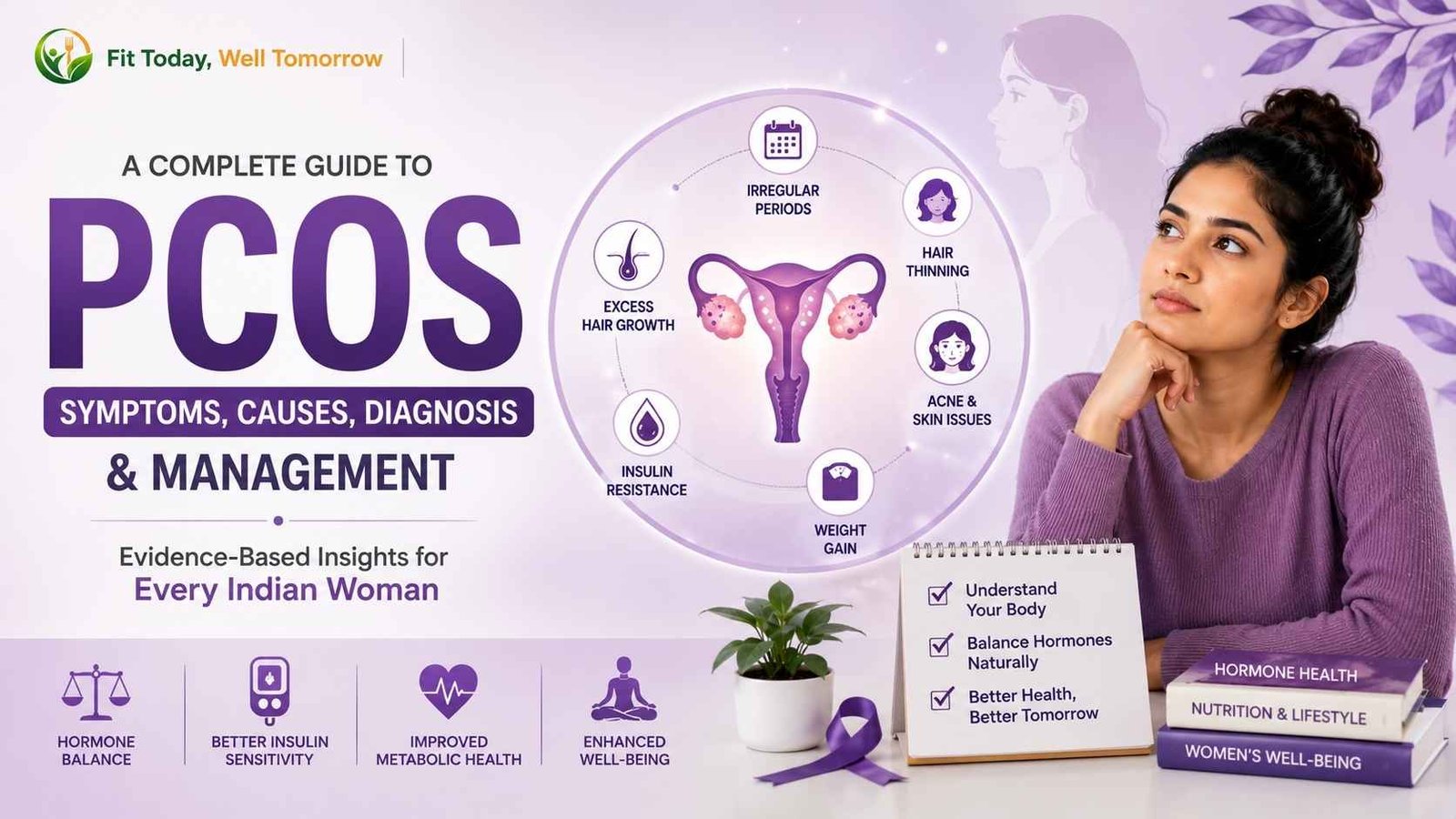
The hormonal changes in PCOS can cause several noticeable symptoms. Periods may become irregular, less frequent, or stop altogether. Some women also develop persistent acne, excess hair growth on the face, chest or abdomen, or thinning hair on the scalp. Weight gain, especially around the abdomen, is also common.
PCOS affects more than the reproductive system. It can also change how the body handles insulin, blood sugar and fat. As a result, the condition can increase the risk of diabetes and heart problems. These metabolic effects make PCOS a long-term health concern, not just a condition linked to periods and fertility
PCOS is common among women of reproductive age worldwide. It is the most common hormonal disorder in this group. In India, it affects roughly 1 in 10 to 1 in 5 women, depending on the diagnostic criteria used. This guide explains why these estimates differ.
Despite its prevalence, PCOS remains poorly understood. Many women receive a diagnosis late or are misdiagnosed. This guide explains what PCOS is, what causes it, how doctors diagnose it in India, and what the evidence supports for managing the condition.
Quick facts on PCOS in India
- Affects an estimated 4 to 22 per cent of Indian women of reproductive age, depending on region and diagnostic criteria, according to the Indian Journal of Medical Research.
- Around 70 per cent of PCOS cases globally are thought to go undiagnosed, per reporting from Think Global Health.
- Depression affects roughly 55 per cent and anxiety around 51 per cent of Indian women with PCOS, the highest pooled rates recorded among the countries reviewed in a 2025 meta-analysis.
- PCOS cannot be cured, but menstrual regularity, fertility, skin and hair symptoms, and metabolic risk can all be actively managed.
PCOD vs PCOS: Are They the Same Thing?
Not quite, though the two terms are used interchangeably across Indian clinics, pharmacies, and everyday conversation, which is a major source of public confusion.
PCOD (polycystic ovarian disease) is a term used mainly in India and a handful of other countries. It describes a condition where the ovaries release immature or partially mature eggs, which can develop into cysts over time, alongside a broader hormonal imbalance. PCOD is generally considered a milder, largely lifestyle-related condition that tends to respond well to diet and exercise changes, and it does not always stop ovulation completely.
PCOS (polycystic ovary syndrome) is the internationally recognised medical diagnosis, used in clinical research and guidelines worldwide. It describes a more complex endocrine and metabolic disorder that affects the whole body, not only the ovaries, and it carries a materially higher risk of insulin resistance, type 2 diabetes, and cardiovascular disease than PCOD.
PCOS and PCOD share some similar features, but they are not the same diagnosis. A woman with PCOD may not meet the clinical criteria for PCOS.
If a doctor uses either term, ask which diagnostic criteria led to the diagnosis. This matters because PCOS can affect metabolic health. Your doctor may also decide whether you need tests such as a glucose tolerance test or lipid profile.
A Name Change Worth Knowing About: From PCOS to PMOS
In May 2026, something genuinely significant happened in how this condition is understood worldwide, and it is worth knowing about even though it will not immediately change what your doctor in India calls it.
A global consensus process, published in The Lancet and led by researchers including Professor Helena Teede at Monash University, formally recommended renaming PCOS to polyendocrine metabolic ovarian syndrome, or PMOS.
This was not a casual rebranding. It followed a multi-year process involving 56 leading academic, clinical, and patient organisations worldwide, iterative global surveys that gathered responses from more than 14,360 people living with the condition and health professionals across every world region, and formal consensus-building methods. The condition affects an estimated 1 in 8 women globally, more than 170 million people, which is part of why the renaming process was taken so seriously.
The reasoning behind the change is straightforward once you hear it: the old name centres on ovarian cysts, but the “cysts” seen on an ultrasound in PCOS are not actually cysts in the medical sense. They are small, immature ovarian follicles that never fully developed, and they are neither required for diagnosis nor the condition’s main danger. The researchers behind the renaming argued that the old name obscured the condition’s real, diverse endocrine and metabolic features, and had contributed for decades to delayed diagnosis, fragmented care, and stigma. The new name is intended to fix that by explicitly naming what actually matters: the endocrine system, the metabolic system, and the ovaries together.
This is a very recent development, and the global transition is expected to take years. Existing clinical diagnostic guidance still runs on the 2023 International Evidence-Based Guideline for PCOS, and Indian clinics, textbooks, and lab reports will continue using PCOS and PCOD for the foreseeable future. It is worth knowing the new terminology exists, though, so it does not seem unfamiliar if a doctor, a research paper, or a newer patient resource mentions PMOS in the coming years.
How Common Is PCOS in India? What the Actual Data Shows
Prevalence figures for PCOS in India vary widely depending on the diagnostic criteria used and the population studied, ranging from about 3.7 per cent in some college-based studies using older NIH criteria to over 22 per cent in urban community studies using the broader Rotterdam criteria, according to a detailed review published in the Indian Journal of Medical Research.
A 2025 study of 1,164 college-going women aged 18 to 25 in Delhi NCR found a prevalence of 17.4 per cent, well above the pooled estimate of 8.41 per cent from earlier Indian research and above the global figure of around 10.89 per cent. Regional variation is significant: studies from Kashmir have reported prevalence as high as 29 to 35 per cent, while a Barak Valley study in Northeast India found 9.18 per cent, with native Bengali women showing markedly higher rates than other ethnic groups in the same region.
Taken together, the research points to PCOS being one of the most common endocrine conditions among reproductive-age women in India, and one that appears to be more prevalent here than in many other parts of the world.
This wide range is not simply an inconsistency in the data. Different studies use different diagnostic thresholds (NIH criteria versus the broader Rotterdam criteria), sample different age groups, and draw from populations with different genetic backgrounds, body composition and dietary patterns, all of which genuinely shift how common PCOS appears to be.
What is consistent across nearly all recent Indian research is the direction of travel: newer studies using broader diagnostic criteria tend to report meaningfully higher prevalence than older studies did, suggesting either a real rise in cases, better detection, or both.
The problem with older Indian studies
For years, Indian PCOS research relied mainly on small studies that did not represent the wider population. Researchers often studied groups such as college students or hospital patients. As a result, prevalence estimates varied widely.
A review in the Indian Journal of Medical Research reported several different estimates. A study of adolescents in Tamil Nadu found a prevalence of 18% using the Rotterdam criteria. A community study in Mumbai reported 22.5% using the Rotterdam criteria and 10.7% using the Androgen Excess Society criteria. Other studies reported 9.1% among medical and dental students in Karnataka, 3.7% in a North Indian community study in Lucknow using the NIH criteria, 9.13% among college students in Bengaluru, and 6% in a general population study in Chennai.
These differences show why a single PCOS prevalence figure for India can be misleading. The estimate changes with the study population and diagnostic criteria used. At the time of the review, India also lacked a large, nationally representative study designed to provide a reliable national estimate.
The 2024 ICMR-PCOS National Task Force study
That gap has since been substantially filled. The most rigorous evidence available today comes from the ICMR-PCOS National Task Force study, published in JAMA Network Open in 2024. This was a genuinely large, multicentre, cross-sectional study that recruited close to 9,824 women aged 18 to 40 across five zones of India between November 2018 and July 2022, with 8,993 women included in the final analysis.
The results were unambiguous about how common PCOS is, while also showing exactly why the number varies so much depending on which definition is used:
- 7.2% national prevalence using the stricter NIH 1990 criteria
- 19.6% national prevalence using the broader, more commonly used Rotterdam 2003 criteria
- 13.6% national prevalence using the AE-PCOS Society criteria
In other words, under the Rotterdam criteria that most Indian gynaecologists actually use in practice, close to one in five Indian women in this age group met the diagnostic threshold.
The study also broke down which specific presentation, or phenotype, of PCOS was most common. Phenotype C (excess androgens plus polycystic-appearing ovaries, without necessarily disrupting ovulation) was the most frequent at 40.8%, followed by phenotype D (ovulatory dysfunction plus polycystic ovaries, without clear excess androgens) at 24.6%, phenotype A (all three Rotterdam features together, the most severe combination) at 20.2%, and phenotype B (excess androgens with ovulatory dysfunction but normal-appearing ovaries) at 14.3%. Prevalence was consistently higher in urban areas than rural ones, and highest in Central and North India.
For global context, the 2023 International Evidence-Based Guideline states that PCOS prevalence sits between 10% and 13% globally using Rotterdam criteria, and notes it may run higher specifically in South East Asian and Eastern Mediterranean populations, a pattern broadly consistent with what Indian researchers have found.
Why the gap between prevalence and awareness matters
Despite how common PCOS demonstrably is, public awareness in India lags badly behind. One community-based study in Central India found that 86.6% of women who were actually at risk of PCOS had never even heard of the condition. That gap between how common a condition is and how well it is understood is precisely why irregular periods, persistent acne, or unexplained weight gain often go unexamined for years before a woman eventually seeks a diagnosis, sometimes only when she starts trying to conceive and encounters difficulty.
What causes PCOS?
The exact cause of PCOS is not fully understood, but research points to a combination of genetic predisposition, insulin resistance and low-grade inflammation working together. A detailed 2012 review in Endocrine Reviews describes how affected women show marked insulin resistance independent of obesity, caused by a defect in insulin’s signalling pathway that selectively disrupts its metabolic effects in muscle and fat tissue while leaving its effect on ovarian hormone production intact, or even amplified. In practical terms, this means insulin keeps telling the ovaries to produce androgens even as the rest of the body struggles to use insulin properly, which is part of why insulin resistance and excess androgens tend to feed into one another. A 2024 molecular review in the International Journal of Molecular Sciences adds that genome-wide association studies have identified numerous genes linked to both steroid hormone production and insulin signalling, and that environmental factors, including endocrine-disrupting chemicals and lifestyle patterns, appear to worsen the underlying genetic tendency.
Indian genetic studies, summarised in the Indian Journal of Medical Research, have linked PCOS to variations in genes involved in insulin signalling and diabetes risk, including IRS1, PPAR-gamma and CAPN10, as well as genes affecting ovarian function, such as LHCGR and FSHR, and inflammatory markers like IL-6 and TNF-alpha. Family history plays a role too: women with a mother or sister who has PCOS are more likely to develop it themselves. Obesity does not cause PCOS, but it can worsen insulin resistance and intensify symptoms, which is part of why weight-neutral lifestyle approaches are now recommended rather than a narrow focus on weight loss alone; you can read more about the health effects of excess weight in our guide to obesity.
Symptoms of PCOS
Symptoms vary considerably from woman to woman, and not everyone with PCOS experiences every sign. The most commonly reported features in Indian studies include:
- Irregular or absent periods. A Northeast Indian cohort found oligomenorrhoea (infrequent periods) in around 45 per cent of PCOS cases and amenorrhoea (absent periods) in around 30 per cent.
- Excess facial or body hair (hirsutism). Reported in roughly four in ten women with the condition in the same study.
- Acne and oily skin. Reported in about half of cases.
- Thinning hair or hair loss from the scalp, medically known as androgenic alopecia, seen in just under three in ten women.
- Acanthosis nigricans, a darkening and thickening of skin in body folds such as the neck or underarms, which appears in over half of Indian women with PCOS and is a visible marker of underlying insulin resistance.
- Difficulty conceiving, with primary or secondary infertility reported in more than half of PCOS cases in some Indian clinical samples.
- Weight gain or difficulty losing weight, particularly around the abdomen.
Because these symptoms overlap with several other conditions, including thyroid disorders and other causes of excess androgen production, a proper diagnosis from a doctor is essential rather than self-diagnosis based on symptoms alone.
Acanthosis nigricans deserves specific attention
Acanthosis nigricans deserves special attention because it can signal insulin resistance. It may be under-recognised among Indian women with PCOS.
A clinical study at a tertiary hospital in Manipal found acanthosis nigricans in more than half of the women with PCOS studied. The condition was also linked to a family history of diabetes.
FOGSI’s clinical recommendations for Indian doctors identify acanthosis nigricans as a visible marker of insulin resistance. You may notice these dark, thickened patches before any blood test detects a problem. They often appear on the back of the neck or in the underarms.
If you notice these changes, mention them to your doctor. This is worth doing even if your periods remain fairly regular.
For many Indian women, however, the very first sign is simply a period that never quite settled into a predictable rhythm after it started, something that is frequently dismissed for years by patients and sometimes by doctors as simply “how my body is.”
How Is PCOS Diagnosed?
The Rotterdam criteria
The internationally accepted diagnostic approach is known as the Rotterdam criteria, first established in 2003 and reaffirmed and further sharpened in the landmark 2023 International Evidence-Based Guideline for the Assessment and Management of PCOS, developed by the International PCOS Network and simultaneously published across four major medical journals. This guideline is also the basis for FOGSI and ICOG’s own Good Clinical Practice Recommendations for Indian doctors, meaning Indian clinical practice is closely aligned with the current global standard.
Under Rotterdam, a PCOS diagnosis requires at least two of the following three features, once other conditions that can mimic PCOS have been ruled out:
- Irregular or absent ovulation (oligo-ovulation or anovulation), typically identified through menstrual cycle patterns
- Clinical or biochemical signs of excess androgens, such as visible hirsutism or elevated blood testosterone levels
- Polycystic ovaries seen on ultrasound (defined as 20 or more follicles in at least one ovary under current thresholds, or an ovarian volume of 10 ml or more), or an elevated anti-Müllerian hormone (AMH) level, which the 2023 guideline formally accepts as an alternative to an ultrasound scan in adults
Nuances that often get lost in translation
A few details from the international guideline are worth knowing, because they are frequently misunderstood or skipped over in casual conversation and even in some clinical settings:
- If a woman already has both irregular periods and clinical signs of excess androgens, an ultrasound is not strictly necessary to confirm the diagnosis. This matters practically, since ultrasound access and cost can be a genuine barrier in parts of India.
- In adolescents, ultrasound and AMH testing are not recommended at all, because polycystic-looking ovaries are extremely common and often entirely normal in the years shortly after a girl’s first period, a phase called multifollicular transition. A teenager who shows PCOS-like features but does not yet meet the full diagnostic criteria should instead be considered “at increased risk” and reassessed later, around eight years after her first period, rather than either dismissed outright or formally diagnosed prematurely.
- Menstrual cycle definitions used for diagnosis also shift by life stage: cycles are considered normal in the first year after a first period as part of the pubertal transition; from one to three years after, irregular is defined as shorter than 21 or longer than 45 days; from three years after the first period until perimenopause, irregular means shorter than 21 days, longer than 35 days, or fewer than 8 cycles a year.
PCOS is a diagnosis of exclusion
PCOS is also what doctors call a diagnosis of exclusion. Before confirming it, a doctor needs to rule out other conditions that can produce a very similar clinical picture, including an underactive thyroid (hypothyroidism is common in India and can closely mimic several PCOS symptoms), elevated prolactin, non-classical congenital adrenal hyperplasia, Cushing’s syndrome, and, rarely, androgen-secreting tumours in the ovary or adrenal gland. A thorough workup in India typically involves a detailed clinical history, a pelvic ultrasound (transvaginal where appropriate and acceptable to the patient, transabdominal otherwise), and blood tests covering androgen levels, thyroid-stimulating hormone, and prolactin.
PCOS and Your Metabolic Health: The Part That Gets Overlooked
This is arguably the most important section of this guide, because it is the part of PCOS that receives the least public attention in India, despite mattering the most for long-term health outcomes.
In the ICMR-PCOS National Task Force study, women diagnosed with PCOS showed strikingly high rates of metabolic complications: 43.2% had obesity, 91.9% had some form of dyslipidaemia (unhealthy cholesterol or blood fat levels), 32.9% had non-alcoholic fatty liver disease, 24.9% had metabolic syndrome, 3.4% already had diabetes, and 8.3% had hypertension, and this was true even accounting for women across the full spectrum of PCOS phenotypes, not only the most severe presentation.
Separately, an analysis of a large database from two tertiary care centres in India found that when women with PCOS were properly tested using an oral glucose tolerance test (OGTT), rather than a simple fasting blood sugar check, roughly 35% showed some form of abnormal glucose tolerance, a number far higher than fasting glucose alone would have suggested.
This matters enormously in practice: the 2023 International Guideline explicitly recommends the 75-gram OGTT as the most accurate way to assess glycaemic status in PCOS, specifically because fasting glucose and even HbA1c can miss a substantial number of at-risk women. Women with PCOS carry a two- to fivefold increased lifetime risk of developing type 2 diabetes, and the international guideline recommends glycaemic testing at the time of diagnosis for every woman with PCOS, repeated every one to three years depending on individual risk factors.
Beyond blood sugar, the same guideline recommends that all women with PCOS have a full lipid profile checked at diagnosis, and blood pressure measured at least annually, given that PCOS is now formally recognised as increasing overall cardiovascular risk, independent of body weight.
PCOS is also associated with a significantly higher prevalence of obstructive sleep apnoea, independent of BMI, and with a higher long-term risk of endometrial hyperplasia and, in rare cases, endometrial cancer, because irregular ovulation means the uterine lining is not shed as regularly as it normally would be.
Importantly, the international guideline is clear that routine endometrial cancer screening is not warranted given how low the absolute risk remains, but persistent, long-standing absence of periods alongside PCOS is a pattern worth actively discussing with a doctor rather than ignoring indefinitely.
None of this is intended to alarm. It is intended to make a clear case for why PCOS management in India needs to look considerably further than the menstrual cycle alone, and think seriously about the whole metabolic picture, in the same way this site’s guide to hypertension management in India and its guide to insulin resistance already encourage for readers more broadly.
Managing PCOS: What the Evidence Actually Supports
There is no single cure for PCOS, but there is a genuinely strong and consistent body of evidence supporting lifestyle change as the foundation of management for every woman with PCOS, regardless of body weight, and often as either the first step or a companion to medical treatment rather than a replacement for it.
Weight management, where relevant
For women with PCOS who are carrying excess weight, the international guideline is specific that even a modest change matters: losing as little as 5% of body weight has been shown to meaningfully improve pregnancy rates, glucose and lipid levels, and hirsutism. This is a realistic, achievable target, not an instruction to pursue dramatic weight loss, and the guideline explicitly emphasises awareness of weight stigma in healthcare settings, recommending that clinicians offer both weight-focused and weight-inclusive approaches depending on what a woman actually wants and needs.
A low glycaemic index Indian diet
This is genuinely one area where traditional Indian eating patterns, done thoughtfully, work in a woman’s favour rather than against her. The international guideline notes there is no single diet composition proven superior to others for PCOS specifically, but a year-long controlled trial of 96 women with PCOS found that 95% of those following a low-glycaemic-index diet regained regular menstrual cycles, compared with only 63% on a standard healthy diet, a striking difference for a purely dietary intervention.
In practice, for an Indian kitchen, this means building meals around millets such as ragi, jowar, and bajra, whole dals and legumes, non-starchy vegetables, curd, nuts and seeds, and smaller, more modest portions of white rice and maida-based foods, while limiting sugary drinks, refined flour, and heavily processed snacks. FitandWell.in’s guide to the glycaemic index of Indian foods is a useful, practical companion for building this out meal by meal, and the site’s millets guide covers the specific grains most relevant here in more depth.
Regular physical activity
The 2023 international guideline is unusually specific here, and its recommendations align with general population physical activity guidance rather than anything PCOS-specific, because the evidence does not show any one exercise type clearly outperforming another for PCOS outcomes. For adults, the guideline recommends a minimum of 150 to 300 minutes of moderate-intensity aerobic activity per week, or 75 to 150 minutes of vigorous-intensity activity, plus muscle-strengthening activity on two non-consecutive days a week.
For greater benefits, including modest weight loss and preventing weight regain, it recommends scaling up to around 250 minutes of moderate activity weekly. Both cardiovascular exercise and resistance training improve insulin sensitivity independent of any weight change, which matters because insulin resistance sits so close to the centre of the condition. Consistency, in the end, matters considerably more than the specific type of exercise chosen.
Medical treatment where indicated
Depending on symptoms and whether pregnancy is currently being planned, a doctor may recommend one or more of the following, always following a proper diagnosis and discussion of individual risk factors:
- Combined oral contraceptives (COCP) to regulate periods and reduce androgen-driven symptoms such as acne and excess hair growth. The international guideline notes no specific formulation is clearly superior, though it flags that certain preparations carry different risk profiles worth discussing individually with a doctor.
- Metformin, particularly recommended for adults with a BMI of 25 or above to improve insulin sensitivity and related metabolic markers. The guideline suggests starting at a low dose and increasing gradually to minimise gastrointestinal side effects, with a typical maximum daily dose of 2.5 grams in adults.
- Anti-androgen medications such as spironolactone (commonly dosed at 25 to 100 mg per day), used alongside effective contraception, for hirsutism that has not responded adequately to several months of COCP treatment alone. The guideline specifically cautions against higher-dose cyproterone acetate and flags liver toxicity risks associated with finasteride, flutamide, and bicalutamide.
- Inositol supplements (myo-inositol and D-chiro-inositol), which the international guideline describes as low-harm and reasonable based on individual preference, with some evidence for improved metabolic measures, though with more limited evidence for ovulation, hirsutism, or weight specifically compared with metformin.
- Fertility medication such as letrozole or clomiphene citrate for women actively trying to conceive, discussed further below.
- Laser or light-based hair removal, which the guideline notes is genuinely evidence-supported for reducing facial hirsutism and improving related quality of life, though women with PCOS may need more sessions than women with hirsutism from other causes to see the same result.
An Indian randomised trial found that a combination of low-dose spironolactone and metformin produced better clinical results and treatment adherence than either drug used alone, which is a useful data point for anyone weighing options with their doctor.
Sleep and stress
Poor sleep and chronic stress both measurably worsen insulin resistance, which in turn worsens PCOS symptoms, making sleep hygiene and stress management a genuine, evidence-supported part of treatment rather than an afterthought tacked onto the end of a management plan.
PCOS and Mental Health
PCOS is consistently and strongly linked with higher rates of anxiety, depression, and altered body image, and the relationship runs in both directions: the hormonal imbalance itself affects mood through biological pathways, and the visible symptoms of PCOS, acne, unwanted hair growth, and weight changes, independently affect self-esteem and confidence. The international guideline treats this as a core, non-optional part of PCOS care, recommending that every adult and adolescent with PCOS be actively screened for depression and anxiety using validated tools, not simply asked in passing.
In a Central Indian study, depression or anxiety was recorded in 32.2% of women with PCOS, making it the single most common associated risk factor identified in that population, ahead of both obesity and diabetes. Anyone struggling with low mood or persistent anxiety alongside a PCOS diagnosis should raise it with their doctor directly and specifically. This is not a symptom to push through quietly, and it responds to the same evidence-based approaches covered in this site’s guide to anxiety.
PCOS and Fertility
Irregular or absent ovulation is the primary reason PCOS is one of the leading causes of infertility among women worldwide. It does not, however, mean pregnancy is unlikely or out of reach. Many women with PCOS conceive with lifestyle changes alone; others need ovulation-inducing medication, and a smaller group require assisted reproductive technology such as IVF.
An Indian randomised trial comparing letrozole with clomiphene citrate for ovulation induction in PCOS found both produced comparable ovulation rates after three treatment cycles, though letrozole showed better endometrial response and pregnancy rates.
Another Indian trial found that combining metformin with clomiphene gave the highest ovulation and live birth rates compared with either used alone. For women who do not respond to first-line medication, options such as laparoscopic ovarian drilling exist, though Indian researchers have cautioned against its routine use given the risk of complications like ovarian adhesions, reserving it for carefully selected cases rather than as a default option.
Women with PCOS who do become pregnant also face a higher risk of gestational diabetes, high blood pressure during pregnancy, and preterm birth, which is why pre-conception counselling with a doctor, including an OGTT before conception where possible, is particularly worthwhile for this group.
Barriers to Diagnosis and Care in India
Given how common PCOS demonstrably is, diagnosis in India is delayed far more often than it reasonably should be. Recognised barriers include low awareness among both women themselves and some primary care providers, lingering social stigma around discussing menstrual and reproductive health openly, the real cost of hormonal blood tests and ultrasound scans for many families, a healthcare culture that sometimes focuses narrowly on fertility while overlooking long-term metabolic risk entirely, and limited access to the kind of joined-up, multidisciplinary care, a gynaecologist, an endocrinologist, a dietitian, and mental health support working together, that PCOS genuinely benefits from.
Specialised, government-run clinics offer one model of what more integrated care can look like. The Multidisciplinary PCOS Clinic at ICMR-National Institute for Research on Women’s Health (formerly NIRRCH) in Parel, Mumbai, initiated in 2016, brings together a gynaecologist, a public health expert, a psychiatrist, a dermatologist, a yoga specialist, and a nutritionist under one roof specifically for PCOS care, precisely the kind of comprehensive model the international guideline recommends. Access to this kind of clinic, however, remains limited outside a handful of major cities, which is itself part of the access problem this section is describing.
A Sample Approach to a Low-GI Indian Day
To make the dietary guidance above more concrete, here is what a low glycaemic index day might realistically look like using common Indian foods, offered as an illustration rather than a rigid prescription, since individual needs vary and a dietitian can tailor this properly:
- Early morning: a small handful of soaked almonds or walnuts, and water or unsweetened tea
- Breakfast: vegetable-loaded besan chilla or moong dal cheela, or a bowl of curd with a small portion of ragi or oats porridge
- Mid-morning: a piece of whole fruit with a low-to-medium glycaemic index, such as guava, apple, or pear
- Lunch: one or two multigrain or bajra rotis, a generous portion of dal or rajma, a non-starchy vegetable sabzi, and a small bowl of curd
- Evening: roasted chana, a small bowl of sprouts, or makhana roasted with minimal oil
- Dinner: grilled paneer, fish, or chicken with sautéed vegetables and a smaller portion of rice or roti than at lunch
The specific goal is not elimination of any food group, including rice or wheat, but shifting the overall balance of a day’s meals towards more fibre, more protein, and fewer sharp blood sugar spikes, which is exactly the mechanism behind the improved cycle regularity seen in the low-GI trial referenced above.
Frequently Asked Questions
Can PCOS be cured?
No, but it can be effectively and durably managed. Symptoms often improve significantly with sustained lifestyle changes, and many women find their cycles regularise and other symptoms ease meaningfully once underlying insulin resistance is brought under better control, whether through lifestyle change, medication, or both together.
Does PCOS mean I cannot lose weight?
It means weight loss is often harder, because insulin resistance encourages fat storage and the body may resist change more than it otherwise would. It is not impossible, however, and the evidence consistently points towards a low-glycaemic-index diet combined with regular strength or cardio exercise as the most effective combination, rather than very low-calorie or extreme diets, which can paradoxically worsen hormonal imbalance through added physiological stress.
Is PCOS the same as having ovarian cysts?
Not exactly, and this is one of the most persistent misunderstandings about the condition. The “cysts” seen on an ultrasound in PCOS are small, immature ovarian follicles that never fully developed, not the fluid-filled cysts associated with other, unrelated ovarian conditions. This distinction is part of why the 2026 global consensus process proposed dropping “cystic” from the name entirely.
At what age does PCOS usually appear?
Symptoms often begin around the time periods first start, in the early-to-mid teenage years, though many women are not formally diagnosed until their twenties or later, frequently when they first seek help for persistently irregular cycles or difficulty conceiving.
Can I have PCOS and still get pregnant naturally?
Yes, and this deserves to be stated plainly. A substantial proportion of women with PCOS conceive without any medical intervention at all, particularly once weight, insulin resistance, and cycle regularity improve through lifestyle change. Others need medical support to conceive, and there is no shame attached to either path.
Is PCOS the same thing as PMOS?
Yes. PMOS (polyendocrine metabolic ovarian syndrome) is simply the new internationally proposed name for the same underlying condition previously called PCOS, following the May 2026 global renaming consensus. No new diagnostic criteria came with the name change; the underlying condition and how it is diagnosed remain the same for now.
Does PCOS run in families?
It can. Having a mother or sister with PCOS meaningfully raises your own risk, and researchers have identified a real hereditary component through twin studies and candidate gene research, though no single gene has been confirmed as a definitive cause, and lifestyle and environmental factors clearly interact with this genetic predisposition.
A Practical Next Step
If your periods have been irregular for several cycles in a row, if you notice new or worsening acne, hair growth, or hair thinning, if you are struggling to conceive after roughly a year of trying, or if you have any combination of the symptoms described above alongside a family history of PCOS or diabetes, the sensible next step is to see a gynaecologist or endocrinologist directly, rather than waiting for symptoms to resolve on their own. Bring a rough record of your last several menstrual cycles if you can, since even an approximate note of dates helps a doctor assess the underlying pattern quickly and efficiently. Earlier diagnosis makes earlier management genuinely possible, and earlier management is what actually protects long-term metabolic and reproductive health, rather than simply addressing symptoms as they arise.
Sources
This article draws on primary research, official clinical guidelines, and government sources throughout. Every source below was directly verified before inclusion.
- Ganie, M. A. et al., Prevalence, Phenotypes, and Comorbidities of Polycystic Ovary Syndrome Among Indian Women, JAMA Network Open, 2024, via PubMed
- ICMR-PCOS National Task Force Study, official project site
- ICMR-National Institute for Research on Women’s Health, Multidisciplinary PCOS Clinic, Mumbai
- National Health Portal of India, Polycystic Ovary Syndrome (PCOS)
- FOGSI and ICOG, Good Clinical Practice Recommendations: Update in Managing PCOS in Women
- Teede, H. J. et al., Recommendations From the 2023 International Evidence-Based Guideline for the Assessment and Management of Polycystic Ovary Syndrome, The Journal of Clinical Endocrinology & Metabolism, 2023
- Teede, H. J. et al., Polyendocrine Metabolic Ovarian Syndrome, the New Name for Polycystic Ovary Syndrome: A Multistep Global Consensus Process, The Lancet, 2026
- Ganie, M. A. et al., Epidemiology, Pathogenesis, Genetics & Management of Polycystic Ovary Syndrome in India, Indian Journal of Medical Research
Editorial note: Indian PCOS prevalence estimates vary considerably between studies, from under 4% to over 22% in named individual studies, and even the ICMR-PCOS National Task Force study itself shows results ranging from 7.2% to 19.6% depending purely on which diagnostic criteria are applied to the same population. This piece has used the largest, most recent, nationally representative figures where available, and named the specific criteria behind each number rather than presenting a single figure as though the matter were fully settled. This article is for informational purposes only and does not replace individual medical advice. Always consult a qualified gynaecologist, endocrinologist, or other healthcare provider for diagnosis and treatment tailored to your own situation.