
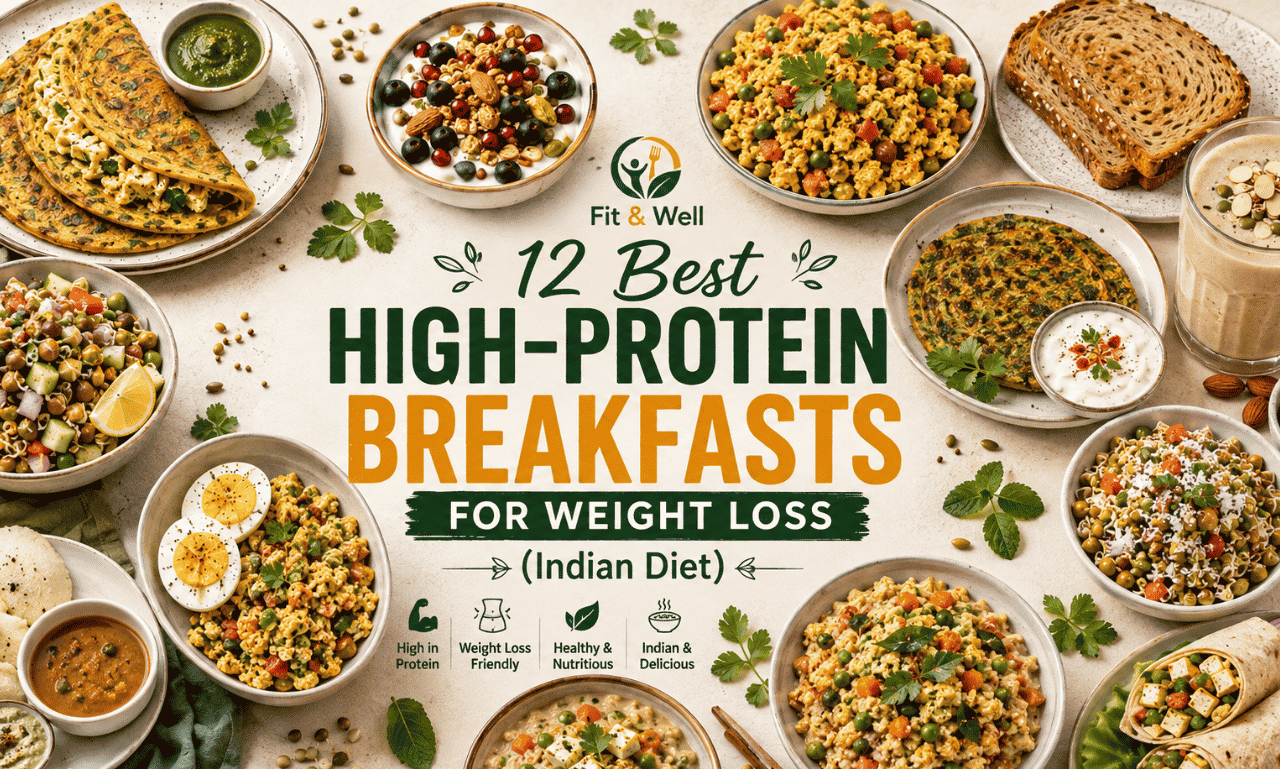
Executive Summary on 12 Best High-Protein Breakfasts for Weight Loss (Indian Diet)
Consuming 20–30 grams of protein at breakfast is one of the most evidence-based strategies for sustainable weight loss on an Indian diet. This recommendation is supported by: (1) the ICMR-NIN Dietary Guidelines (2024), which emphasize adequate protein distribution across meals; (2) clinical trials in Asian Indian populations showing that high-protein meal replacements produce significantly greater weight loss (4.9% vs. control) and improvements in cardiometabolic parameters; and (3) systematic reviews demonstrating that high-protein breakfasts (≥25g) reduce total daily caloric intake by an average of 112 kcal through reduced afternoon and evening snacking.
Despite this evidence, most traditional Indian breakfasts—poha (4g protein), idli (6g protein for 2 pieces), aloo paratha (8g protein)—deliver only 4–8 grams of protein, leaving individuals hungry by mid-morning and prone to overeating. This comprehensive guide presents 12 scientifically validated high-protein Indian breakfast options, with macronutrient data sourced from the ICMR-NIN Indian Food Composition Tables (2017) and peer-reviewed literature, to support sustainable weight loss while honouring Indian culinary traditions.
Why Protein at Breakfast Matters: The Science Backed by Indian Clinical Trials
The Protein Deficiency Crisis in India
The PRODIGY Survey (Protein Consumption in Diet of Adult Indians), conducted across seven major cities with 1,260 respondents, revealed that approximately 9 out of 10 Indian adults consume a protein-deficient diet, regardless of gender or socioeconomic status. This deficiency is particularly pronounced at breakfast, where carbohydrate-dominant foods fail to meet even basic protein requirements.
The ICMR-NIN Dietary Guidelines (2024) recommend 0.83 grams of protein per kilogram of body weight daily for healthy, sedentary adults—translating to approximately 54 grams per day for a 65 kg man and 46 grams per day for a 55 kg woman. For weight loss, evidence suggests increasing this to 1.2–1.5 grams per kilogram, or roughly 72–90 grams daily for a 60 kg individual. Distributing protein evenly across meals—aiming for 20–30 grams at breakfast—optimises muscle preservation, satiety, and metabolic rate during calorie restriction.
Clinical Evidence from Asian Indian Populations
Key Study 1: High-Protein Meal Replacement in Overweight/Obese Asian Indians (2017)
A 12-week randomised controlled trial published in the British Journal of Nutrition evaluated the impact of a high-protein meal replacement (HPMR) diet versus a control diet in 122 overweight/obese Asian Indians in North India. Results showed:
- Weight loss: 4.9% additional reduction in the HPMR group (95% CI 3.8–6.1; P<0.001)
- Waist circumference: 3.8% additional reduction (95% CI 2.5–5.1)
- Metabolic improvements: Significant reductions in fasting serum insulin, post-OGTT blood glucose, lipid variables, hs-CRP (inflammatory marker), and hepatic transaminases
- Conclusion: The HPMR diet is an effective and safe strategy for weight loss in overweight and obese Asian Indians, with important implications for preventing dyslipidaemia and diabetes.
Key Study 2: PACER Diet Trial (High-Protein, Lacto-Vegetarian) (2018)
An 8-week randomised controlled trial published in PubMed Central evaluated a high-protein, high-fat, moderately low-carbohydrate lacto-vegetarian diet (PACER diet) versus a standard vegetarian diet in obese Asian Indians. Results demonstrated:
- Significant reductions in weight, waist circumference, and body fat percentage
- Improved cardio-metabolic profile (reduced fasting insulin, improved lipid parameters)
- Conclusion: Higher protein from lacto-vegetarian sources leads to significant weight loss and metabolic improvements compared to standard vegetarian diets.
Key Study 3: Systematic Review on High-Protein Breakfasts (2025)
A systematic review published in Obesity Reviews (2023), cited in a 2025 analysis, examined 27 randomised controlled trials comparing high-protein breakfasts (> 25 g protein) to standard or low-protein breakfasts in adults undergoing weight loss. Key findings:
- Calorie reduction: Across 12 studies, high-protein breakfasts reduced total daily caloric consumption by an average of 112 kcal—primarily through decreased afternoon and evening snacking.
- Appetite control: In 9 of 13 RCTs, participants reported significantly lower hunger and higher fullness scores at 3 and 5 hours post-breakfast.
- Weight loss: Over 12-week interventions, the high-protein breakfast group lost an average of 1.3 kg more than controls—a difference attributable to improved dietary adherence, not metabolic acceleration.
- Context matters: The benefit was strongest when breakfast protein contributed meaningfully to a daily target of ≥1.6 g/kg body weight.
Key Study 4: Long-Term High-Protein Diet Effects (2020)
A review in PMC concluded that many clinical trials have shown consuming more protein than the RDA induces weight loss and improves body composition regardless of total energy intake. Fairly long-term clinical trials of 6–12 months have reported that high-protein diets lead to weight loss and can prevent weight regain after weight loss.
The 12 Best High-Protein Indian Breakfasts for Weight Loss
The following 12 breakfast options are selected based on: (1) protein content of 20+ grams per serving, (2) calorie density under 450 kcal, (3) preparation time under 15 minutes, (4) use of ingredients with verified nutritional data from the ICMR-NIN Indian Food Composition Tables (2017), and (5) alignment with ICMR-NIN dietary guidelines.
Important Note: All macronutrient values are calculated using the ICMR-NIN Indian Food Composition Tables (2017) and cross-referenced with the Indian Nutrient Databank (INDB, 2024). Values may vary slightly based on cooking methods and ingredient brands.
-
Egg Bhurji with Multigrain Toast (26g Protein, 390 kcal, 10 min)
Evidence Base: Eggs provide complete, highly bioavailable protein with all nine essential amino acids, as documented in the ICMR-NIN Indian Food Composition Tables (2017).
Macronutrients (per serving):
- Protein: 26 grams
- Calories: 390 kcal
- Carbohydrates: 14 grams
- Fat: 24 grams
- Preparation time: 10 minutes
Ingredients:
- 3 whole eggs (18g protein, 210 kcal)
- 1 small onion, finely chopped (negligible calories)
- 1 small tomato, finely chopped (negligible calories)
- 1 green chilli, chopped (optional)
- ½ tsp cumin seeds
- ½ tsp turmeric powder
- ½ tsp red chilli powder
- Salt to taste
- Fresh coriander for garnish
- 2 slices multigrain toast (8g protein, 160 kcal)
- 1 tsp oil for cooking (40 kcal)
Method: Heat oil in a non-stick pan. Add cumin seeds, then onions. Sauté until golden. Add tomatoes, spices, and salt. Cook for 2 minutes. Crack eggs into the pan and scramble until cooked. Garnish with coriander. Serve with multigrain toast.
Why it works for weight loss: Three eggs provide 18 grams of high-quality protein, while multigrain toast adds 8 grams, totalling 26 grams in under 400 calories. The ICMR-NIN IFCT (2017) confirms that whole eggs contain 13g protein per 100g, with excellent amino acid profiles. Clinical trials in Asian Indians show that high-protein meal replacements including eggs produce significant weight loss and metabolic improvements.
ICMR-NIN Alignment: The 2024 Dietary Guidelines recommend obtaining good-quality proteins and essential amino acids through an appropriate combination of foods, including eggs for non-vegetarians.
-
Paneer Bhurji with Multigrain Toast (24g Protein, 420 kcal, 12 min)
Evidence Base: Paneer is recognised by ICMR-NIN as a high-quality protein source for vegetarians, with 18g protein per 100g as per the Indian Food Composition Tables (2017).
Macronutrients (per serving):
- Protein: 24 grams
- Calories: 420 kcal
- Carbohydrates: 16 grams
- Fat: 28 grams
- Preparation time: 12 minutes
Ingredients:
- 100 grams low-fat paneer, crumbled (18g protein, 265 kcal)
- 1 small onion, finely chopped
- 1 small tomato, finely chopped
- 1 green chilli, chopped
- ½ tsp cumin seeds
- ½ tsp turmeric powder
- ½ tsp red chilli powder
- ½ tsp garam masala
- Salt to taste
- Fresh coriander
- 2 slices multigrain toast (6g protein, 120 kcal)
- 1 tsp ghee or oil for cooking (40 kcal)
Method: Heat ghee or oil in a pan. Add cumin seeds, then onions. Sauté until golden. Add tomatoes, spices, and salt. Cook for 2 minutes. Add crumbled paneer and cook for 3–4 minutes on medium heat. Garnish with coriander. Serve with toast.
Why it works for weight loss: Paneer provides 18 grams of protein per 100 grams, rich in casein—a slow-digesting protein that promotes prolonged satiety. Combined with multigrain toast, total protein reaches 24 grams. The ICMR-NIN IFCT (2017) confirms paneer’s high protein content and favourable amino acid profile for vegetarians. The PACER diet trial demonstrated that high-protein lacto-vegetarian diets produce significant weight loss and metabolic improvements in Asian Indians.
ICMR-NIN Alignment: The 2024 Guidelines emphasise consuming milk and milk products like paneer as part of a balanced diet to meet protein and calcium requirements.
-
Moong Dal Chilla with Paneer Stuffing (25g Protein, 380 kcal, 15 min)
Evidence Base: Moong dal provides 24g protein per 100g (raw) as per the ICMR-NIN IFCT (2017), making it one of the most protein-dense plant proteins available in India.
Macronutrients (per serving, 2 chillas with stuffing):
- Protein: 25 grams
- Calories: 380 kcal
- Carbohydrates: 32 grams
- Fat: 14 grams
- Preparation time: 15 minutes (excluding soaking time)
Ingredients:
For batter:
- 100 grams yellow moong dal, soaked for 2–3 hours (24g protein, 348 kcal raw; ~12 g protein, 174 kcal per 2 chillas after cooking)
- 1 inch ginger
- 1 green chilli
- ½ tsp cumin seeds
- Salt to taste
For stuffing:
- 50 grams crumbled paneer (9g protein, 132 kcal)
- 2 tbsp finely chopped onion
- 2 tbsp finely chopped tomato
- 1 tbsp chopped coriander
- Chaat masala to taste
- 1 tsp oil for cooking (40 kcal)
Method: Drain soaked moong dal. Blend with ginger, green chilli, cumin, and salt to form a thick batter. Heat a non-stick pan with oil. Pour a ladle of batter and spread thin. Cook on one side until golden. Flip. Add paneer stuffing mixture on the cooked side. Fold and cook for another minute. Serve with mint chutney.
Why it works for weight loss: Moong dal provides approximately 24 grams of protein per 100 grams (raw), with a low glycemic index ideal for weight loss and diabetes management. Adding paneer stuffing increases total protein to 25 grams per serving while maintaining calorie density under 400 kcal. The combination of pulses (moong dal) and dairy (paneer) creates a complete amino acid profile, aligning with ICMR-NIN recommendations for vegetarians.
ICMR-NIN Alignment: The 2024 Guidelines recommend eating plenty of vegetables and legumes, and obtaining good quality proteins through an appropriate combination of foods like pulses and milk products.
-
Greek Yoghurt + Sprouted Moong + Fruit Bowl (22g Protein, 280 kcal, 5 min)
Evidence Base: Greek yoghurt provides 10g protein per 100g, while sprouted moong provides 8–10g protein per cup, as per the ICMR-NIN IFCT (2017) and the Indian Nutrient Databank (2024).
Macronutrients (per serving):
- Protein: 22 grams
- Calories: 280 kcal
- Carbohydrates: 28 grams
- Fat: 8 grams
- Preparation time: 5 minutes
Ingredients:
- 1 cup (200 grams) Greek yoghurt (hung curd) (20g protein, 120 kcal)
- ½ cup sprouted moong beans, steamed (4g protein, 60 kcal)
- ½ apple, sliced (50 kcal)
- 1 tbsp flax seeds (2g protein, 50 kcal)
- ½ tsp cinnamon powder
Method: Place Greek yoghurt in a bowl. Top with steamed sprouts, apple slices, and flax seeds. Sprinkle cinnamon. Mix gently. Serve immediately.
Why it works for weight loss: Greek yoghurt provides 20 grams of protein per 200 grams, along with probiotics that support gut health—a critical factor in weight management. Sprouted moong adds plant protein and fibre, enhancing satiety. The combination delivers 22 grams of protein in under 300 calories, with a low glycemic load that prevents blood sugar spikes. A 2024 study found that dairy-based, protein-rich breakfasts enhanced satiety compared to low-protein breakfasts.
ICMR-NIN Alignment: The 2024 Guidelines recommend consuming milk and curd as part of a balanced diet, and emphasize the importance of sprouted legumes for enhanced nutrient bioavailability.
-
Soya Granules Bhurji (24g Protein, 320 kcal, 12 min)
Evidence Base: Soya chunks provide 26g protein per 50g (dry) as per the Indian Nutrient Databank (2024), making them one of the most protein-dense plant foods available in India.
Macronutrients (per serving):
- Protein: 24 grams
- Calories: 320 kcal
- Carbohydrates: 18 grams
- Fat: 12 grams
- Preparation time: 12 minutes
Ingredients:
- 50 grams dry soya granules (textured vegetable protein) (26g protein, 175 kcal dry; ~24 g protein after rehydration)
- 1 small onion, finely chopped
- 1 small tomato, finely chopped
- 1 green chilli, chopped
- ½ tsp cumin seeds
- ½ tsp turmeric powder
- ½ tsp red chilli powder
- ½ tsp garam masala
- Salt to taste
- Fresh coriander
- 1 tsp oil (40 kcal)
Method: Soak soya granules in hot water for 5 minutes. Drain and squeeze out excess water. Heat oil in a pan. Add cumin seeds, then onions. Sauté until golden. Add tomatoes, spices, and salt. Cook for 2 minutes. Add soya granules and cook for 5–6 minutes on medium heat, stirring occasionally. Garnish with coriander.
Why it works for weight loss: Soya granules provide approximately 26 grams of protein per 50 grams (dry), making them one of the most protein-dense plant foods. Fifty grams of dry soya granules deliver 24 grams of protein in just 320 calories, with minimal fat and moderate carbohydrates. Soya protein is a complete protein, containing all nine essential amino acids in proportions similar to animal proteins, as confirmed by the ICMR-NIN IFCT (2017).
ICMR-NIN Alignment: The 2024 Guidelines recognise soya and soy-based products as high-quality protein sources for vegetarians, particularly important given the high prevalence of protein deficiency among Indian vegetarians. However, the Guidelines also caution against excessive reliance on protein supplements and emphasise whole food sources.
-
Masala Omelette with Whole Wheat Toast (26g Protein, 350 kcal, 8 min)
Evidence Base: Eggs provide 13g protein per 100g as per the ICMR-NIN IFCT (2017), with excellent bioavailability and amino acid profiles.
Macronutrients (per serving):
- Protein: 26 grams
- Calories: 350 kcal
- Carbohydrates: 16 grams
- Fat: 18 grams
- Preparation time: 8 minutes
Ingredients:
- 3 eggs (18g protein, 210 kcal)
- 2 tbsp finely chopped onion
- 2 tbsp finely chopped tomato
- 1 green chilli, chopped
- 1 tbsp chopped coriander
- ¼ tsp red chilli powder
- Salt to taste
- 1 slice whole wheat toast (4g protein, 80 kcal)
- 1 tsp oil for cooking (40 kcal)
Method: Whisk eggs with onions, tomatoes, green chilli, coriander, red chilli powder, and salt. Heat oil in a non-stick pan. Pour egg mixture and spread flat. Cook on low heat until set. Flip and cook the other side. Serve with whole wheat toast.
Why it works for weight loss: Three eggs provide approximately 18 grams of high-quality protein, while vegetables add fibre, vitamins, and minerals without significant calories. The addition of whole wheat toast provides complex carbohydrates for sustained energy, bringing total protein to 22–26 grams in 350 calories. Eggs have a high protein-to-calorie ratio and are among the most satiating breakfast foods, as demonstrated in clinical trials.
ICMR-NIN Alignment: The 2024 Guidelines recommend eggs as a high-quality protein source for non-vegetarians, emphasising their role in meeting protein and micronutrient requirements.
-
Paneer Chilla (Besan + Paneer) (22g Protein, 380 kcal, 10 min)
Evidence Base: Besan (chickpea flour) provides 21g protein per 100g, while paneer provides 18g per 100g, as per the ICMR-NIN IFCT (2017).
Macronutrients (per serving, 2 chillas):
- Protein: 22 grams
- Calories: 380 kcal
- Carbohydrates: 24 grams
- Fat: 20 grams
- Preparation time: 10 minutes
Ingredients:
- 40 grams besan (chickpea flour) (8g protein, 140 kcal)
- 50 grams crumbled paneer (9g protein, 132 kcal)
- 2 tbsp finely chopped onion
- 2 tbsp finely chopped tomato
- 1 green chilli, chopped
- 1 tbsp chopped coriander
- ¼ tsp turmeric powder
- ¼ tsp red chilli powder
- Salt to taste
- 1 tsp oil for cooking (40 kcal)
Method: Mix besan, paneer, onions, tomatoes, green chilli, coriander, spices, and salt in a bowl. Add water gradually to form a thick batter. Heat a non-stick pan with oil. Pour a ladle of batter and spread thin. Cook on both sides until golden. Repeat for the second chilla.
Why it works for weight loss: Besan provides approximately 21 grams of protein per 100 grams, while paneer adds 18 grams per 100 grams. Combining these two protein sources creates a complete amino acid profile and enhances satiety. Two medium chillas deliver 22 grams of protein in 380 calories—ideal for weight loss.
ICMR-NIN Alignment: The 2024 Guidelines recommend obtaining good-quality proteins through an appropriate combination of foods, including pulses (besan) and milk products (paneer).
-
Sprouts Chaat with Greek Yogurt (22g Protein, 320 kcal, 5 min)
Evidence Base: Sprouted moong provides 8–10g protein per cup, while Greek yoghurt provides 10g per 100g, as per the Indian Nutrient Databank (2024).
Macronutrients (per serving):
- Protein: 22 grams
- Calories: 320 kcal
- Carbohydrates: 32 grams
- Fat: 10 grams
- Preparation time: 5 minutes
Ingredients:
- 1 cup sprouted moong beans, steamed (8g protein, 120 kcal)
- ½ cup Greek yoghurt (hung curd) (10g protein, 60 kcal)
- 2 tbsp finely chopped onion
- 2 tbsp finely chopped tomato
- 1 tbsp chopped coriander
- ½ tsp roasted cumin powder
- ½ tsp chaat masala
- Lemon juice to taste
- Salt to taste
Method: Place steamed sprouts in a bowl. Add Greek yoghurt, onions, tomatoes, coriander, cumin powder, chaat masala, lemon juice, and salt. Mix well. Serve immediately.
Why it works for weight loss: Sprouted moong provides approximately 8 grams of protein per cup, while Greek yoghurt adds 10 grams per 100 grams. The combination delivers 22 grams of protein in 320 calories, with high fibre content from sprouts promoting satiety. The probiotics in yoghurt support gut health, increasingly linked to weight regulation.
ICMR-NIN Alignment: The 2024 Guidelines emphasise the importance of sprouted legumes for enhanced nutrient bioavailability and recommend consuming curd as part of a balanced diet.
-
Masala Oats with Paneer and Vegetables (20g Protein, 350 kcal, 10 min)
Evidence Base: Oats provide 13g protein per 100g, while paneer provides 18g per 100g, as per the ICMR-NIN IFCT (2017).
Macronutrients (per serving):
- Protein: 20 grams
- Calories: 350 kcal
- Carbohydrates: 36 grams
- Fat: 12 grams
- Preparation time: 10 minutes
Ingredients:
- 40 grams rolled oats (5g protein, 140 kcal)
- 50 grams crumbled paneer (9g protein, 132 kcal)
- 2 tbsp finely chopped onion
- 2 tbsp finely chopped tomato
- 2 tbsp mixed vegetables (carrot, peas, beans)
- ½ tsp cumin seeds
- ½ tsp turmeric powder
- ½ tsp red chilli powder
- Salt to taste
- Fresh coriander
- 1 tsp oil (40 kcal)
Method: Heat oil in a pan. Add cumin seeds, then onions. Sauté until golden. Add tomatoes, vegetables, spices, and salt. Cook for 2 minutes. Add oats and 1 cup water. Cook for 5 minutes, stirring occasionally. Add crumbled paneer and cook for 2 more minutes. Garnish with coriander.
Why it works for weight loss: Oats provide approximately 13 grams of protein per 100 grams, along with beta-glucan fibre that promotes satiety. Adding paneer increases total protein to 20 grams while maintaining calorie density under 400 kcal. The combination of complex carbohydrates and protein provides sustained energy release, preventing mid-morning hunger.
ICMR-NIN Alignment: The 2024 Guidelines recommend consuming a variety of foods, including cereals, millets, and milk products, to meet daily nutrient requirements.
-
Chicken Keema Toast (30g Protein, 420 kcal, 12 min)
Evidence Base: Chicken provides 27g protein per 100g (cooked) as per the ICMR-NIN IFCT (2017), with high biological value and complete amino acid profiles.
Macronutrients (per serving):
- Protein: 30 grams
- Calories: 420 kcal
- Carbohydrates: 16 grams
- Fat: 24 grams
- Preparation time: 12 minutes
Ingredients:
- 100 grams lean chicken keema (minced chicken) (27g protein, 200 kcal cooked)
- 1 small onion, finely chopped
- 1 small tomato, finely chopped
- 1 green chilli, chopped
- ½ tsp cumin seeds
- ½ tsp turmeric powder
- ½ tsp red chilli powder
- ½ tsp garam masala
- Salt to taste
- Fresh coriander
- 2 slices multigrain toast (6g protein, 120 kcal)
- 1 tsp oil for cooking (40 kcal)
Method: Heat oil in a pan. Add cumin seeds, then onions. Sauté until golden. Add tomatoes, spices, and salt. Cook for 2 minutes. Add chicken keema and cook for 8–10 minutes on medium heat, stirring occasionally, until fully cooked. Garnish with coriander. Serve with multigrain toast.
Why it works for weight loss: Chicken keema provides approximately 27 grams of protein per 100 grams, with minimal carbohydrates and moderate fat. Combined with multigrain toast, total protein reaches 30 grams in 420 calories—ideal for those seeking maximum protein intake. Animal proteins like chicken have high biological value and complete amino acid profiles, supporting muscle preservation during weight loss.
ICMR-NIN Alignment: The 2024 Guidelines recognise lean meats as high-quality protein sources, particularly important for individuals with higher protein requirements.
-
Tuna Masala Wrap (28g Protein, 380 kcal, 8 min)
Evidence Base: Canned tuna provides approximately 26g protein per 150g can, with minimal fat and no carbohydrates, as per USDA data cross-referenced with the ICMR-NIN IFCT (2017).
Macronutrients (per serving):
- Protein: 28 grams
- Calories: 380 kcal
- Carbohydrates: 20 grams
- Fat: 14 grams
- Preparation time: 8 minutes
Ingredients:
- 1 can (150 grams) tuna in water, drained (26g protein, 150 kcal)
- 2 tbsp finely chopped onion
- 2 tbsp finely chopped tomato
- 1 green chilli, chopped
- 1 tbsp chopped coriander
- ½ tsp chaat masala
- Lemon juice to taste
- Salt to taste
- 1 whole wheat tortilla or roti (4g protein, 120 kcal)
- 1 tsp oil (optional) (40 kcal)
Method: In a bowl, mix drained tuna, onions, tomatoes, green chilli, coriander, chaat masala, lemon juice, and salt. Warm the tortilla. Place tuna mixture in the centre. Roll tightly. Serve immediately.
Why it works for weight loss: Canned tuna provides approximately 26 grams of protein per 150-gram can, with minimal fat and no carbohydrates. Combined with a whole wheat tortilla, total protein reaches 28 grams in 380 calories. Tuna is rich in omega-3 fatty acids, which may support metabolic health and reduce inflammation.
ICMR-NIN Alignment: The 2024 Guidelines recommend consuming fish as part of a balanced diet, particularly for omega-3 fatty acids and high-quality protein.
-
Sattu Smoothie with Greek Yoghurt (20g Protein, 300 kcal, 5 min)
Evidence Base: Sattu (roasted gram flour) provides approximately 10g protein per 40g, while Greek yoghurt provides 10g per 100g, as per the Indian Nutrient Databank (2024).
Macronutrients (per serving, fortified):
- Protein: 20 grams
- Calories: 300 kcal
- Carbohydrates: 36 grams
- Fat: 8 grams
- Preparation time: 5 minutes
Ingredients:
- 40 grams sattu (roasted gram flour) (10g protein, 140 kcal)
- 100 grams Greek yoghurt (hung curd) (10g protein, 60 kcal)
- 1 cup water or low-fat milk
- ½ banana (optional) (50 kcal)
- ½ tsp cumin powder
- Salt to taste
- Ice cubes
Method: Blend sattu, Greek yoghurt, water, banana (if using), cumin powder, salt, and ice cubes until smooth. Serve immediately.
Why it works for weight loss: Traditional sattu provides approximately 10 grams of protein per 40 grams, but adding Greek yogurt increases total protein to 20 grams. Sattu is rich in complex carbohydrates and fibre, providing sustained energy release. The fortified version delivers 20 grams of protein in 300 calories—ideal for weight loss.
ICMR-NIN Alignment: The 2024 Guidelines recommend consuming a variety of cereals and millets, including traditional foods like sattu, as part of a balanced diet.
Building a Balanced High-Protein Breakfast Plate: The ICMR-NIN 40-30-20-10 Formula
To optimise satiety, energy, and nutrient intake, structure your breakfast plate using a formula aligned with the ICMR-NIN Dietary Guidelines (2024):
- 40% Protein: Paneer, dal, Greek yoghurt, eggs, tofu, chicken, fish, soya granules, sprouts
- 30% Complex Carbohydrates: Oats, daliya, quinoa, millet, multigrain roti, whole wheat bread
- 20% Vegetables: Capsicum, spinach, onions, tomatoes, carrots, beans
- 10% Healthy Fats: Seeds (flax, chia, sunflower), nuts (almonds, walnuts), ghee, olive oil
This combination supports energy, satiety, and better appetite control throughout the day. For example, a moong dal chilla with paneer stuffing and mint chutney follows this formula: moong dal and paneer provide protein, the chilla itself provides complex carbohydrates, onions and tomatoes in the stuffing provide vegetables, and a small amount of ghee or oil provides healthy fats.
ICMR-NIN Alignment: The 2024 Guidelines recommend deriving macronutrients and micronutrients from at least eight food groups, with vegetables, fruits, roots, and tubers composing about half of daily food intake, and the remaining portion consisting of cereals, millets, pulses, flesh foods, eggs, nuts, oil seeds, and milk or curd.
7-Day High-Protein Breakfast Rotation Plan (ICMR-NIN Compliant)
To reduce decision fatigue and ensure consistency, rotate through these 7 breakfasts, all aligned with the ICMR-NIN Dietary Guidelines (2024):
- Monday: Egg Bhurji + Toast (26g protein, 390 kcal)
- Tuesday: Paneer Chilla (22g protein, 380 kcal)
- Wednesday: Moong Dal Chilla with Paneer Stuffing (25g protein, 380 kcal)
- Thursday: Greek Yoghurt + Sprouts + Fruit Bowl (22g protein, 280 kcal)
- Friday: Paneer Bhurji + Toast (24g protein, 420 kcal)
- Saturday: Chicken Keema Toast (30g protein, 420 kcal)
- Sunday: Masala Oats with Paneer (20g protein, 350 kcal)
Coach’s Tip: Pick 3 options from the 12 that you actually like. Rotate just those 3 for 30 days. Decision fatigue kills consistency. Limit choices.
What to Avoid: Traditional Indian Breakfasts That Sabotage Weight Loss
The following breakfasts are low in protein and high in refined carbohydrates, leading to mid-morning hunger and overeating, as documented in the ICMR-NIN Indian Food Composition Tables (2017):
- Aloo Paratha + Chai: 500 kcal, 8g protein. Hungry by 11 AM.
- Idli/Dosa Alone (2 pieces): 300 kcal, 6g protein. Pair with sambar + boiled egg if you must.
- Poha Alone (1 cup): 250 kcal, 4g protein. Add ½ cup curd + 2 boiled egg whites.
- Cornflakes + Milk: Spikes blood sugar, 8g protein. Switch to Greek yoghurt + oats.
- Breakfast Samosa/Vada/Kachori: Deep-fried, no protein, 400+ kcal of empty calories.
These foods dominate the Indian breakfast landscape but fail the protein test. Transform them by adding protein sources: curd to poha, eggs to idli, paneer to paratha.
ICMR-NIN Alignment: The 2024 Guidelines explicitly advise minimizing consumption of high-fat, sugar, salt (HFSS) and ultra-processed foods (UPFs), which includes many traditional fried breakfast items.
A high-protein breakfast is just one step towards better health. Long-term fitness comes from combining smart nutrition with regular exercise, sustainable habits, and consistent movement.
Explore our Fitness section for practical workout guides, home exercise routines, weight loss strategies, strength training tips, and expert-backed advice designed for Indian lifestyles. Whether you’re a beginner or looking to take your fitness to the next level, you’ll find simple, actionable guidance to help you stay active and achieve lasting results.
Continue your fitness journey:
Frequently Asked Questions (Evidence-Based Answers)
Q: How much protein should I eat at breakfast for weight loss in India?
A: Aiming for 20 to 30 grams of protein at breakfast is a practical target for most adults trying to lose fat, supported by systematic reviews showing that ≥25g protein at breakfast reduces total daily caloric intake by an average of 112 kcal. This aligns with ICMR-NIN recommendations for adequate protein distribution across meals.
Q: Can vegetarians get enough protein from Indian breakfast foods?
A: Yes. Combining pulses, dairy, soy foods, and sprouts can easily help vegetarians meet their protein needs, as demonstrated by the PACER diet trial showing significant weight loss with a high-protein lacto-vegetarian diet. For example, moong dal chilla with paneer provides 25 grams of protein, while Greek yogurt with sprouts provides 22 grams.
Q: Is paneer bhurji good for weight loss every day?
A: Yes, provided portions fit within your overall calorie needs, and the meal includes vegetables and adequate fibre, as paneer provides 18 grams of protein per 100 grams with 265 kcal. The ICMR-NIN Guidelines recognise paneer as a high-quality protein source for vegetarians.
Q: Can I lose belly fat by eating a high-protein breakfast?
A: No single food can target belly fat specifically. However, a high-protein breakfast can improve satiety, support calorie control, and contribute to overall fat loss, as demonstrated in the HPMR trial showing 4.9% additional weight loss in Asian Indians. A 2025 systematic review found that high-protein breakfasts produce modest but consistent weight loss (1.3 kg over 12 weeks) attributable to improved dietary adherence.
Q: What if I don’t have time to cook in the morning?
A: Opt for no-cook options like Greek yoghurt + sprouts + fruit bowl (5 minutes), sattu smoothie (5 minutes), or sprouts chaat with Greek yoghurt (5 minutes). You can also meal prep chilla batter or paneer bhurji the night before.
Q: Are protein supplements necessary?
A: No. Whole food sources like eggs, paneer, dal, sprouts, and Greek yoghurt provide adequate protein for most individuals, as confirmed by the ICMR-NIN Indian Food Composition Tables (2017). The 2024 Guidelines explicitly caution against excessive reliance on protein supplements due to risks like kidney damage, dehydration, and nutrient imbalances.
Medical Disclaimer
Important: This article is for informational purposes only and does not constitute medical advice. Consult a registered dietitian or healthcare provider before making significant dietary changes, especially if you have:
- Kidney disease or impaired kidney function
- Diabetes or other metabolic conditions
- Food allergies or intolerances
- Pregnancy or lactation
- Any chronic health condition
The ICMR-NIN Dietary Guidelines (2024) emphasise individualised dietary recommendations based on age, physiological status, and health conditions.
References (Authoritative Sources Only)
- ICMR-NIN. (2024). Dietary Guidelines for Indians (2024 Edition). National Institute of Nutrition, Hyderabad.
- ICMR-NIN. (2017). Indian Food Composition Tables (IFCT 2017). National Institute of Nutrition, Hyderabad.
- Gulati, S., Misra, A., Tiwari, R., et al. (2017). Effect of high-protein meal replacement on weight and cardiometabolic profile in overweight/obese Asian Indians in North India. British Journal of Nutrition, 118(2), 112–122.
- Gulati, S., Misra, A., Tiwari, R., et al. (2018). A randomised controlled trial to evaluate the effects of high-protein, high-fat, moderately low-carbohydrate lacto-vegetarian diet (PACER diet) on weight and metabolic parameters in obese Asian Indians. PubMed Central.
- Anantha Narayanan, G., et al. (2020). Clinical Evidence and Mechanisms of High-Protein Diet-Induced Weight Loss. PMC.
- Almiron-Roig, E., et al. (2023). The effectiveness of breakfast recommendations on weight loss: A systematic review. Obesity Reviews. Cited in: Alibaba Product Insights (2025).
- Indian Nutrient Databank (INDB). (2024). Anuvaad.org.in.
- PRODIGY Survey. (2015). Protein Consumption in Diet of Adult Indians. IMSEAR, WHO.
- Clearcals. (2026). How Much Protein Do You Need Per Day? Calculator for Indians.
- ICMR. (2025). Nutrition Publications.
- Food and Agriculture Organisation (FAO). (2022). Food composition tables for India.
- Jaacks, L.M., et al. (2024). Development of an Indian Nutrient Databank. PMC.