
Fifty grams. That’s the number most Indians have heard and mentally filed away, and it’s only correct for one specific body weight.
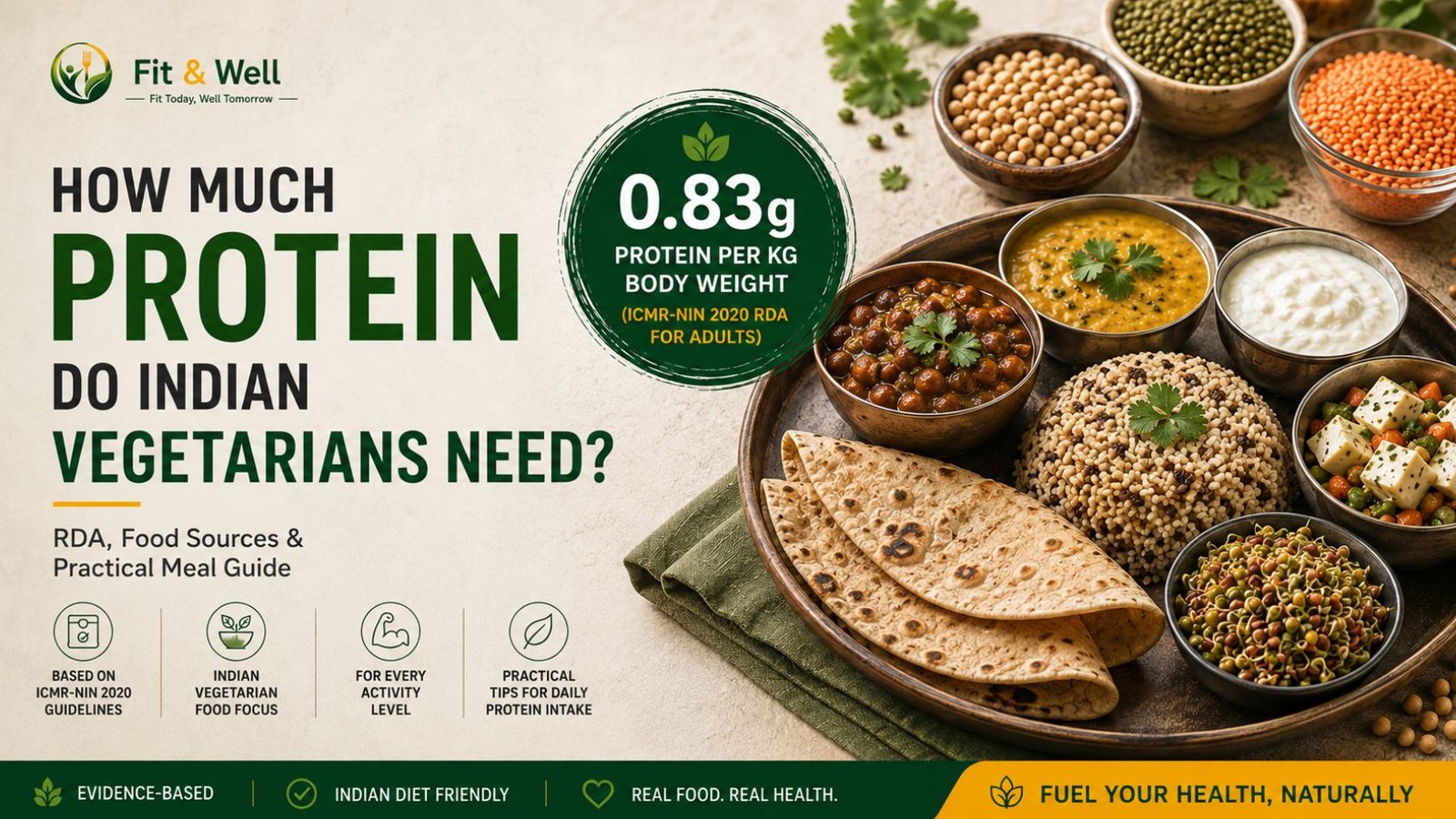
According to the ICMR-National Institute of Nutrition’s 2020 dietary guidelines, the Recommended Dietary Allowance (RDA) for a healthy Indian adult is 0.83 grams of protein per kilogram of body weight per day. That works out to 46g for a 55 kg woman, 50g for a 60 kg adult, 54g for a 65 kg man, and 58g for a 70 kg adult. Vegetarians eating a mostly cereal-based diet need to plan closer to 1g/kg, and anyone strength training needs considerably more.
That’s the answer. Everything below explains why the number moves, what it looks like on an actual plate, and where the official figure quietly undersells what active people need.
How Much Protein Do Indian Vegetarians Need Daily?
Definition: The RDA is the intake that covers the needs of 97 to 98% of healthy people in a population. Below it sits the Estimated Average Requirement (EAR), the amount that meets the needs of only half the population, useful for population-level planning but not a personal target. ICMR-NIN set the adult protein EAR at 0.66 g/kg/day and the RDA at 0.83 g/kg/day, a downward revision from the 2010 guideline of 1 g/kg, confirmed in the CHRISMED Journal of Health and Research’s review of the 2020 update.
Use this table to calculate your own number. The maths is simple: body weight in kg multiplied by your target in g/kg.
| Body weight | Sedentary RDA (0.83 g/kg) | Cereal-heavy diet (1.0 g/kg) | Strength training (1.4 g/kg) | Serious training (1.6 g/kg) |
|---|---|---|---|---|
| 50 kg | 42g | 50g | 70g | 80g |
| 55 kg | 46g | 55g | 77g | 88g |
| 60 kg | 50g | 60g | 84g | 96g |
| 65 kg | 54g | 65g | 91g | 104g |
| 70 kg | 58g | 70g | 98g | 112g |
| 75 kg | 62g | 75g | 105g | 120g |
| 80 kg | 66g | 80g | 112g | 128g |
The 0.83 g/kg column is the official ICMR-NIN adult RDA. Everything to its right is a practical planning target, not a government figure, and the difference matters when you’re reading nutrition labels or arguing with a gym trainer.
Why the Official Number Undersells Cereal-Heavy Vegetarian Diets
Here’s the detail most protein-powder marketing skips: ICMR-NIN’s own guidelines carry a footnote recommending a higher intake for people on cereal-based diets with lower protein quality, which describes most vegetarian India. Rice and wheat are dominated by carbohydrate, and what protein they do contain is short on lysine, an essential amino acid the body can’t manufacture on its own. A study on rice’s amino acid composition published via PMC confirms lysine is the first limiting amino acid in rice, meaning the body can’t fully use rice protein for muscle repair unless lysine arrives from another source on the plate.
Pulses solve this. Dal, rajma and chana are relatively rich in lysine but comparatively low in methionine, the amino acid cereals supply in abundance. Eat them together across the day and the gaps close. A study in the Journal of Nutrition measured this directly: combining lentils with rice in roughly a 1:1 ratio improved methionine availability and protein synthesis in healthy young adults, essentially confirming in a lab what Indian kitchens worked out generations ago with dal-chawal.
The practical result: a 60 kg vegetarian eating mostly rice, roti and thin dal should plan for 60g of protein a day, not 50g. That extra 10g isn’t a rounding error. It’s the difference between meeting requirements and quietly running a deficit for years.
Protein Needs by Activity Level
Protein requirements aren’t static. They climb with training load, drop with age-related inactivity, and shift entirely during pregnancy. Walking to the market and running intervals do not create the same demand on the body, and treating them identically is where most home-grown protein advice falls apart.
| Life stage or activity | Practical protein target |
|---|---|
| Sedentary healthy adult | 0.83 g/kg/day (ICMR-NIN RDA) |
| Cereal-heavy vegetarian diet | Around 1.0 g/kg/day |
| Recreationally active (yoga, walking, light gym) | 1.0 to 1.2 g/kg/day |
| Regular strength training | 1.4 to 1.6 g/kg/day |
| Serious training or muscle gain | 1.6 to 2.0 g/kg/day |
| Older adults (60+) | 1.0 to 1.2 g/kg/day |
The strength-training range comes from the International Society of Sports Nutrition’s position stand on protein and exercise, which found 1.4 to 2.0 g/kg/day both safe and effective for building and maintaining muscle in exercising individuals, with 1.6 to 2.0 g/kg reserved for strength and power athletes specifically.
Older adults deserve a separate note. Ageing brings a well-documented risk of muscle loss, particularly once activity and appetite decline together. A protein target above the general adult RDA, paired with resistance exercise where medically appropriate, helps counter this. But anyone with kidney disease should not raise protein intake without a doctor’s input; damaged kidneys process protein differently, and self-prescribed high-protein diets can do real harm here.
During weight loss, protein becomes more important, not less. A calorie deficit risks losing lean muscle along with fat unless protein intake stays high enough to signal the body to preserve it. Use current body weight for the calculation, not a future goal weight, unless a dietitian tells you otherwise.
Protein During Pregnancy and Lactation
Pregnancy changes the equation entirely. The ICMR-NIN 2020 tables, summarised in a peer-reviewed practical guide in the Indian Journal of Forensic and Community Medicine, specify additional protein on top of the standard adult RDA:
| Stage | Additional protein needed |
|---|---|
| Pregnancy, 2nd trimester | +9.5g/day |
| Pregnancy, 3rd trimester | +22.0g/day |
| Lactation, 0 to 6 months | +17.0g/day |
| Lactation, 7 to 12 months | +13.0g/day |
A pregnant woman with a baseline RDA of 46g therefore needs roughly 68g/day by her third trimester. That’s a meaningful jump, and it’s exactly why pregnancy diets built only around dal and roti tend to fall short unless paneer, curd, milk or soy get added deliberately. This is not a category to guess your way through. Combine these figures with individual guidance from an obstetrician or dietitian, particularly if morning sickness or gestational diabetes is affecting what you can eat.
Which Indian Vegetarian Foods Actually Deliver Protein?
Volume and protein content are not the same thing. A full plate of rice, roti and sabzi can leave you well under target unless it includes a concentrated protein source. Here’s what actually moves the needle, per standard household portion.
| Food | Standard portion | Approx. protein |
|---|---|---|
| Cooked moong or toor dal | 1 katori (~150g) | 7 to 9g |
| Cooked rajma or chickpeas | 1 katori (~150g) | 8 to 12g |
| Paneer | 100g | 15 to 20g |
| Curd/dahi | 200g | 7 to 9g |
| Milk | 250ml | ~8g |
| Tofu | 100g | 8 to 12g |
| Dry soya chunks | 50g (dry weight) | 25 to 26g |
| Sattu | 30g | ~6g |
| Roasted chana | 30g | ~6g |
| Peanuts | 30g | 7 to 8g |
| Besan | 50g (dry flour) | 10 to 11g |
| Cooked quinoa | 1 cup | 7 to 8g |
Two details trip people up here. First, dry and cooked weights aren’t interchangeable: soya chunks absorb water during cooking, so 100g dry and 100g cooked deliver very different protein amounts per gram. Always note whether you’re weighing raw or prepared food. Second, portion size is doing more work than food choice. A thick katori of dal made with a generous quantity of pulses delivers meaningfully more protein than a thin, watery version, even though both look like “one bowl of dal” on a plate.
For exact figures on packaged foods, ICMR-NIN’s own Indian Food Composition Tables remain the reference standard, though household cooking will always vary from a laboratory sample.
Building a Higher-Protein Thali
You don’t need to abandon rice and roti. You need to make the protein component deliberate instead of incidental.
A basic meal of two rotis, one bowl of dal, vegetables and a bowl of curd delivers roughly 20 to 25g of protein, depending on portion thickness. That’s a reasonable contribution, but a strength-training adult chasing 90g a day still needs protein at breakfast, snack time and dinner too.
A single addition changes the maths more than removing carbohydrates ever will. Add 100g of paneer, tofu or soya to the main dish, and the same meal jumps to 35 to 40g without requiring a larger plate.
A sample high-protein vegetarian day:
| Meal | What’s on the plate | Approx. protein |
|---|---|---|
| Breakfast | Two besan chillas with curd | 20 to 25g |
| Lunch | Rice or roti, a thick bowl of dal or rajma, curd, vegetables | 20 to 25g |
| Snack | Sattu drink or roasted chana with milk | 8 to 15g |
| Dinner | Roti or rice with paneer, tofu or soy chunks, vegetables | 20 to 30g |
Stack these together, and a vegetarian can realistically hit 70 to 90g across the day, comfortably covering both the cereal-adjusted baseline and a moderate training target, without touching a supplement tub.
Do Vegetarians Need “Complete Proteins”?
No, and the phrase gets thrown around more casually than it should be. All food proteins are built from amino acids, nine of which are essential because the body can’t synthesise them on its own. Different foods carry different proportions of these nine. Cereals run low on lysine; pulses run low on methionine and other sulfur-containing amino acids. Neither gap makes the food “incomplete” in any meaningful nutritional sense; it just means the overall diet needs variety.
Rice and dal don’t need to be eaten in a precise ratio at every single meal for this to work. The body maintains a pool of amino acids and can draw on protein eaten earlier in the day. What matters more than complementary pairing at each sitting is total daily protein and reasonable variety across the week: cereals, pulses, dairy, soy, nuts and seeds, in rotation.
Is Protein Powder Necessary?
For most healthy people, no. Whole foods like dal, paneer, curd, tofu and soy deliver fibre, calcium, iron and other micronutrients that an isolated powder simply doesn’t carry. A supplement earns its place mainly on convenience, not necessity.
Plant protein isolates in India (pea, soy or blends) typically run ₹800 to ₹2,500 for a 1kg tub, delivering 20 to 30g of protein per scoop, roughly a month’s supply at one serving a day. That’s a reasonable top-up for someone chasing 90 to 120g daily through training, or someone with genuinely limited appetite or cooking time. It’s not a substitute for a varied plate.
If you do buy one, compare products by protein-per-serving and cost-per-gram-of-protein, not tub size or marketing language. “Plant-based” and “premium” on a label say nothing about actual amino acid content.
People with kidney disease, liver disease or pregnancy-related complications should get individual advice before increasing protein intake through any concentrated source, food or powder.
Common Mistakes in Vegetarian Protein Planning
Counting only the main dish. Curd, milk, besan and snacks quietly add up, and skipping them in a mental tally makes intake look lower than it actually is.
Mixing raw and cooked weights. A nutrition app listing “100g soya chunks” without specifying dry or cooked weight can throw an estimate off by more than double.
Assuming every katori is the same size. Household bowls vary widely. Weighing your own bowl once gives a far more accurate baseline than guessing.
Replacing meals with shakes. A protein shake adds grams but skips the fibre and micronutrients a meal provides.
Ignoring total calories. If daily energy intake is too low, the body starts burning protein for fuel instead of directing it toward muscle repair. A high protein target cannot fix an underfed diet.
Are Indian Vegetarians Actually Protein Deficient?
Some, yes, though the word “deficient” gets used more loosely than it should. Falling short of the RDA on an occasional day isn’t clinical deficiency. Clinical protein-energy malnutrition is a distinct medical condition involving tissue loss and impaired healing, and it looks nothing like a busy office worker skipping paneer for a week.
That said, dietary surveys consistently show vegetarian diets in India skew lower in protein density than non-vegetarian diets, largely because cereal-heavy thalis crowd out concentrated protein sources rather than because plant protein is inherently inadequate. Persistent fatigue, hair fall, slow workout recovery or frequent infections shouldn’t be self-diagnosed as protein deficiency from a blog post. They deserve a proper medical evaluation, since the same symptoms overlap with iron deficiency, thyroid issues and simple under-eating.
Frequently Asked Questions
How much protein does a 60 kg Indian vegetarian need? At the ICMR-NIN RDA of 0.83 g/kg/day, that’s 50g daily. On a cereal-heavy diet, plan for closer to 60g. Regular strength training pushes the target to 84 to 96g at 1.4 to 1.6 g/kg.
Is 50g of protein enough for an Indian woman? It covers the reference RDA for a sedentary 60 kg woman. It’s not automatically enough for every woman; body weight, pregnancy, lactation, age and activity level all shift the number up or down.
Can vegetarians get complete protein without eggs or meat? Yes. Combining cereals like rice or wheat with pulses like dal or rajma balances out each food’s amino acid gaps across the day. No precise ratio or single-meal pairing is required.
Can dal alone meet daily protein needs? Not practically. One katori delivers 7 to 9g, so hitting 50 to 60g from dal alone would mean six or seven servings a day. Pairing dal with paneer, curd, soy or tofu gets there far more realistically.
Does soaking or sprouting increase protein in pulses? Not meaningfully. Sprouting improves digestibility and slightly boosts lysine availability, but the added water content means sprouted pulses don’t contain significantly more protein per serving than the original dry pulse.
Should older adults eat more protein? Generally yes, since ageing raises the risk of muscle loss, and a target of 1.0 to 1.2 g/kg/day paired with resistance exercise helps counter it. Anyone with kidney disease or another chronic condition should get individual guidance before raising intake.
Track your plate for a week. Count the dal, count the paneer, count the curd. Most vegetarians discover the gap was never willpower. It was arithmetic, and now you have the numbers to close it.
Sources: ICMR-National Institute of Nutrition (2020) Nutrient Requirements for Indians; CHRISMED Journal of Health and Research (2021); Indian Journal of Forensic and Community Medicine; Journal of the International Society of Sports Nutrition; Journal of Nutrition. This article is for general information and does not replace individual medical or dietary advice. Consult a doctor or registered dietitian for pregnancy, kidney disease, or other medical conditions before changing protein intake.