
Starting a fitness routine doesn’t require an expensive gym membership, complicated equipment or hours of free time. If you’re wondering how to start exercising at home, the good news is that you already have everything you need to begin.
Whether you live in a small apartment in Delhi, share a flat in Mumbai, or work long hours in Bangalore, home workouts offer a practical way to stay active without adding another commute to your day. A few square metres of floor space, comfortable clothing, and a realistic plan are enough to build a sustainable exercise habit.
The goal isn’t to complete the hardest workout possible. It’s to create a routine you can maintain week after week. This guide shows you exactly how to do that, from setting realistic goals to choosing the right exercises and building a workout schedule that fits around work, family and everyday commitments.
Before You Start Exercising at Home
For many adults, time is the biggest obstacle to regular exercise. Between work deadlines, commuting, household responsibilities and family commitments, finding an extra hour for the gym often feels impossible.
Home workouts remove many of those barriers.
Even 15 to 30 minutes of purposeful movement can contribute towards improving your overall fitness when performed consistently. The physical activity guidelines for adults published by the World Health Organization recommend regular aerobic activity alongside muscle-strengthening exercises each week, making home workouts an effective way to stay active.For people living in busy Indian cities, this flexibility is especially valuable. Traffic in Delhi NCR, unpredictable work schedules in Gurgaon, or compact living spaces in Mumbai often make gym visits difficult to sustain. Exercising at home allows you to fit movement into your day without sacrificing other priorities.
Some of the biggest advantages include:
- No travel time.
- No membership fees.
- Privacy while learning new exercises.
- Flexible workout times.
- Easy to maintain during bad weather.
- Suitable for beginners of any fitness level.
- Minimal equipment required.
Home workouts are also highly adaptable. You can choose strength training, mobility exercises, yoga, cardiovascular workouts or a combination of all three depending on your goals.
Most importantly, they remove the excuse of not having enough time.
If you can consistently set aside just 20 minutes three or four times each week, you’re already building a foundation that many people struggle to establish.
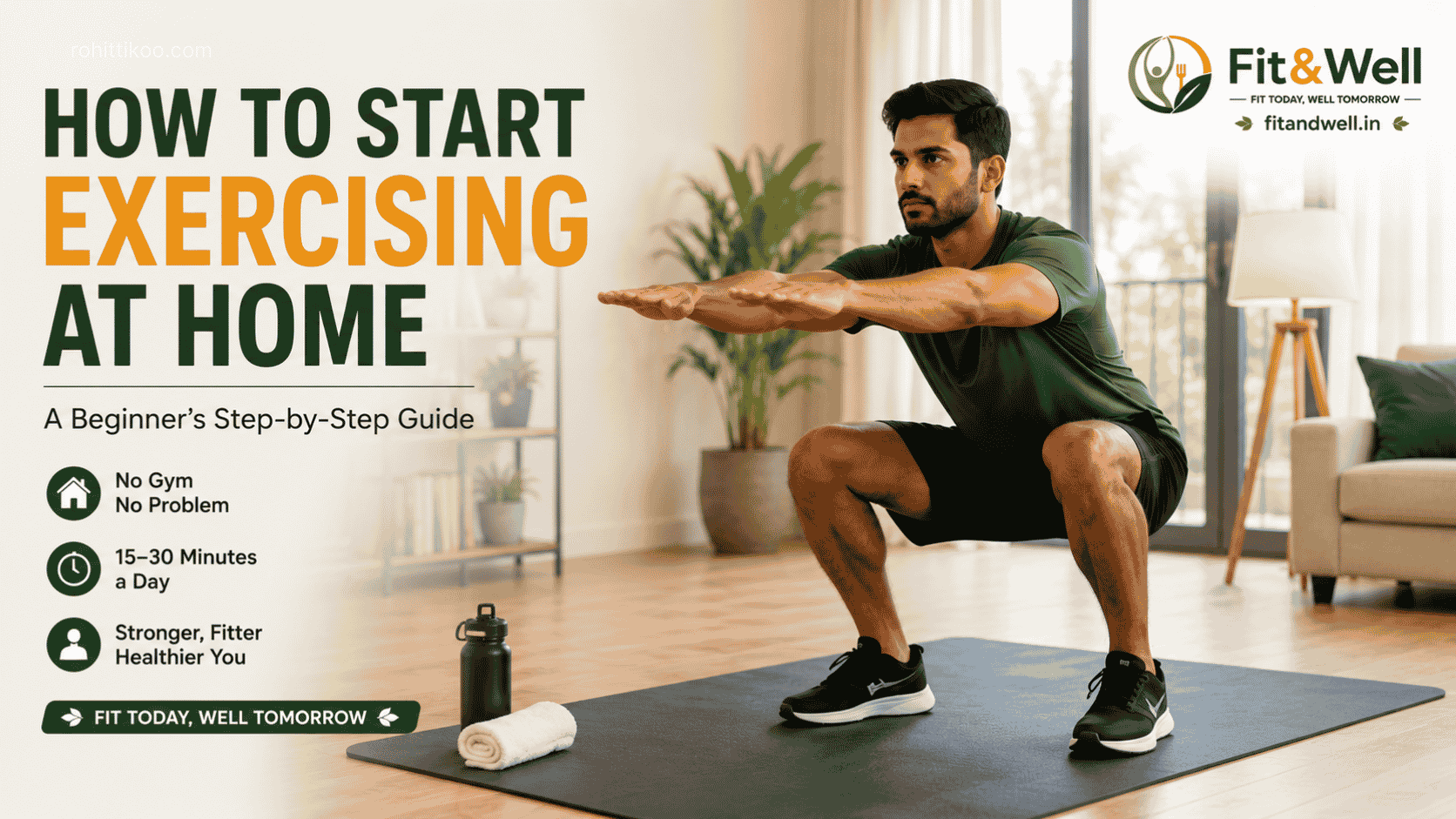
Step 1: Set Simple, Realistic Fitness Goals
Starting without a clear goal often leads to frustration. Many beginners expect dramatic results within a few weeks, and when those expectations aren’t met, motivation quickly fades.
Instead of focusing solely on weight loss or appearance, set goals that are within your control.
Good examples include:
- Exercise three times each week.
- Complete 20 minutes of movement every session.
- Walk 8,000 steps daily.
- Perform ten consecutive push-ups.
- Improve flexibility enough to comfortably touch your toes.
- Sleep for at least seven hours most nights.
These goals are measurable, achievable and easier to maintain.
As your fitness improves, your goals can evolve naturally.
How to set realistic home workout goals as a beginner
Start by asking yourself three simple questions:
Why do I want to exercise?
Your answer might be to improve energy, reduce back pain, lose weight, increase strength or simply feel healthier.
How much time can I realistically commit?
Be honest.
If your schedule only allows 20 minutes on weekdays, build your routine around that instead of planning hour-long sessions you’ll eventually skip.
What type of exercise do I actually enjoy?
Some people enjoy strength training. Others prefer yoga, brisk walking or mobility sessions.
The best exercise programme is one you’ll continue doing consistently.
Write your goals down and review them every month. Small improvements accumulate much faster than dramatic but short-lived efforts.
Step 2: Create a Minimal Home Workout Space
One of the biggest misconceptions about exercising at home is that you need an entire room dedicated to fitness.
You don’t.
A clear space measuring roughly the size of a yoga mat is enough for most beginner workouts. Even if you live in a compact apartment, you can create an effective exercise area by moving a chair or coffee table for 20 minutes.
The focus should be on making the space inviting and easy to use. The fewer barriers there are between deciding to exercise and actually starting, the more likely you’ll stick with the habit.
Choose a location that has:
- Good ventilation.
- Enough room to stretch your arms overhead.
- A non-slip floor or exercise mat.
- Good lighting.
- Access to water.
Keep your workout essentials together so they’re always ready.
This might include:
- Exercise mat.
- Water bottle.
- Small towel.
- Resistance bands (optional).
- Comfortable trainers if required.
Avoid creating unnecessary complexity.
Many effective no gym workout at home routines rely entirely on bodyweight exercises such as squats, lunges, push-ups, glute bridges and planks.
What you need to start exercising at home
You can begin with almost nothing.
Essential items:
- Comfortable clothing that allows free movement.
- Supportive footwear if you’re performing impact exercises.
- A water bottle.
- A small exercise mat or carpeted surface.
- A timer or smartphone.
Optional equipment for future progression:
- Resistance bands.
- Adjustable dumbbells.
- Kettlebell.
- Skipping rope.
- Pull-up bar.
Resist the temptation to buy expensive equipment before you’ve established the habit. Once you’re exercising consistently for several months, you’ll have a much better understanding of what additional equipment will genuinely support your goals.
Step 3: Choose Exercises That Fit Your Time and Goals
One reason many beginners quit within a few weeks is that they choose workouts that don’t match their fitness level or lifestyle. Following an advanced high-intensity routine because it’s trending on social media often leads to excessive soreness, poor form and frustration.
A better approach is to build your routine around fundamental movement patterns. These exercises strengthen multiple muscle groups, improve coordination and create a solid fitness foundation without requiring specialised equipment.
For most beginners, a balanced home workout should include:
- Lower-body exercises to strengthen your legs and hips.
- Upper-body exercises to build pushing and pulling strength.
- Core exercises to improve stability and posture.
- Cardiovascular movement to support heart health and endurance.
- Mobility work to maintain flexibility and reduce stiffness.
This combination provides a complete workout while keeping sessions efficient.
Match Your Workout to Your Goal
Rather than trying to do everything at once, focus on the goal that matters most to you.
| Goal | Prioritise |
| Weight management | Full-body circuits with brisk walking |
| Building strength | Bodyweight strength exercises with gradual progression |
| Improving fitness | Combine strength and cardio |
| Better mobility | Stretching, yoga and mobility drills |
| General health | A mix of strength, walking and flexibility |
If your schedule varies from week to week, don’t worry about creating the “perfect” programme. Aim for consistency rather than perfection.
Three quality workouts each week are far more beneficial than planning six sessions and completing only one.
The Best Beginner Exercises to Start With
These movements require little or no equipment and are suitable for most healthy adults.
Squats
Squats strengthen your:
- Quadriceps
- Hamstrings
- Glutes
- Core
If standard squats feel difficult, start by sitting down and standing up from a sturdy chair.
Push-ups
Push-ups develop:
- Chest
- Shoulders
- Triceps
- Core stability
Beginners can perform incline push-ups using a wall or kitchen counter before progressing to floor push-ups.
Glute Bridges
Glute bridges strengthen the posterior chain, particularly important if you spend long hours sitting at a desk.
Benefits include:
- Better hip strength
- Improved posture
- Reduced lower back discomfort
- Stronger glutes
Lunges
Lunges improve:
- Balance
- Coordination
- Leg strength
- Hip stability
Hold onto a chair if you need additional balance.
Plank
A plank trains your entire core without requiring repeated spinal movement.
Focus on maintaining a straight line from shoulders to ankles rather than holding the position for as long as possible.
Bird Dog
This simple exercise improves:
- Core stability
- Balance
- Lower back control
- Coordination
It’s particularly useful for beginners and office workers experiencing lower back stiffness.
Marching or High Knees
A simple way to raise your heart rate indoors.
If you live in an apartment with neighbours below, choose low-impact marching instead of jumping movements.
Build Around Compound Movements
Compound exercises involve several joints and muscles working together. They provide more value than isolation exercises because they closely resemble everyday movement.
Examples include:
· Squats
· Push-ups
· Lunges
- Step-ups
- Glute bridges
These exercises should form the foundation of your home workout routine for beginners.
Your First 15–30 Minute Home Workout Plan
The best workout is the one you’ll actually complete.
Instead of waiting until you have an hour free, begin with sessions that comfortably fit into your day. For many busy professionals, 15 to 30 minutes is realistic and sustainable.
These routines are designed to improve overall fitness without overwhelming beginners.
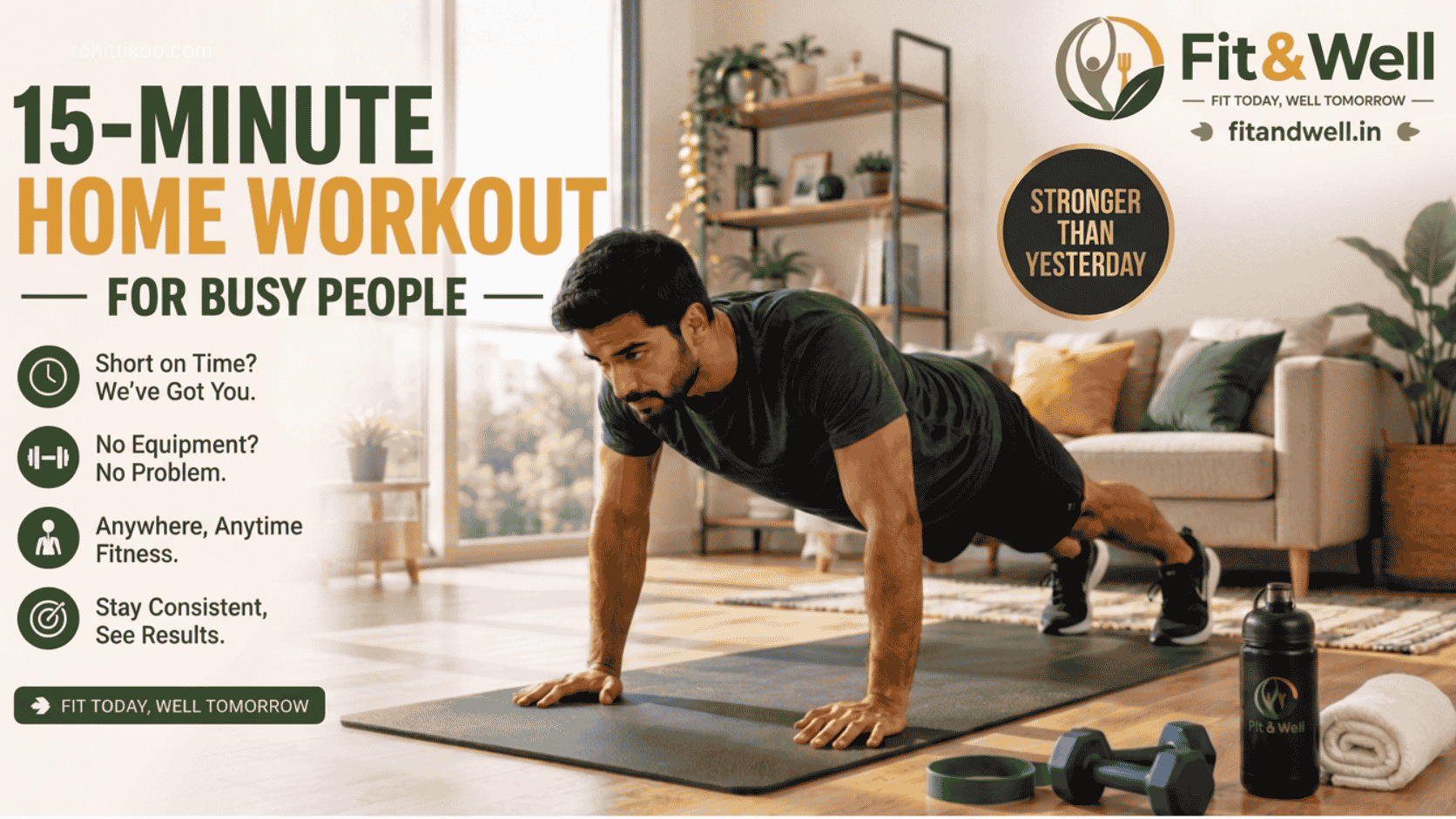
15-Minute Beginner Home Workout
This routine works your entire body using bodyweight exercises.
Warm-up (3 minutes)
Perform each movement for around 30 seconds.
- March on the spot
- Arm circles
- Hip circles
- Bodyweight squats
- Shoulder rolls
- Gentle torso twists
The goal is simply to increase blood flow and prepare your joints for movement.
Main Workout (10 minutes)
Complete the following circuit.
Work for 40 seconds, then rest for 20 seconds before moving to the next exercise.
Repeat the circuit twice.
- Bodyweight Squats
- Incline Push-ups
3. Glute Bridges
- Marching on the Spot
5. Plank
If you struggle to complete 40 seconds, reduce the work interval to 30 seconds and gradually increase it over time.
Cool-down (2 minutes)
Finish with gentle stretches for:
- Hamstrings
- Quadriceps
- Chest
- Shoulders
- Calves
Breathe slowly and avoid bouncing while stretching.
Weekly Beginner Schedule
| Day | Activity |
| Monday | 15-minute workout |
| Tuesday | 20 to 30-minute walk |
| Wednesday | 15-minute workout |
| Thursday | Mobility or stretching |
| Friday | 15-minute workout |
| Saturday | Walk, cycling or yoga |
| Sunday | Rest and recovery |
This schedule provides a balanced combination of strength, movement and recovery.
30-Minute Intermediate Home Workout
Once you’ve completed the beginner routine consistently for four to six weeks, you can increase both workout duration and intensity.
Warm-up (5 minutes)
- Brisk marching
- Bodyweight squats
- Arm circles
- Walking lunges
- Hip mobility
- Dynamic hamstring stretches
Strength Circuit (15 minutes)
Complete three rounds.
Perform each exercise for 45 seconds followed by 15 seconds of rest.
1. Squats
2. Push-ups
- Reverse Lunges
4. Glute Bridges
- Plank Shoulder Taps
- Mountain Climbers (slow and controlled)
Rest for one minute before beginning the next round.
Cardio Finisher (5 minutes)
Choose one:
- Fast marching
- Step-ups
- Skipping rope
- Shadow boxing
- Low-impact jumping jacks
Maintain a pace that increases your breathing while still allowing you to speak in short sentences.
Cool-down (5 minutes)
Stretch:
- Hip flexors
- Glutes
- Hamstrings
- Chest
- Shoulders
- Upper back
Finish with slow, controlled breathing.
How Often Should You Exercise Each Week?
For beginners, aim for:
- Strength training: 2 to 3 sessions weekly.
- Cardiovascular activity: 2 to 3 sessions weekly.
- Mobility or stretching: 2 sessions weekly.
- Daily movement: Walk whenever possible.
This balanced approach supports improvements in strength, endurance and flexibility while allowing adequate recovery.
As your fitness improves, you can gradually increase either the duration or the intensity of your workouts. Avoid increasing both at the same time.
How to Progress Without Burning Out
Progress doesn’t always mean exercising longer.
You can make your workouts more challenging by making small adjustments over time.
Every one or two weeks, consider increasing just one variable:
- Add one extra repetition.
- Add one additional set.
- Increase the work interval by five to ten seconds.
- Reduce rest periods slightly.
- Improve exercise technique.
- Slow down each repetition to increase muscle control.
These gradual changes encourage improvement while reducing the risk of injury or excessive fatigue.
A common mistake is trying to double workout volume after a few successful sessions. Sustainable progress comes from consistency, not dramatic increases in intensity.
Listen to Your Body
It’s normal to experience mild muscle soreness after starting a new exercise programme. However, sharp pain, dizziness, chest discomfort or persistent joint pain are not normal responses to exercise.
If you experience any of these symptoms, stop exercising and seek appropriate medical advice before continuing.
For most people, consistency, proper technique and gradual progression are far more important than working at maximum intensity.
By mastering these basic exercises and following a realistic schedule, you’ll build strength, confidence and endurance without needing a gym membership or expensive equipment.
Staying Consistent, Safety, Nutrition and Recovery
How to Stay Consistent with Home Exercise When You’re Busy
Starting a workout routine is relatively easy. Maintaining it for months is where most people struggle.
Lack of consistency isn’t usually caused by laziness. More often, it’s the result of unrealistic expectations, poor planning or trying to fit exercise into an already overloaded schedule.
Instead of relying on motivation, create systems that make exercising the easiest choice.
Schedule Workouts Like Important Appointments
If your workouts are optional, they’ll often be the first thing you skip.
Treat them like any other commitment by adding them to your calendar.
For example:
- Monday: 7:00 am to 7:20 am
- Wednesday: 7:00 am to 7:20 am
- Friday: 7:00 am to 7:20 am
If mornings don’t work, schedule your workout after work or during your lunch break. The best time to exercise is the time you can stick to consistently.
Start Smaller Than You Think You Need To
Many people believe a workout isn’t worthwhile unless it lasts an hour.
That’s simply not true.
If you’re short on time, even a 15-minute session is far better than doing nothing. Short workouts can improve your fitness, reinforce healthy habits and make it easier to stay consistent.
Some days, your only goal might be to complete a quick mobility routine or a brisk walk. That still counts.
Prepare the Night Before
Reducing small obstacles makes it easier to follow through.
Before going to bed:
- Lay out your workout clothes.
- Fill your water bottle.
- Charge your headphones if you use them.
- Keep your exercise mat ready.
- Decide which workout you’ll do.
When everything is prepared, you’re less likely to skip your session because of minor inconveniences.
Build Exercise Into Your Existing Routine
One of the easiest ways to create a lasting habit is to attach it to something you already do.
For example:
- Exercise after brushing your teeth in the morning.
- Stretch after finishing work.
- Walk immediately after dinner.
- Do a short workout before your evening shower.
These habit pairings reduce the mental effort required to decide when to exercise.
Focus on Progress, Not Perfection
Life will occasionally disrupt your routine.
Work deadlines, travel, family responsibilities or illness may force you to miss a few workouts.
Don’t let one missed session become a missed week.
Resume your routine as soon as possible instead of trying to “make up” for lost workouts with an excessively hard session.
Consistency is measured over months, not days.
How can I stay consistent with home workouts as a busy professional?
If you have a demanding job, consistency depends on planning rather than motivation.
Here’s what works best:
- Schedule workouts in your calendar.
- Keep sessions between 15 and 30 minutes.
- Choose full-body routines to maximise your time.
- Prepare your workout space in advance.
- Track completed workouts rather than focusing only on weight or appearance.
- Accept that some weeks will be better than others.
If you regularly work long hours in Delhi, commute across Gurgaon or manage a busy schedule in Bengaluru, flexibility is essential. Some weeks, you may only manage three short workouts. That’s still meaningful progress.
The aim isn’t to have a perfect routine. It’s to build one that fits your life.
Safety Tips and Common Mistakes When Starting Home Workouts
Exercising at home is convenient, but it also means you’re responsible for maintaining proper form and progressing safely.
Avoiding common mistakes will reduce your risk of injury and make your workouts more effective.
Always Begin With a Warm-up
Never jump straight into intense exercise.
A proper warm-up prepares your muscles and joints for movement by gradually increasing your heart rate and improving mobility.
Spend at least five minutes doing dynamic movements such as:
- Marching on the spot
- Arm circles
- Hip rotations
- Bodyweight squats
- Walking lunges
Prioritise Good Technique
Completing more repetitions doesn’t matter if your form is poor.
Move slowly and deliberately, paying attention to posture and control.
If you’re unsure about a particular exercise, reduce the range of motion or choose an easier variation until you feel confident.
Quality always beats quantity.
Progress Gradually
One of the biggest mistakes beginners make is increasing workout intensity too quickly.
Avoid changing several variables at once.
Instead, increase only one of the following every one to two weeks:
- Number of repetitions
- Number of sets
- Exercise duration
- Resistance
- Exercise difficulty
Gradual progression allows your muscles, joints and connective tissues to adapt safely.
This gradual approach aligns with guidance from the American College of Sports Medicine, which recommends progressive overload and proper recovery rather than sudden increases in training volume.
Don’t Skip Recovery
Exercise creates the stimulus for improvement.
Recovery is when your body adapts.
Without enough rest, your performance may decline rather than improve.
Include at least one or two recovery days each week.
These don’t have to mean complete inactivity. Gentle walking, stretching or yoga can support recovery while keeping you active.
Stay Hydrated
Even mild dehydration can affect exercise performance.
Drink water throughout the day rather than waiting until you’re thirsty.
If you’re exercising indoors during hot summer months, particularly in cities like Delhi or Jaipur where temperatures can become extreme, pay extra attention to hydration.
Listen to Warning Signs
Stop exercising immediately if you experience:
- Chest pain
- Severe dizziness
- Difficulty breathing beyond normal exertion
- Sharp joint pain
- Sudden swelling
- Loss of balance
Seek medical advice before returning to exercise if these symptoms occur.
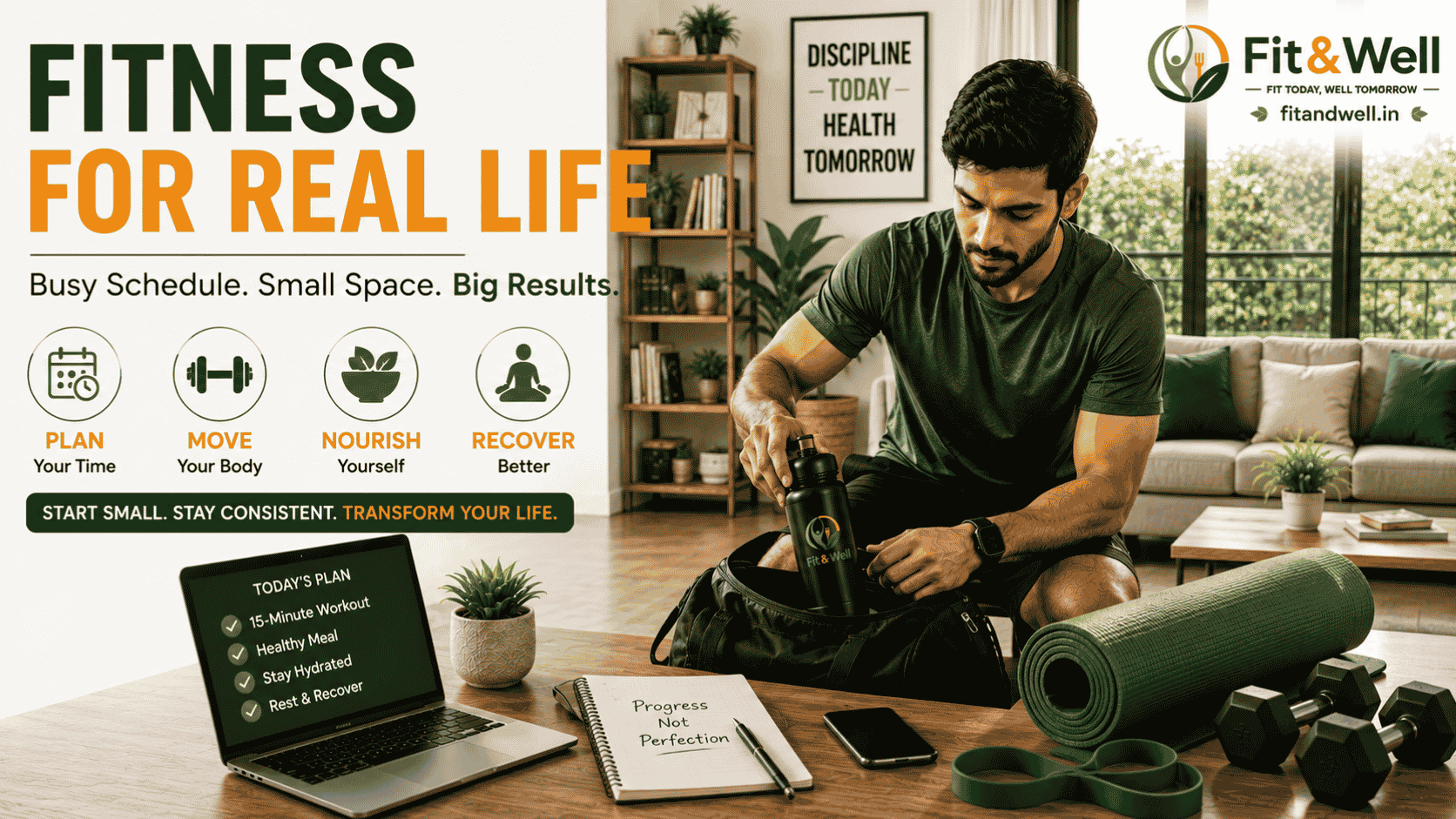
Common Beginner Mistakes
Many beginners unknowingly slow their progress by making avoidable errors.
Here are the most common ones:
- Starting with advanced online workouts.
- Exercising every day without rest.
- Ignoring proper technique.
- Comparing yourself with experienced fitness influencers.
- Expecting rapid weight loss.
- Skipping warm-ups and cool-downs.
- Doing random workouts without a structured plan.
- Neglecting sleep and nutrition.
Avoiding these mistakes will help you build a routine that’s both effective and sustainable.
Nutrition and Recovery to Support Your Home Workout Routine
Exercise is only one part of improving your health.
Nutrition, hydration and recovery play equally important roles in helping your body adapt to training.
You don’t need an overly restrictive diet to support your workouts.
Instead, focus on eating balanced meals that provide enough energy, protein, healthy fats and carbohydrates.
If your goal is to improve your fitness while managing your weight, pairing regular exercise with a balanced eating plan can make a significant difference. Our weight loss diet plan for Indians provides practical meal ideas, portion guidance and nutrition tips designed around everyday Indian foods to help you build sustainable habits.
What should I eat before a home workout?
Your pre-workout meal depends on when you’re exercising.
If you’re working out within an hour of eating, choose something light that’s easy to digest.
Good options include:
- A banana with a handful of peanuts.
- Greek yoghurt with fruit.
- Wholegrain toast with peanut butter.
- A small bowl of oats.
- A fruit smoothie with milk or yoghurt.
If you’re exercising later in the day after a regular meal, there’s usually no need for an additional snack.
Avoid very heavy, spicy or greasy meals immediately before exercising, as they may cause discomfort.
What should I eat after exercising?
Your post-workout meal should help replenish energy and support muscle recovery.
Aim to include:
- Lean protein
- Complex carbohydrates
- Vegetables
- Fluids
Examples include:
- Grilled chicken with rice and vegetables.
- Dal with brown rice and salad.
- Paneer with wholewheat chapatis.
- Eggs on wholegrain toast.
- Chickpea curry with quinoa.
You don’t need expensive protein supplements if you’re already meeting your daily protein needs through food.
Hydration Matters
Drink water before, during and after your workout.
If you’re exercising for less than an hour at a moderate intensity, plain water is usually sufficient.
Sports drinks are generally unnecessary for most beginner home workouts.
How much rest do I need between home workouts?
Most beginners benefit from allowing each muscle group at least 48 hours to recover after strength-focused exercise.
That doesn’t mean complete inactivity.
You can alternate activities such as:
- Walking
- Yoga
- Stretching
- Mobility work
- Light cycling
Recovery also depends on:
- Sleep quality
- Nutrition
- Hydration
- Overall stress levels
Aim for 7 to 9 hours of sleep each night, as this is when much of your body’s recovery and muscle repair takes place.
The National Health Service also emphasises that regular exercise, balanced nutrition, adequate hydration and quality sleep work together to support overall health and long-term fitness.
Lifestyle Habits That Support Your Progress
Exercise becomes much more effective when combined with healthy daily habits.
Focus on:
- Eating regular, balanced meals.
- Staying hydrated throughout the day.
- Limiting prolonged sitting by standing or walking every hour.
- Managing stress through relaxation techniques or mindfulness.
- Maintaining a consistent sleep schedule.
These habits work together to improve energy, recovery and long-term health.
Home Workouts Are About Building a Lifestyle
Many people begin exercising because they want to lose weight or improve their appearance. While these can be worthwhile goals, the most meaningful benefits often extend far beyond the mirror.
A consistent home workout routine can help improve:
- Everyday strength for lifting, carrying and climbing stairs.
- Mobility and flexibility.
- Balance and coordination.
- Energy levels.
- Mood and mental wellbeing.
- Cardiovascular fitness.
- Long-term independence as you age.
Instead of chasing rapid transformations, focus on becoming someone who moves regularly.
That’s a change that can last a lifetime.Top of Form
FAQs, Quick Start Guide and WordPress SEO Assets
Common Questions About Starting Home Workouts (FAQ)
How can I start exercising at home if I have no time?
The biggest mistake is thinking you need an hour to exercise. Most beginners can make noticeable progress with 15 to 20 minutes, three to four times a week.
Start with a simple full-body routine that includes squats, push-ups, glute bridges and planks. Schedule your workouts like appointments and perform them at the same time each week. Consistency matters far more than workout length.
What is the best home workout for beginners in India?
A beginner-friendly routine should focus on basic bodyweight movements that improve overall strength and fitness.
A balanced workout might include:
- Bodyweight squats
- Incline or knee push-ups
- Glute bridges
· Lunges
- Planks
- Brisk marching or walking
This type of routine requires little space and no expensive equipment, making it suitable whether you live in a small apartment in Delhi or a shared home in Mumbai.
How many days a week should I exercise at home?
For most beginners, three strength-focused workouts each week provide an excellent starting point.
You can also include:
- Two days of walking or light cardio
- One or two mobility or stretching sessions
- At least one recovery day
This balance supports steady progress while giving your body enough time to recover.
Do I need equipment to start home workouts?
No.
Most beginners can improve strength, endurance and mobility using only their body weight.
Useful exercises include:
· Squats
· Push-ups
· Lunges
- Planks
- Glute bridges
As you become stronger, you may choose to add resistance bands or adjustable dumbbells, but they aren’t essential when you’re first learning how to start exercising at home.
How long should a beginner home workout be?
Aim for 15 to 30 minutes.
A typical session should include:
- 5-minute warm-up
- 10 to 20 minutes of strength and cardio exercises
- 5-minute cool-down
Short, well-planned workouts are easier to maintain than long sessions that don’t fit your schedule.
Can I lose weight by exercising at home?
Home workouts can support weight loss when combined with a balanced diet and a sustainable calorie intake.
Strength training, walking and regular movement help increase energy expenditure while preserving muscle mass. However, exercise alone is rarely enough. Nutrition, sleep and long-term consistency also play important roles.
Instead of aiming for rapid weight loss, focus on building healthy habits you can maintain over time.
Is yoga enough for a home workout routine?
Yoga improves flexibility, balance, mobility and mental wellbeing, making it an excellent part of a home fitness routine.
However, most adults will also benefit from regular strength training and moderate cardiovascular exercise. Combining yoga with bodyweight strength workouts and walking creates a more balanced programme that supports overall health.
Quick Start: How to Begin Exercising at Home Today
If you’re ready to begin, don’t overcomplicate it.
Your 4-Step Quick Start Plan
✓ Pick 15 minutes
Choose a realistic time that fits your daily routine, whether it’s before work, during lunch or after dinner.
✓ Learn Three Basic Exercises
Start with:
· Squats
- Incline Push-ups
- Planks
Master good technique before adding more exercises.
✓ Exercise Three Times This Week
Aim for three full-body workouts rather than trying to exercise every day.
✓ Track Your Progress
Record:
- Number of workouts completed
- Repetitions performed
- How you felt afterwards
Small improvements each week are a better measure of success than the number on the scales.
Next Steps
Starting a home workout routine doesn’t require perfect conditions. It requires a practical plan that fits your lifestyle.
Whether you’re balancing work in Gurgaon, studying in Bengaluru or managing family responsibilities in Delhi, regular movement is possible without a gym membership or expensive equipment.
Begin with short, manageable sessions. Focus on proper technique, gradual progression and consistency rather than intensity. As your confidence grows, you can increase the challenge while maintaining habits that support long-term health.
The most effective exercise plan isn’t the most complicated one. It’s the one you’ll still be following months from now.