

Feeling constantly exhausted isn’t a personal failure. It is a natural reaction to the way we live today. We all ask ourselves how to stop feeling tired, but we do very little to fix it.
Data shows that over half the global population experiences constant lethargy, proving that our energy crisis is a widespread lifestyle issue rather than an individual problem. By implementing simple, evidence-backed changes into your morning, afternoon, and evening routines, you can permanently override baseline exhaustion and optimise your natural energy levels.
1. Implement the First Light Protocol
Viewing natural morning sunlight changes everything. Getting outside within thirty minutes of waking triggers a precise, healthy cortisol spike that sets your internal biological clock. When natural light hits your eyes, it signals your brain to stop producing melatonin, the hormone that makes you sleepy.
The chart below outlines how early-morning sun exposure acts as a master switch for your physical and mental well-being.
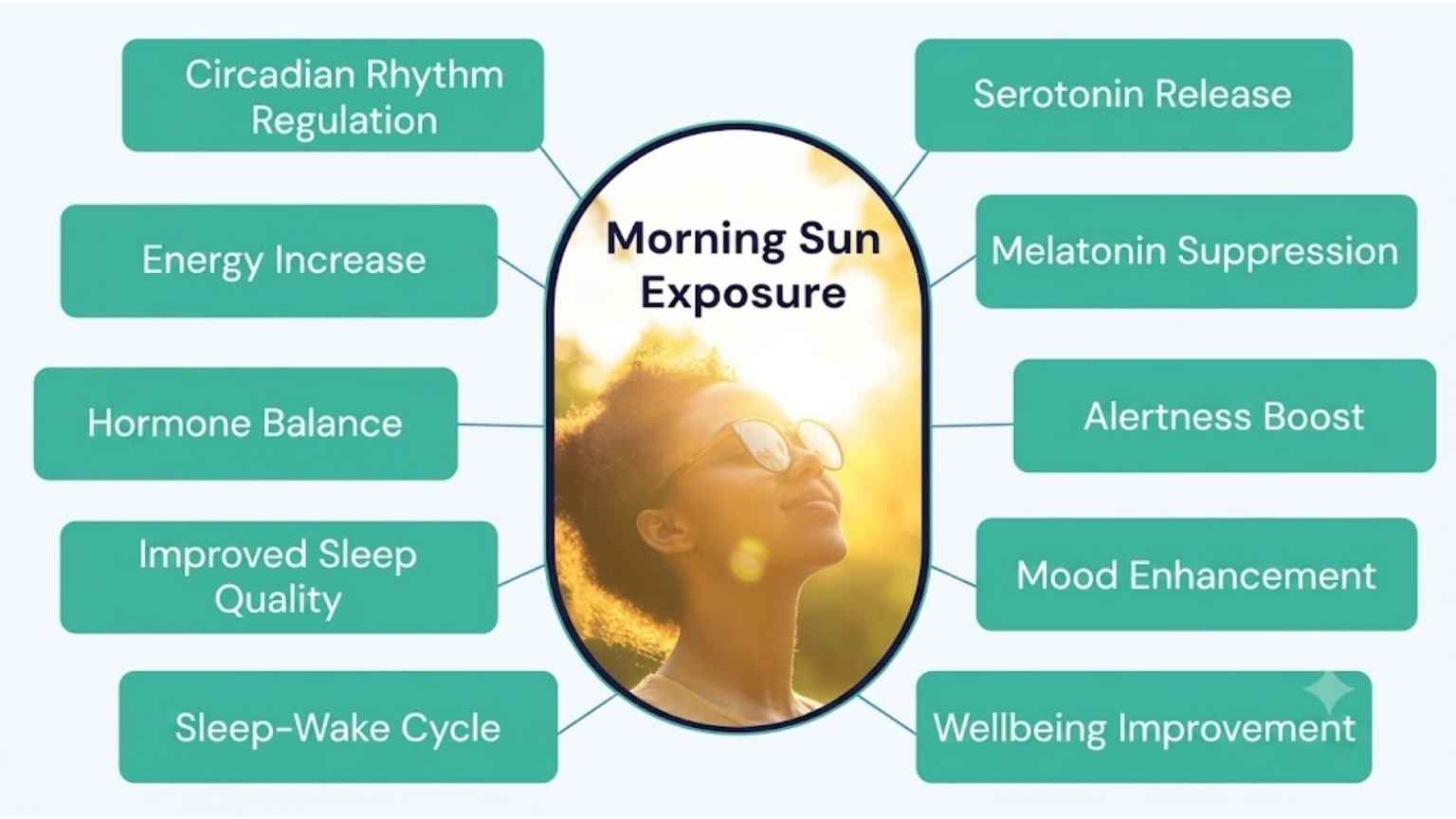
As shown in the graphic, this habit does more than just wake you up; it regulates your entire sleep-wake cycle and enhances your mood. To get the best results, you can follow the structured steps found in the Huberman Lab morning sunlight guide. Standing outside without sunglasses for just ten minutes is enough to clear away residual grogginess.
2. Utilise Strategic Delayed Caffeine
Most people drink coffee the moment they roll out of bed, but this is a major biochemical mistake. While you sleep, your body builds up a compound called adenosine, which creates sleep pressure and makes you feel tired. Waking up naturally clears this compound over time.
If you ingest caffeine immediately, you merely block your brain’s receptors without actually clearing the chemical out. By waiting 90 to 120 minutes before your first cup, you allow your natural cortisol levels to peak and clear the adenosine first. This approach is detailed in the online masterclass on caffeine optimisation, ensuring you enjoy your coffee while completely avoiding the dreaded mid-afternoon crash.
3. Master Post-Lunch Glucose Blunting
The post-lunch slump is a direct result of blood sugar volatility. Eating a midday meal rich in refined carbohydrates spikes your blood sugar, causing a subsequent systemic crash that leaves you feeling comatose by mid-afternoon.
The solution is a simple 10 to 15-minute walk immediately after eating. Evidence published in a major clinical study on postprandial glucose levels confirms that light post-meal movement acts as a sponge. It pulls glucose directly into your skeletal muscle tissue, providing steady energy without requiring a massive, fatiguing insulin surge.
4. Establish Micro-Hydration Cycles
Mild dehydration is a hidden thief of daily mental focus. By the time you actually feel thirsty, your body is already running low on fluids, which can reduce your cognitive processing speed by up to 12%.
Instead of chugging a massive glass of water only when a headache appears, try sipping small volumes steadily throughout the day. You can easily align your daily fluid intake with the official British Nutrition Foundation hydration resources to maintain an optimal fluid balance before physical fatigue and brain fog set in.
5. Integrate Midday Non-Sleep Deep Rest (NSDR)
When mental fatigue hits in the afternoon, do not reach for sugar or an extra shot of espresso. Non-Sleep Deep Rest, or NSDR, is an evidence-backed practice involving deliberate stillness, body scanning, and calm, rhythmic breathing.
A brief 20-minute session calms your nervous system and restores brain dopamine levels to baseline, mirroring the restorative effects of a full sleep cycle. If you struggle to focus past 3:00 PM, trying a restorative audio script from the Huberman Lab sleep toolkit can rapidly restore your productivity and reduce deep cognitive exhaustion.
6. Practice the 20-Minute Low-Intensity Movement Rule
Fatigue easily breeds a sedentary mindset, which ironically makes your exhaustion worse. This creates a frustrating behavioural loop where you feel too tired to move, so you stay still, which drains your energy further.
Physical activity triggers the creation of new mitochondria, which are the power plants inside your cells. A landmark clinical trial highlighted by the University of Georgia exercise study revealed that sedentary adults who engaged in just 20 minutes of low-intensity exercise three times a week reported a massive 65% drop in their fatigue levels.
7. Adjust Nutrition for Magnesium-Rich ATP Production
Energy production at the cellular level requires a molecule called adenosine triphosphate, or ATP. However, this essential molecule cannot function properly without binding to a magnesium ion.
Modern industrial farming has systematically depleted minerals from our soil, leaving many people sub-clinically deficient in this nutrient. Data within the peer-reviewed muscle and mineral review highlights how correcting a minor magnesium deficiency alters baseline cellular output and alleviates chronic physical weakness. Focus on incorporating dark leafy greens, pumpkin seeds, and clean dietary minerals into your meals.
8. Enforce a Strict Digital Sunset
Melatonin production cannot survive the glare of modern consumer electronics. Implementing a digital sunset requires turning off high-intensity blue light sources roughly two hours before sleep because blue light mimics the daytime sky, tricking your brain into halting sleep hormones.
Try replacing your phone with an analogue book before bed. The difference in your sleep quality will be profound. You will experience deeper slow-wave sleep, which is the exact phase responsible for physical restoration, muscle recovery, and immune system repair.
9. Execute Morning Temperature Cycling
Spiking your daytime alertness requires a deliberate, controlled physiological change. Ending your morning shower with two minutes of cold water triggers a massive, sustained release of alertness hormones like norepinephrine and dopamine.
The sudden drop in skin temperature constricts peripheral blood vessels, driving oxygenated blood to your vital organs. This causes an immediate lift in mental clarity and physical warmth that persists for hours without any chemical cost or crash.
10. Complete the Evening Brain Dump Ritual
Psychological stress quickly manifests as physical exhaustion. When you carry an unorganised mental load into the evening, your mind remains hyperactive, draining your energy reserves through low-grade, unconscious anxiety.
Every evening, write down every pending task, worry, and micro-decision onto a blank sheet of paper. This simple act of cognitive offloading frees up your executive function. You cannot expect a night of deeply restorative rest when your subconscious mind is busy processing unstructured data all night.
If you’re looking for more practical tips on improving your overall well-being, explore our Health and Wellness articles
Frequently Asked Questions
How long does it take to see a reduction in fatigue?
Biochemical adjustments like post-lunch walks and morning cold showers yield immediate results within the first 24 hours. Structural changes, such as building cellular energy capacity through low-intensity exercise, require around three weeks of consistent practice.
Can bright indoor office lights substitute for morning sunlight?
No. Standard indoor lighting lacks the necessary power to activate your internal clock effectively. Artificial lights typically deliver 300 to 500 lux, whereas even a cloudy morning sky delivers at least 10,000 lux. You must step outside to get the benefits.
Why does delaying coffee prevent the afternoon crash?
Delaying caffeine allows accumulated sleep chemicals to clear from your system naturally through morning cortisol activity. If you block those receptors with coffee immediately upon waking, the sleep pressure continues to build up behind the caffeine. Once the caffeine wears off, a sudden afternoon collapse occurs.
Will a high-intensity workout fix low energy better than low-intensity movement?
No. When you are suffering from persistent exhaustion, high-intensity exercise elevates stress hormones excessively, leading to further burnout. Low-intensity movement stimulates cellular energy growth without overtaxing an already tired nervous system.