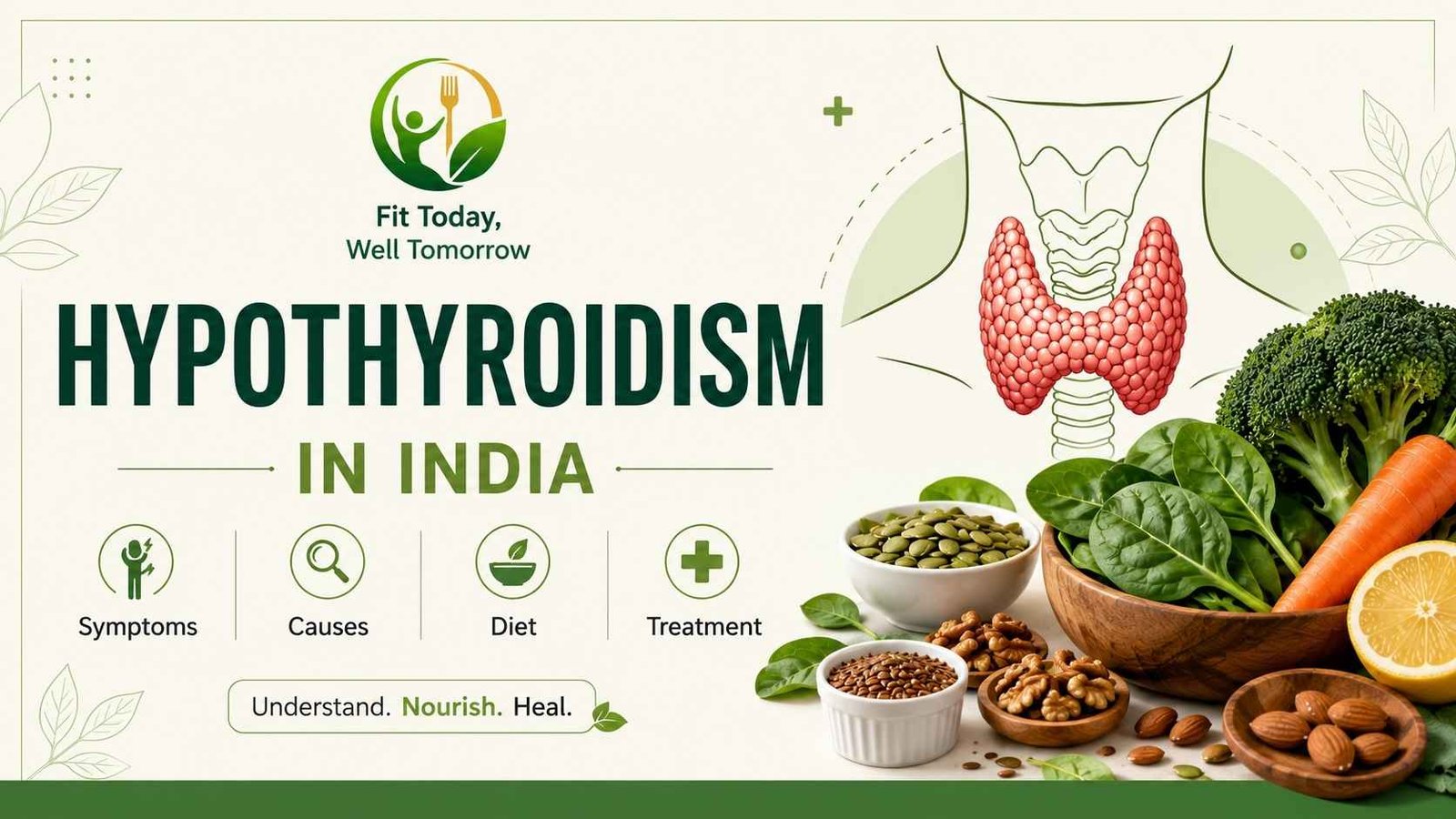

Hypothyroidism happens when the thyroid gland cannot make enough thyroid hormone to keep the body’s metabolism running normally. It is one of the most common thyroid disorders in India, and it is thought to affect roughly one in ten adults, with women affected far more often than men.
Many cases go unnoticed for years. The symptoms build up slowly and look like everyday complaints: tiredness, weight gain, constipation, low mood, poor concentration. The only reliable way to tell hypothyroidism apart from ordinary fatigue is a blood test, not a symptom checklist.
This guide covers what hypothyroidism is, how common it really is in India, its causes and risk factors, how it is diagnosed and treated, what a sensible diet looks like, pregnancy considerations, and the myths worth retiring.
Medical note: this article is for health education. It does not replace diagnosis or treatment from a qualified doctor. Thyroid medication should never be started, stopped or adjusted without medical supervision.
What Is Hypothyroidism?
The thyroid is a small, butterfly-shaped gland at the front of the neck. Despite its size, it plays an outsized role in regulating metabolism.
It mainly produces thyroxine (T4), along with smaller amounts of triiodothyronine (T3). T4 is converted into the more active T3 in tissues throughout the body.
The thyroid does not work alone. It answers to a chain of command that runs from the hypothalamus to the pituitary gland to the thyroid itself.
The hypothalamus releases a hormone that tells the pituitary gland to produce thyroid-stimulating hormone, or TSH. TSH then tells the thyroid how much hormone to make.
When thyroid hormone levels drop, the pituitary usually raises TSH to push the thyroid to work harder. This is why a raised TSH, even with normal T4, is often the first clue that the thyroid is struggling.
In primary hypothyroidism, the thyroid itself cannot keep up, however hard TSH pushes it. TSH rises, and free T4 eventually falls. This pattern is why TSH and free T4 sit at the centre of every hypothyroidism diagnosis.
The Three Types of Hypothyroidism
Hypothyroidism is not one single condition. Doctors generally split it into three types.
Primary hypothyroidism is by far the most common. The problem sits in the thyroid gland itself, which cannot produce enough hormone. TSH is high; free T4 is low once the condition becomes overt. Common causes include autoimmune thyroid disease, thyroid surgery, radioactive iodine treatment, certain medicines, and severe iodine deficiency.
Subclinical hypothyroidism is milder. TSH is raised, but free T4 is still within the normal range. Some people feel unwell; many feel nothing at all. Whether to treat it depends on the degree of TSH elevation, age, symptoms, pregnancy status, thyroid antibodies and cardiovascular risk, not on the TSH number alone.
Central hypothyroidism is rare. Here the fault lies in the pituitary gland or hypothalamus, not the thyroid. TSH may not rise the way it normally would, even though thyroid hormone is genuinely low. This is one reason a normal TSH cannot always be trusted at face value in someone with suspected pituitary disease, and why thyroid tests need to be read in context rather than as a single isolated number.
Hypothyroidism vs Hyperthyroidism
The two sit at opposite ends of the same gland’s output. Hypothyroidism means too little hormone, which slows the body down: fatigue, weight gain, cold intolerance, constipation. Hyperthyroidism means too much hormone, which speeds it up: unintended weight loss, a racing heart, heat intolerance, tremor.
Both are diagnosed with the same TSH and free T4 blood tests, and both are common enough in India to be worth testing for rather than guessing about. This article focuses on the underactive form.
How Common Is Hypothyroidism in India?
Hypothyroidism carries a genuinely large burden in India, and the numbers are higher than in many Western populations.
The Indian Thyroid Society’s most recent consensus statement, on the use of T3 (liothyronine) therapy, cites Indian data showing an overall hypothyroidism prevalence of around 10.95%, with 8.02% of that made up of subclinical cases (Indian Thyroid Society, Role of Triiodothyronine in Hypothyroidism, 2025).
Individual studies show how much this figure moves depending on the population studied. A 2024 study of the Tata Longitudinal Study of Ageing cohort in Bangalore, involving 1,181 adults aged 45 and above, found hypothyroidism in 17.69% of participants, most of it subclinical, and significantly more common in women (Prevalence of hypothyroidism in older adults, Brain Communications, 2024).
A separate study of 800 adults in northern India found subclinical hypothyroidism in 10.25% overall: 12.8% in women against 8.8% in men (Prevalence of subclinical hypothyroidism in the general adult population of northern India, Journal of Medical Science and Clinical Research, 2020).
The honest takeaway is that there is no single number that describes every Indian population. Prevalence shifts with age, sex, iodine status, diagnostic criteria and whether a study is community-based or hospital-based. What stays consistent across almost every Indian study is the same pattern: hypothyroidism is common, and women carry a disproportionate share of it.
A few things also make the Indian picture distinct from the global one.
Iodine status has improved, unevenly. Iodine deficiency used to be the dominant cause of thyroid problems across large parts of India. Universal salt iodisation changed that substantially: national survey data found 91.7% of Indian households using iodised salt, and 77.5% using adequately iodised salt (National Iodine and Salt Intake Survey, 2014 to 2015).
Rural households still lag urban ones by about 17 percentage points, and southern India trails the rest of the country because of continued use of unrefined crystal salt. Iodine deficiency has not disappeared in India; it has become a pocketed problem rather than a nationwide one.
Autoimmune disease is now the leading cause where iodine intake is adequate. As iodine status has improved, Hashimoto’s thyroiditis has overtaken deficiency as the most frequently identified cause of hypothyroidism in urban India.
Underdiagnosis is real. Early symptoms are vague and easy to dismiss, and routine thyroid screening isn’t part of most general check-ups outside pregnancy or specific risk groups. A meaningful share of cases likely go unnoticed for months or years.
Why Are Women More Affected?
Women are considerably more likely than men to develop autoimmune thyroid disease such as Hashimoto’s thyroiditis. Hormonal, genetic and immune-system differences are all thought to play a part.
Pregnancy adds another layer of risk. The hormonal and immune shifts of pregnancy can affect thyroid function, and postpartum thyroiditis can cause a temporary phase of overactive thyroid followed by an underactive one in some women.
Age matters too. Thyroid disorders become more common as people get older, though hypothyroidism can appear at any age.
Symptoms of Hypothyroidism
Hypothyroidism develops slowly, often over months or years. That is exactly why it is so easy to miss or write off as ordinary tiredness or “just getting older.”
Common symptoms include:
- Persistent fatigue that doesn’t lift with rest
- Weight gain, or difficulty losing weight
- Feeling unusually cold
- Constipation
- Dry skin, and thinning or brittle hair
- Muscle weakness, aches and reduced exercise tolerance
- Low mood, poor concentration, memory problems and slower thinking
- Puffiness in the face
- Hoarseness of voice
- Heavier or irregular menstrual periods
- A slower heart rate
- Raised cholesterol on routine blood tests
- Reduced libido and increased sleepiness
Not everyone gets all of these, and severity varies widely. Some people with a mildly raised TSH feel entirely well; others notice a cluster of symptoms strong enough to prompt a doctor’s visit.
The trouble is that almost none of these symptoms are specific to hypothyroidism. A 2023 review in Frontiers in Endocrinology pointed out that the common symptoms of overt hypothyroidism are genuinely non-specific, and that no single symptom can reliably identify the condition on its own (Jansen et al., Frontiers in Endocrinology, 2023). Fatigue could mean hypothyroidism, or it could mean anaemia, poor sleep, vitamin D deficiency, depression or a dozen other things.
This is especially worth remembering in India, where unexplained weight gain or tiredness is sometimes blamed on a “slow thyroid” without a blood test ever being done. Symptoms are a reason to test, not a diagnosis in themselves.
Hypothyroidism and Weight Gain
Weight gain is the symptom most people associate with hypothyroidism, and the relationship is more complicated than the popular version of the story.
Reduced thyroid hormone can slow metabolic processes and contribute to weight gain, and some of that early gain is fluid retention rather than fat. According to the American Thyroid Association, the weight gain directly attributable to hypothyroidism is typically modest: about 2 to 4.5 kilograms, depending on severity (American Thyroid Association, Thyroid and Weight).
Hypothyroidism rarely explains large or fast-progressing obesity on its own. People with obesity can also have a slightly raised TSH without true hypothyroidism, and a 2023 review found that this TSH elevation can sometimes ease after weight loss rather than the other way round (Biondi, Subclinical Hypothyroidism in Patients with Obesity and Metabolic Syndrome, Nutrients, 2023).
That matters for treatment. The goal of levothyroxine is to restore normal thyroid hormone levels, not to act as a weight-loss drug, and treating a mildly raised TSH purely to chase weight loss is not supported by the evidence.
Once genuine hypothyroidism is treated, some of the associated weight can come off, but the rest still depends on the same basics as for anyone else: food, activity, sleep and consistency. Our guide to obesity, its causes and its health risks covers that fuller picture.
Hair Loss and Hypothyroidism
Thyroid hormone affects hair follicles and skin, so hypothyroidism can cause dry skin and diffuse hair thinning rather than a single defined bald patch.
But hair loss has plenty of other causes too: iron deficiency, vitamin shortfalls, stress, rapid weight loss, illness, PCOS, certain medicines and ordinary androgenetic hair loss. A thyroid test is a reasonable step for unexplained hair loss, but a normal result means the search should move on to another cause.
Menstrual Problems and Hypothyroidism
Thyroid hormones interact closely with reproductive hormones. Hypothyroidism can contribute to heavier periods, irregular cycles, longer cycles and ovulation problems, and severe untreated cases can affect fertility.
That said, thyroid disease is rarely the only possible explanation. Pregnancy, PCOS, perimenopause, fibroids and other hormonal conditions can all cause similar patterns, which is exactly why a blood test rather than an assumption is the right next step.
What Causes Hypothyroidism?
Hashimoto’s thyroiditis is an autoimmune condition where the immune system gradually attacks thyroid tissue. It is the single most common cause of hypothyroidism where iodine intake is adequate, including in most of urban India, and it often develops slowly over years. Thyroid peroxidase (TPO) antibodies are usually raised.
A 2025 hospital-based study from New Delhi found evidence of autoimmune thyroid disease in a substantial share of hypothyroid patients, though as a single-hospital study its findings shouldn’t be read as representative of the whole country (Prevalence of Autoimmune Thyroid Disease in Hypothyroidism, Cureus, 2025).
Iodine deficiency remains a factor in specific pockets of India, particularly rural areas with lower coverage of adequately iodised salt. The thyroid simply cannot build hormone without enough iodine as raw material.
Too much iodine can be just as disruptive as too little, particularly in people already prone to autoimmune thyroid disease. High-dose iodine supplements or kelp tablets, taken without a documented need, are not a safe way to “support” the thyroid.
Thyroid surgery that removes part or all of the gland commonly leads to hypothyroidism, and total thyroidectomy generally means lifelong hormone replacement.
Radioactive iodine treatment, used for some thyroid conditions including hyperthyroidism, reduces thyroid tissue activity over time and often leads to hypothyroidism requiring levothyroxine.
Certain medicines can trigger or worsen hypothyroidism, including lithium, amiodarone, some immune-modulating therapies and some cancer treatments. Anyone starting a long-term medicine with a known thyroid effect should have thyroid function checked periodically.
Postpartum thyroiditis can develop in the months after childbirth, sometimes with a brief overactive phase before hypothyroidism sets in. It often resolves on its own, but it can also become permanent, so follow-up testing matters.
Pituitary or hypothalamic disease can rarely cause central hypothyroidism, which needs a different diagnostic approach since TSH doesn’t behave the way it would in primary hypothyroidism.
Who Is Most at Risk?
- Women, especially over 60 and post-menopausal
- Anyone with a personal or family history of autoimmune disease
- People with a family history of thyroid disease
- Women who are pregnant or have recently given birth
- Anyone with a history of thyroid surgery or radiation to the head, neck or chest
- People taking medicines known to affect thyroid function
- People in regions with historically low iodine intake, or with excessive iodine exposure
There is also a well-documented overlap with PCOS in Indian women, which is why thyroid testing is now a routine part of working up PCOS symptoms. A large 2024 nationwide Indian study of nearly 9,000 women found PCOS itself affects a substantial share of reproductive-age women, with high rates of metabolic complications alongside it (Ganie et al., JAMA Network Open, 2024).
International research has found subclinical hypothyroidism specifically in as many as 31.1% of women with PCOS, independently linked to insulin resistance (Gawron et al., Journal of Clinical Medicine, 2022).
The fertility connection can be striking. The Indian Thyroid Society’s consensus statement on subclinical hypothyroidism cites an Indian study in which 62.7% of infertile women found to have hypothyroidism had the subclinical rather than overt form, and 76.6% went on to conceive after treatment (Indian Thyroid Society, Subclinical Hypothyroidism in Adults, 2023). That is a strong argument for testing early rather than assuming the problem away.
How Is Hypothyroidism Diagnosed?
Symptoms alone cannot diagnose hypothyroidism. Blood tests are needed.
TSH is usually the first test ordered. When thyroid hormone is low, the pituitary generally raises TSH to compensate, so a high TSH is the first red flag for primary hypothyroidism.
Free T4 shows whether hormone production is genuinely reduced. High TSH with low free T4 points to overt hypothyroidism. High TSH with normal free T4 points to the subclinical form.
TPO antibodies help identify an autoimmune cause. A positive result doesn’t automatically mean treatment is needed, and antibody testing isn’t required for everyone with an abnormal TSH; it depends on the clinical picture.
T3 is generally not useful for diagnosing primary hypothyroidism, because T3 can stay normal even when T4 has already dropped. A normal T3 does not rule hypothyroidism out.
None of this needs special preparation or fasting, and results are usually available within a day or two from most Indian labs.
What TSH level actually means hypothyroidism?
There is no single TSH number that applies the same way to everyone. Reference ranges differ between labs, and age, pregnancy, medication and current illness all affect how a result should be read.
A TSH of 6 mIU/L means something different in a healthy 25-year-old than it does in a 75-year-old man, a woman trying to conceive, someone already pregnant, someone with positive TPO antibodies, or someone with significant heart disease. This is exactly why an online TSH calculator can’t substitute for a doctor’s interpretation.
Subclinical Hypothyroidism: Should It Always Be Treated?
This is one of the more genuinely debated questions in thyroid care, and it deserves an honest answer rather than a simple yes.
The Indian Thyroid Society’s 2023 consensus lays out an age- and risk-adjusted approach rather than one blanket rule:
- TSH above 10 mIU/L, under 65: treatment is generally recommended regardless of symptoms.
- TSH 4.5 to 10 mIU/L, under 65: a treatment trial is considered if symptoms or cardiovascular risk factors are present, but it isn’t automatic if someone feels well.
- TSH below 4.5 mIU/L: current evidence does not support routine treatment, except during pregnancy or when planning one, where the target is stricter.
- Age 65 to 85: a cautious “watch and monitor” approach is preferred, even up to TSH 10, since over-treatment carries its own risks, including irregular heart rhythm and bone loss.
- Over 80 to 85: hormone treatment is generally avoided unless there is a strong specific reason.
This individualised approach holds up well against the wider evidence, which is more mixed than a “treat every raised TSH” rule would suggest. A 2007 Cochrane review of 12 randomised trials found that levothyroxine for subclinical hypothyroidism did not significantly improve symptoms, mood or quality of life, though it modestly improved cholesterol and some heart-function measures (Villar et al., Cochrane Database of Systematic Reviews, 2007).
A 2021 review in The Lancet Diabetes & Endocrinology, focused specifically on people 65 and over, concluded that levothyroxine should generally be reserved for that age group only once TSH is persistently 7 mIU/L or higher, since treatment below that showed no consistent benefit for the heart, bones or cognition (Biondi et al., The Lancet Diabetes & Endocrinology, 2021).
Randomised sub-studies of the large TRUST trial found the same thing: no measurable improvement in heart function or artery health after treatment in older adults with mild subclinical hypothyroidism (Gencer et al., The American Journal of Medicine, 2019; Blum et al., The Journal of Clinical Endocrinology & Metabolism, 2018).
At the same time, a 2022 umbrella review pooling 20 systematic reviews found that treating subclinical hypothyroidism was linked to lower all-cause mortality in adults under 70, and that untreated cases above TSH 10 carried a higher risk of cardiovascular events or death (Bauer et al., PLOS ONE, 2022).
Put together, treatment clearly helps some groups (younger adults, higher TSH, real symptoms) and offers little proven benefit for others (older adults with only a mildly raised TSH and no symptoms). That’s why the Indian Thyroid Society’s graded approach, rather than one rule for everyone, reflects where the evidence actually stands.
TPO antibody status also matters for monitoring. People who test positive have a meaningfully higher yearly risk of progressing to overt hypothyroidism, around 4.3% a year versus 2.6% in antibody-negative people, which is why annual monitoring is recommended for antibody-positive individuals and roughly every three years for those who test negative.
The honest summary: a single mildly raised TSH is rarely a medical emergency, and it isn’t, on its own, proof that treatment is required. It’s a reason for a conversation with a doctor about symptoms, age, antibody status, cardiovascular risk and pregnancy plans, not an automatic prescription.
Hypothyroidism and Pregnancy in India
Pregnancy is where the threshold for treating even mild thyroid underactivity tightens noticeably, because untreated hypothyroidism in pregnancy is linked to a higher risk of miscarriage, pre-eclampsia, preterm birth and impaired fetal neurological development (National Guidelines for Screening of Hypothyroidism during Pregnancy, National Health Mission).
Indian data suggests thyroid dysfunction in pregnancy is genuinely common. A 2021 meta-analysis of 61 observational studies estimated the pooled prevalence of hypothyroidism among pregnant women in India at 11.07% (Yadav et al., Journal of Thyroid Research, 2021).
India’s national guidelines set trimester-specific TSH targets, tighter than the general adult range:
- First trimester: 0.1 to 2.5 mIU/L
- Second trimester: 0.2 to 3.0 mIU/L
- Third trimester: 0.3 to 3.0 mIU/L
The guidelines currently recommend targeted, risk-based screening rather than testing every pregnant woman, prioritising those in iodine-deficient areas, with a BMI of 30 or above, a personal or family history of thyroid disease, an autoimmune condition, or a history of pregnancy loss or infertility.
This targeted approach is itself debated among Indian endocrinologists, some of whom argue for universal screening given how common thyroid dysfunction is nationally. A woman without an obvious risk factor can still reasonably ask her obstetrician for a TSH test as routine antenatal blood work, since it’s inexpensive and low-risk.
Women trying to conceive should have TSH checked beforehand where possible, with treatment generally recommended above 4.0 mIU/L, aiming for below 2.5 mIU/L before conception. Given how strong the fertility link is, this is a genuinely actionable step for anyone in India planning a pregnancy, not only those already flagged as high risk.
Postpartum thyroiditis deserves its own mention here. It can develop in the first year after delivery, sometimes with an overactive phase followed by an underactive one. Some women recover fully; others go on to develop permanent hypothyroidism, which is why follow-up testing is recommended for anyone who has had it. Persistent fatigue, low mood, palpitations, anxiety or unusual cold intolerance after childbirth shouldn’t automatically be written off as “just” the demands of a newborn.
Hypothyroidism Diet: What Actually Helps
No diet cures hypothyroidism caused by Hashimoto’s thyroiditis or established autoimmune damage, and anything that promises otherwise deserves scepticism. What diet can do is support hormone production where a nutrient shortfall is part of the picture, and avoid a few specific interactions with thyroid medication.
There is also no single “hypothyroidism diet” that suits everyone. A 2022 review in The Journal of Clinical Endocrinology & Metabolism, looking specifically at diet and alternative approaches to thyroid disease, is a useful reference point here, since it examined the evidence on iodine, selenium, gluten, soy and cruciferous vegetables together and found several popular restrictions weaker than commonly believed (Larsen, Singh and Brito, Thyroid, Diet and Alternative Approaches, JCEM, 2022).
Iodine is the one nutrient the thyroid cannot do without, since it’s the raw material for T3 and T4. Most Indians eating a typical diet with iodised salt, dairy and some fish get enough. Good sources include iodised salt, dairy, eggs and seafood. People relying mainly on non-iodised crystal salt, more common in parts of southern India, may want to consciously switch to iodised salt.
Selenium supports both hormone production and the conversion of T4 into T3. Brazil nuts, sunflower seeds, fish and eggs are good sources. Because Brazil nuts are unusually concentrated in selenium, a small handful a few times a week is plenty; more is not automatically better, and selenium in excess is itself toxic.
Some research suggests selenium supplementation may lower thyroid antibody levels in people with Hashimoto’s, but the evidence for broader clinical benefit is less certain. It’s best reserved for a documented deficiency or a doctor’s specific recommendation rather than taken routinely.
Zinc supports thyroid hormone synthesis and conversion. Shellfish, chicken, legumes and pumpkin seeds are reasonable sources.
Iron deficiency, extremely common among Indian women for reasons unrelated to the thyroid, can also impair thyroid hormone metabolism. Lentils, beans, leafy greens and, where eaten, red meat matter for this reason as well as for general energy.
Cabbage, cauliflower and other cruciferous vegetables have a long-standing reputation as “goitrogens” that harm the thyroid. In practice, for someone eating these foods cooked and in normal amounts, with adequate iodine elsewhere in the diet, the evidence does not support avoiding them. Cooking meaningfully reduces their goitrogenic activity, and the JCEM review found little evidence that cutting them out helps most people with thyroid disorders. There is generally no reason to eliminate broccoli, cauliflower or cabbage from an otherwise balanced diet.
Soy carries a similar reputation, and it doesn’t need routine avoidance either. The genuine issue is that soy can reduce how much levothyroxine the body absorbs if eaten too close to the dose, the same way iron, calcium and high-fibre foods can. The fix is timing, not elimination: take levothyroxine on an empty stomach, typically first thing in the morning, and wait at least an hour, longer for calcium and iron specifically, before eating these foods or taking these supplements.
Gluten doesn’t need to be cut unless there’s a specific reason to. Hashimoto’s thyroiditis and coeliac disease can coexist, since both are autoimmune, but the JCEM review found insufficient evidence to recommend a gluten-free diet for everyone with Hashimoto’s. If there are symptoms suggestive of coeliac disease or unexplained iron deficiency, that’s worth testing for before cutting gluten, not a reason to eliminate it pre-emptively.
A generally balanced pattern, built around vegetables, fruit, whole grains, pulses, adequate protein and healthy fats, remains the sensible baseline, exactly as it would for anyone else. Our weight-loss diet plan for Indians sets out what that looks like in practical terms. There is no “thyroid superfood” that changes the course of established autoimmune hypothyroidism; medication does the heavy lifting, and diet supports overall health around it.
What a day of eating might look like
There’s no need to give up familiar Indian food. A few simple, balanced options:
Breakfast: vegetable poha with curd, besan chilla, idli with sambar, or eggs with a whole-grain roti.
Lunch: a bowl of dal, one or two rotis or a modest portion of rice, plenty of vegetables, and curd or salad on the side.
Dinner: dal and sabzi, grilled fish or paneer with vegetables, or a vegetable soup with a protein source.
Portion sizes should reflect individual calorie needs, and anyone managing diabetes, obesity or high cholesterol alongside hypothyroidism may need a more structured plan from a dietitian.
Common Myths About Hypothyroidism, Checked Against the Evidence
“Iodised salt causes thyroid problems.” The opposite has historically been true in India. Too little iodine, not too much, has been the dominant issue, which is exactly why universal salt iodisation was introduced. For someone eating a typical amount of iodised salt, it solves a documented deficiency problem rather than creating a new risk.
“A normal T3 means the thyroid is fine.” Not necessarily. T3 can stay within range even when T4 has already dropped, so it’s a poor test for ruling out primary hypothyroidism. TSH and free T4 matter far more.
“You can replace levothyroxine with an ashwagandha supplement.” This one deserves a genuinely balanced answer, not a flat yes or no, because there is real research here. It’s more encouraging than most supplement claims, though it comes with a safety caveat that’s often left out.
A small Indian trial, double-blind and placebo-controlled, gave 50 adults with subclinical hypothyroidism either 300 mg of ashwagandha root extract twice daily or a placebo for eight weeks. By the end, the ashwagandha group showed a 17.4% reduction in TSH and increases in T4 (19.6%) and T3 (41.5%), with no serious side effects (Sharma, Basu and Singh, Journal of Alternative and Complementary Medicine, 2018).
A broader 2023 review of ashwagandha’s effects on the endocrine system found the same general direction, with active compounds appearing to raise T3 and T4 and lower TSH (Wicinski et al., International Journal of Molecular Sciences, 2023). That’s a genuinely interesting, India-rooted result, but it rests on small, short trials that haven’t been replicated at scale.
There’s a safety caveat too. A more recent 2026 review flags the flip side of the same mechanism: prolonged or excessive use has, in some cases, been implicated in over-stimulating the thyroid rather than gently correcting an underactive one (Kumar et al., Phytotherapy Research, 2026).
None of this is evidence that ashwagandha can replace levothyroxine in overt hypothyroidism. It’s a reasonable thing to discuss with a doctor as a possible adjunct in mild, subclinical cases, properly monitored, not a self-directed substitute for treatment.
“Once you start levothyroxine, you can never stop.” Mostly true, not always. Where the cause is autoimmune damage or a removed thyroid, the gland’s capacity to make hormone doesn’t usually return, so treatment is lifelong. Where the cause is temporary, such as postpartum or viral thyroiditis, or a medicine that’s since been stopped, hypothyroidism can sometimes resolve, and doctors periodically reassess rather than assuming treatment is forever in every case.
“Once your TSH is normal, you can stop the medicine.” No. A normal TSH on treatment usually means the medication is doing exactly what it’s meant to do, not that it’s no longer needed. Stopping without medical advice lets levels drift back up again.
Treatment: Levothyroxine and What to Expect
For most people with overt hypothyroidism, and many with subclinical hypothyroidism who meet the treatment criteria above, the standard treatment is levothyroxine, a synthetic form of T4, taken once daily.
It’s best taken consistently, on an empty stomach, most commonly first thing in the morning, at least 30 to 60 minutes before food, coffee or other medicines.
Indian clinicians often start with a comparatively low dose, in the range of 25 to 75 micrograms daily, and titrate upward gradually based on repeat blood tests, typically six to eight weeks apart at first, until TSH settles within the target range. Once a stable dose is found, monitoring usually drops to once or twice a year, unless symptoms, weight or pregnancy status change.
Improvement is often gradual. Many people notice more energy and less brain fog within a few weeks, but full symptom resolution can take longer, and it’s normal for the dose to need one or two adjustments before it’s right. For people who find a strict daily routine difficult, alternative dosing strategies, including once-weekly or evening dosing under medical supervision, have shown reasonable effectiveness in Indian studies, though the standard morning dose on an empty stomach remains the default for most people.
Because levothyroxine replaces a missing hormone rather than suppressing a symptom, it needs to be taken consistently rather than only when symptoms flare, and it should never be stopped or adjusted without medical guidance, even once someone starts feeling well.
Exercise and Lifestyle
Exercise doesn’t change thyroid hormone levels and can’t substitute for levothyroxine when medication is needed. What it can do, once thyroid levels are stable on treatment, is meaningfully ease the knock-on effects of hypothyroidism: low energy, low mood, joint stiffness and difficulty managing weight.
A 2024 systematic review on diet and physical activity in hypothyroidism concluded that management works best as a combined effort: proper medical treatment alongside sensible nutrition and regular activity, not any one of the three alone (Zduńczyk et al., Quality in Sport, 2024).
Start gently and build up gradually rather than diving into intense training, particularly if fatigue or joint pain has been part of the picture. A mix of low-impact aerobic activity, walking, swimming, cycling, and some strength training across the week, roughly 30 to 60 minutes, three times a week, is a reasonable starting point. Our guide to starting to exercise at home is a good place to begin once a doctor has confirmed thyroid levels are stable.
Anyone with severe untreated hypothyroidism, particularly with cardiovascular symptoms, should get medical clearance before starting anything strenuous.
Hypothyroidism and Diabetes
Thyroid disorders and diabetes overlap more than people expect. Both become more common with age, and both can affect metabolic health.
People with autoimmune (type 1) diabetes have a higher risk of autoimmune thyroid disease. In type 2 diabetes, thyroid dysfunction can also occur alongside obesity, insulin resistance and cardiovascular risk factors. This doesn’t mean everyone with diabetes needs thyroid testing on a fixed schedule; that decision should follow clinical judgement and relevant guidelines rather than a blanket rule.
Hypothyroidism and Cholesterol
Thyroid hormone influences how the body handles fat in the blood. Untreated overt hypothyroidism can raise cholesterol, particularly LDL, which is one reason thyroid function is worth checking when cholesterol turns up unexpectedly high.
Treating genuine hypothyroidism can improve these numbers in some people, but thyroid treatment isn’t a substitute for proper cholesterol management on its own.
Hypothyroidism and Mental Health
Low mood, brain fog, poor concentration and memory complaints are recognised features of hypothyroidism, and they’re part of why the condition can be missed or mistaken for a purely psychological issue.
Depression and anxiety can also occur completely independently of thyroid disease, though. If low mood or cognitive symptoms persist despite thyroid levels that are already well controlled, the right move is to look for another cause rather than push the dose higher, since too much thyroid hormone brings its own problems. Our guides to anxiety and depression cover when it’s time to seek that support directly.
What Happens If Hypothyroidism Is Left Untreated?
Untreated, significant hypothyroidism can eventually affect several systems: raised cholesterol, cardiovascular strain, fertility problems, menstrual disturbance, pregnancy complications, depression, cognitive difficulty, nerve problems, anaemia and muscle weakness.
In rare, severe, prolonged cases, hypothyroidism can progress to myxoedema coma, a genuine medical emergency. This is uncommon, and it exists at the far end of a condition that is, for almost everyone who gets tested and treated, straightforward to manage.
A Simple Hypothyroidism Checklist
- Take your medicine consistently. Avoid frequently changing the timing.
- Don’t adjust your own dose. A higher dose isn’t automatically better, and over-treatment has its own risks.
- Keep up with monitoring. Follow the testing schedule your doctor recommends.
- Eat a balanced diet. There’s rarely a need to eliminate whole food groups.
- Use iodised salt appropriately. Don’t try to compensate with high-dose iodine supplements.
- Don’t fear cabbage or broccoli. Normal portions, cooked, are generally fine.
- Don’t go gluten-free without a reason. Ask about coeliac testing if there’s a clinical indication.
- Stay active. Walking and resistance work support overall metabolic health once levels are stable.
- Flag pregnancy plans early. Thyroid hormone needs can shift during pregnancy.
- Investigate symptoms that persist after treatment. Not everything that lingers is the thyroid’s fault.
Frequently Asked Questions
What is the most common symptom of hypothyroidism?
Fatigue is one of the most commonly reported symptoms, but it isn’t specific to the condition. Weight gain, cold intolerance, constipation, dry skin, hair changes and menstrual disturbance are also common.
What is the best treatment for hypothyroidism?
Levothyroxine is the standard treatment for established primary hypothyroidism. The dose is individual and needs monitoring with blood tests, not guesswork.
Can hypothyroidism be cured permanently?
Some cases are temporary, but permanent thyroid failure, from autoimmune damage, surgery or radioactive iodine, usually means long-term treatment.
Can I eat rice or roti if I have hypothyroidism?
Yes. Neither needs to be eliminated. Portion size and overall diet quality matter more than cutting out a single staple, particularly for anyone also managing diabetes or weight.
Is curd good for hypothyroidism?
Yes, it’s a useful source of protein and calcium. Just keep calcium-rich foods and supplements away from the hour or so around your levothyroxine dose.
Can I drink tea or coffee after taking levothyroxine?
Both can reduce absorption if taken too close to the dose. Follow your doctor’s guidance on the gap, typically at least 30 to 60 minutes.
Should I avoid soy?
No, but keep it away from your medication timing for the same absorption reason as calcium and iron.
Does hypothyroidism cause hair loss?
It can contribute to diffuse thinning, but hair loss has many other causes, so a normal thyroid test means looking elsewhere.
Can hypothyroidism cause infertility?
Yes, untreated thyroid dysfunction can interfere with ovulation and fertility. Treatment often restores normal function, and the Indian data on subclinical hypothyroidism and infertility, cited earlier, is genuinely encouraging.
Is hypothyroidism dangerous?
Left untreated for a long time, it can cause serious complications. Properly diagnosed and treated, it’s one of the more manageable chronic conditions.
Can I stop levothyroxine once my TSH is normal?
Not without medical advice. A normal TSH on treatment usually means the medicine is working, not that it can be stopped.
How often should thyroid tests be repeated?
There’s no single schedule for everyone. It depends on whether someone is newly diagnosed, stable on treatment, pregnant, or changing medication, and the treating doctor should set the interval.
When to See a Doctor
Get a thyroid blood test if several symptoms above have lasted more than a few weeks, if there’s a family history of thyroid disease, if trying to conceive or already pregnant, if there’s unexplained infertility, or if there’s a personal history of autoimmune disease.
The test itself is inexpensive, widely available across India, and needs no special preparation. An abnormal result is very often the start of a straightforward, well-understood treatment path, not a reason for alarm.
The Bottom Line
Hypothyroidism is common in India, and it is also highly manageable once it’s correctly diagnosed and treated. It can produce a wide range of symptoms, from tiredness and weight gain to constipation, hair changes and poor concentration, but none of those symptoms is specific enough to diagnose the condition on their own. A blood test, mainly TSH and free T4, is what actually confirms it.
Hashimoto’s thyroiditis is the leading cause where iodine intake is adequate, while iodine deficiency, thyroid surgery, radioactive iodine treatment and certain medicines also play a role. For established hypothyroidism, levothyroxine remains the standard, effective treatment.
Diet has a genuine supporting role, but no food replaces thyroid hormone once the gland can no longer make enough of it. Most people don’t need to eliminate cabbage, broccoli, soy, rice or roti; a balanced diet with adequate protein, vegetables, fibre and the right nutrients is enough.
Iodine deserves particular attention in India, since both too little and too much can disrupt the thyroid; using appropriately iodised salt is a better strategy than high-dose supplements. Pregnancy needs extra vigilance, since thyroid requirements shift and untreated hypothyroidism can affect both mother and baby.
Perhaps the most useful thing to take away is that hypothyroidism is a medical condition to be tested for and treated properly, not a weight problem or a dietary failing. With an accurate diagnosis, the right dose of levothyroxine, regular monitoring and a sensible, balanced Indian diet, most people with hypothyroidism live full, active lives.
Sources
- Indian Thyroid Society: Role of Triiodothyronine in Hypothyroidism, consensus statement (2025)
- Indian Thyroid Society: Subclinical hypothyroidism in adults, consensus statement (2023)
- National Health Mission, Government of India: National Guidelines for Screening of Hypothyroidism during Pregnancy
- National Iodine and Salt Intake Survey (NISI) 2014 to 2015, Public Health Nutrition
- Prevalence of hypothyroidism in older adults and its association with cognition, Brain Communications (2024)
- Prevalence of subclinical hypothyroidism in the general adult population of northern India, Journal of Medical Science and Clinical Research (2020)
- Yadav et al: Prevalence of Hypothyroidism in Pregnant Women in India, a meta-analysis, Journal of Thyroid Research (2021)
- Prevalence of Autoimmune Thyroid Disease in Hypothyroidism, a cross-sectional study from New Delhi, Cureus (2025)
- Jansen et al: Hypothyroidism, the difficulty in attributing symptoms to their underlying cause, Frontiers in Endocrinology (2023)
- Larsen, Singh and Brito: Thyroid, Diet and Alternative Approaches, The Journal of Clinical Endocrinology & Metabolism (2022)
- Biondi: Subclinical Hypothyroidism in Patients with Obesity and Metabolic Syndrome, a narrative review, Nutrients (2023)
- American Thyroid Association: Thyroid and Weight
- Villar et al: Thyroid hormone replacement for subclinical hypothyroidism, Cochrane Database of Systematic Reviews (2007)
- Biondi et al: Subclinical hypothyroidism in older individuals, The Lancet Diabetes & Endocrinology (2021)
- Gencer et al: The Impact of Levothyroxine on Cardiac Function in Older Adults with Mild Subclinical Hypothyroidism, The American Journal of Medicine (2019)
- Blum et al: Impact of Thyroid Hormone Therapy on Atherosclerosis in the Elderly With Subclinical Hypothyroidism, The Journal of Clinical Endocrinology & Metabolism (2018)
- Bauer et al: The impact of management strategies for subclinical hypothyroidism on long-term clinical outcomes, an umbrella review, PLOS ONE (2022)
- Ganie et al: Prevalence, Phenotypes, and Comorbidities of Polycystic Ovary Syndrome Among Indian Women, JAMA Network Open (2024)
- Gawron et al: Association of Subclinical Hypothyroidism with PCOS Phenotypes and Metabolic Profile, Journal of Clinical Medicine (2022)
- Sharma, Basu and Singh: Efficacy and Safety of Ashwagandha Root Extract in Subclinical Hypothyroid Patients, Journal of Alternative and Complementary Medicine (2018)
- Wicinski et al: Can Ashwagandha Benefit the Endocrine System? A review, International Journal of Molecular Sciences (2023)
- Kumar et al: Potential Adverse Effects of Ashwagandha, a critical review of preclinical and clinical evidence, Phytotherapy Research (2026)
- Zduńczyk et al: The impact of physical activity and diet in the treatment of hypothyroidism, a systematic review, Quality in Sport (2024)