
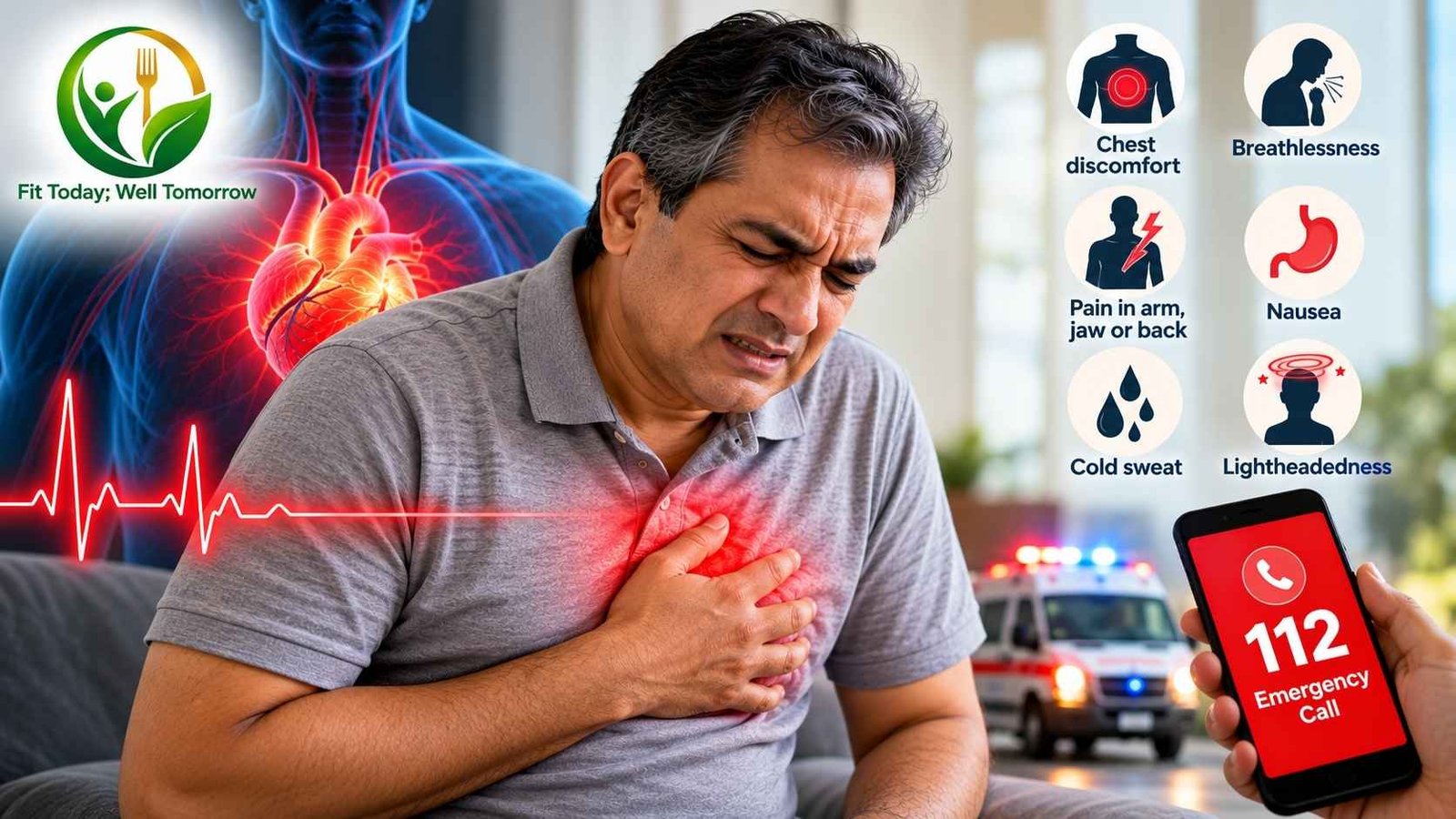
Heart attack warning signs include discomfort in the centre of the chest that lasts more than a few minutes, or that fades and comes back, often with pain spreading to an arm, the jaw, the neck, the back or the stomach, and often with breathlessness, a cold sweat, nausea or lightheadedness. If you suspect one, call 112 immediately and do not drive yourself. In pooled trials of clot-dissolving treatment, treatment given within the first hour saved 65 lives per 1,000 patients, against 37 in the second hour.
What a heart attack feels like
The American Heart Association puts chest discomfort first, and is careful about the word discomfort. Its guidance says that “most heart attacks involve discomfort in the center of the chest that lasts more than a few minutes, or that goes away and comes back”. It is not always the crushing pain of film and television. Northern Ireland’s public health guidance describes it as “a sensation of pressure, tightness or squeezing” in the centre of the chest.
From there, the signs spread outwards. The AHA lists pain or discomfort “in one or both arms, the back, neck, jaw or stomach”, along with “shortness of breath with or without chest discomfort”. Other signs it names include “breaking out in a cold sweat, nausea or lightheadedness”, plus a rapid or irregular heartbeat and feeling unusually tired.
The US Centers for Disease Control and Prevention, in guidance dated October 2024, lists much the same set: chest pain or discomfort, feeling weak or light-headed or faint, pain in the jaw, neck or back, pain in one or both arms or shoulders, and shortness of breath.
The pattern that should make you act
Call for help if chest discomfort lasts more than a few minutes, or settles and returns, and especially if it arrives alongside breathlessness, a cold sweat, nausea, or pain radiating into an arm or the jaw. Note that in the AHA’s own description, breathlessness may come “with or without chest discomfort”, so the absence of chest pain is not reassurance.
You do not need to be certain. The AHA’s patient leaflet is explicit: “Even if you’re not sure it’s a heart attack, immediately call 911 or your local emergency medical services (EMS).” In India, that call is to 112.
When there is no chest pain at all
This is the part most people have never been told, and it is the reason a lot of heart attacks are missed at home.
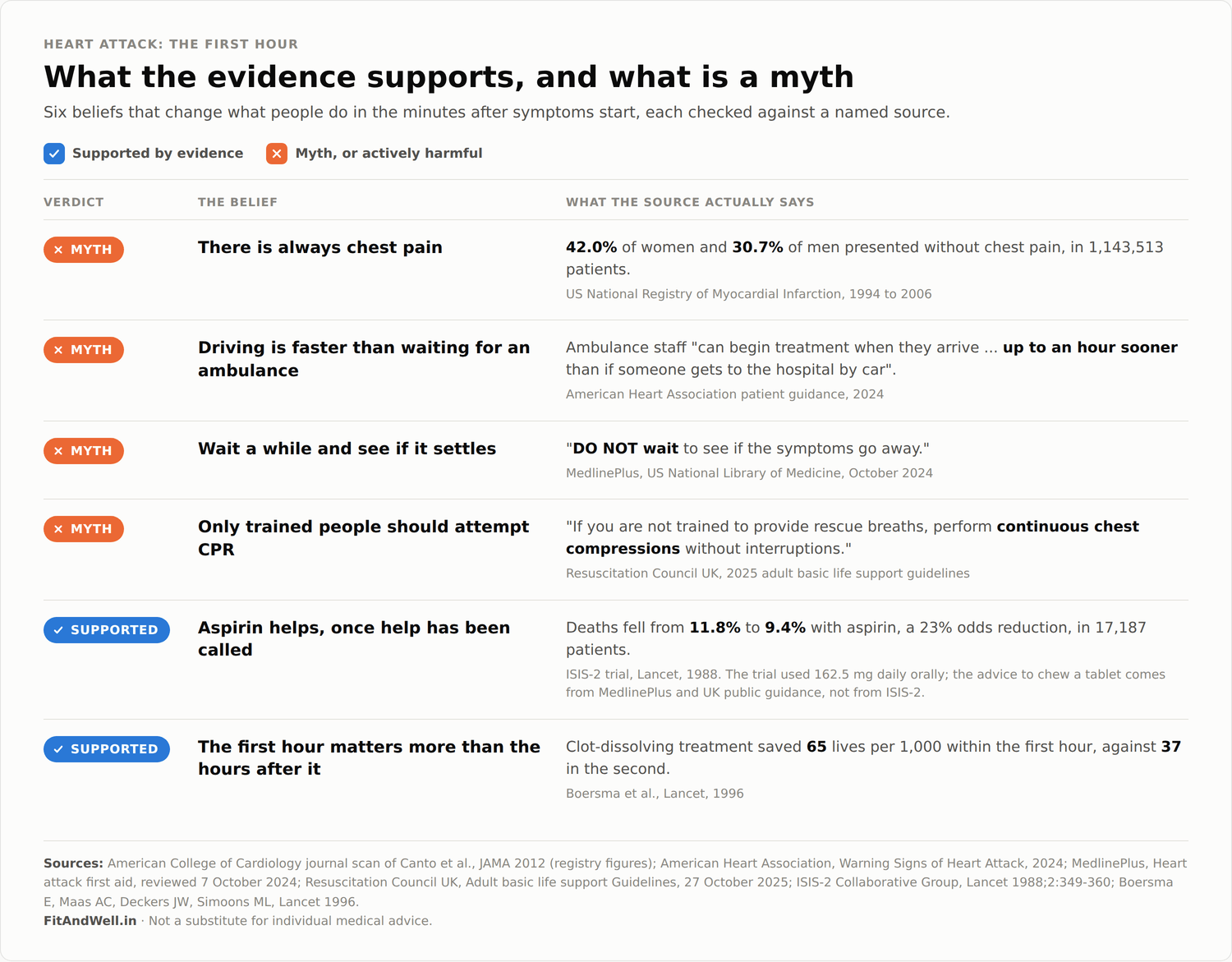
An analysis of the US National Registry of Myocardial Infarction, covering 1,143,513 patients treated between 1994 and 2006, found that “the proportion of MI patients who presented without chest pain was significantly higher for women than men (42.0%; 95% confidence interval [CI], 41.8%-42.1% vs. 30.7%; 95% CI, 30.6%-30.8%; p < 0.001)”.
Read that again. Roughly three in ten men and four in ten women in that enormous registry arrived at hospital having a heart attack without chest pain as a presenting symptom. In-hospital mortality in the same cohort was 14.6% for women and 10.3% for men. The sex gap in painless presentation was widest among the youngest patients and narrowed with age, from an odds ratio of 1.30 in those under 45 to 1.03 in those aged 75 and over. This is US registry data, not Indian data, but the underlying biology isn’t thought to stop at a border.
So what does it look like instead? The AHA notes that women may have anxiety, shortness of breath, nausea, vomiting, upset stomach, pain in the shoulder, back or arm, and unusual tiredness and weakness. The CDC likewise says women are more likely to have unusual tiredness, nausea and vomiting.
Diabetes changes the picture too. A review in the Methodist DeBakey Cardiovascular Journal in 2018 notes that “patients with DM may not report classic ischemic chest pain but may instead present with dyspnea, nausea, fatigue, cough, or other nonspecific symptoms that may be missed as symptoms of MI”. The same review reports that “multiple studies have also identified an association between CAN and silent myocardial ischemia”, CAN being cardiac autonomic neuropathy, nerve damage affecting the heart.
That is an association rather than a demonstrated mechanism, and the review does not put a figure on it. The practical reading is still the safe one: if you or a family member has diabetes, the threshold for calling for help should be lower, not higher.
Heart attack or cardiac arrest? They are not the same
The two get used interchangeably, and they need different responses.
The AHA puts the distinction cleanly: “A heart attack is a circulation problem. Sudden cardiac arrest is an electrical problem.” A heart attack “occurs when blood flow to the heart is blocked”. Sudden cardiac arrest “occurs when the heart suddenly stops beating”.
Someone having a heart attack is usually conscious and able to respond. Someone in cardiac arrest is not. The AHA’s markers for cardiac arrest are “no response to tapping on shoulders” and the person “does not take a normal breath when you tilt the head up and check for at least five seconds”.
Do not use consciousness as a test for whether to call. A person can be drowsy, confused or barely responsive and still be having a heart attack. The link between the two conditions is that heart attacks, in the AHA’s words, “increase the risk for sudden cardiac arrest”. That is why the plan below covers both.
Why the first hour carries so much weight
The evidence for early treatment is old, large and unusually clear.
A pooled analysis by Boersma and colleagues, published in the Lancet in 1996 and still the reference point for the phrase golden hour, examined how mortality benefit from clot-dissolving treatment varied with delay. Within the first hour, the pooled estimate was “65 lives saved (SD 14, 95% CI: 38, 93); NNT 15” per 1,000 patients treated. In the second hour it fell to “37 lives saved (SD 9, 95% CI: 20, 55); NNT 27”. At two to three hours it was “26 lives saved (SD 6, 95% CI: 14, 37); NNT 38”.
In proportional terms, the review found a mortality reduction of “48% (95% CI: 31, 61) for patients treated within 1 hour” against “20% (95% CI: 15, 25) for those treated later”.
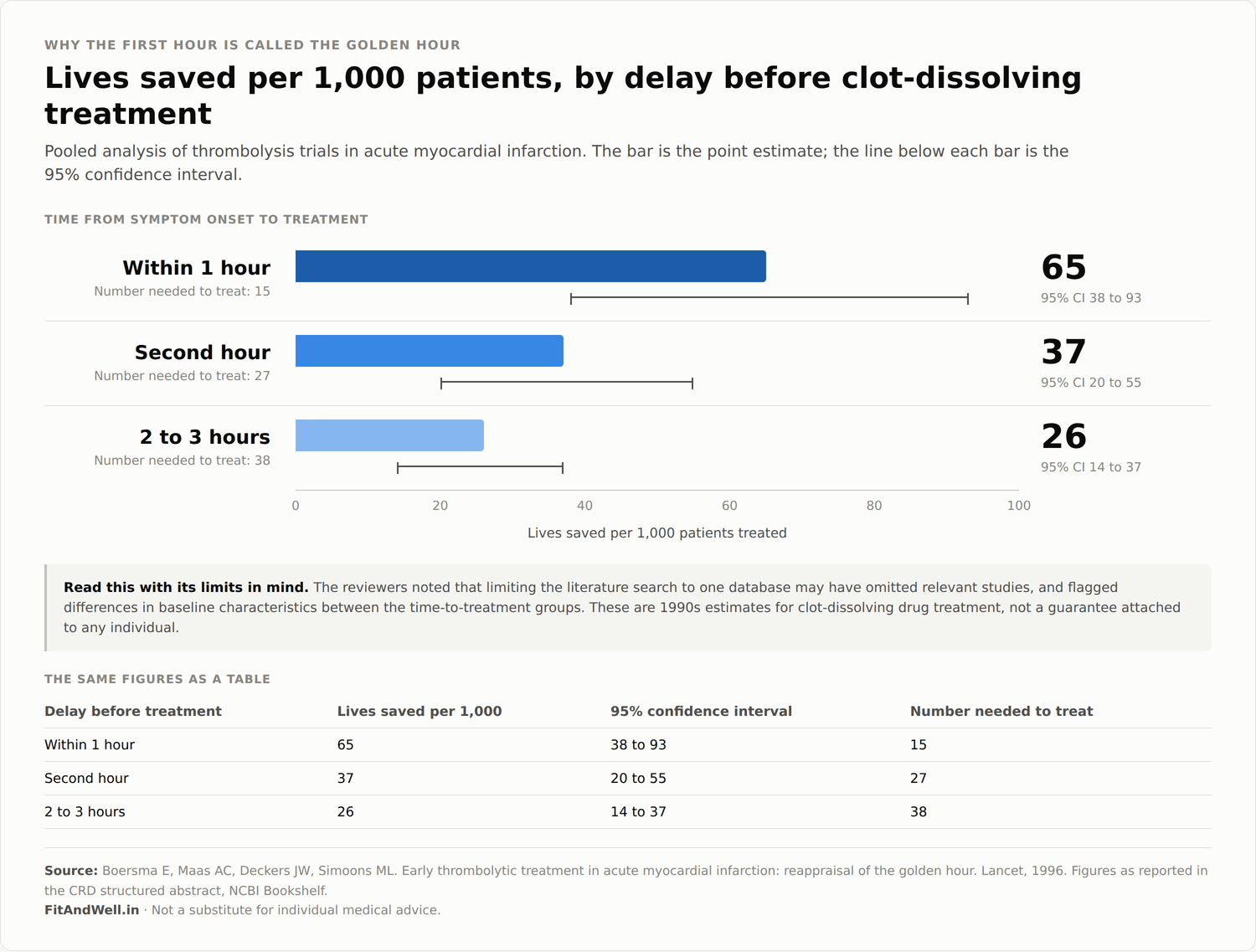
It is worth being straight about the limits of that analysis, because most articles quoting the golden hour are not. The reviewers themselves flagged that “limiting the literature search to one database may have resulted in the omission of some relevant studies”, and noted potential bias from “differences in the baseline characteristics between time-to-treatment groups”. The direction of the finding is not seriously in doubt. The precise numbers are an estimate from 1990s trials of clot-dissolving drug treatment, not a guarantee attached to any individual.
The CDC states the practical version plainly: “The chances of surviving a heart attack are better the sooner emergency treatment begins.”
Why an ambulance beats a car
This is a common and costly mistake, and it is the one most families make.
The AHA’s patient leaflet gives the reason in one line. Emergency medical staff, it says, “can begin treatment when they arrive … up to an hour sooner than if someone gets to the hospital by car”.
An ambulance is also, under current guidelines, where the ECG should happen. The 2023 European Society of Cardiology guidelines for acute coronary syndromes recommend that “an ECG is obtained immediately upon FMC and interpreted by a qualified emergency medical technician or physician within 10 min”, FMC being first medical contact.
A diagnosis made before arrival means the hospital can prepare while the patient is still moving, and the guideline notes that “bypassing the ED is associated with a significant saving in the time from FMC to wire crossing and may be associated with improved survival”. Ambulance equipment and crew training vary between Indian states and services, so this describes the standard being aimed at rather than a guarantee of what will arrive.
The same guideline is unusually direct about public behaviour: “The public should be educated to call the EMS directly rather than a primary care physician for symptoms suggestive of ACS.” It also notes that “the time from symptom onset to ‘first call for help’ is associated with socioeconomic factors and sex”.
In India, the number to call is 112. The Government of India’s Emergency Response Support System describes it as “a single emergency number 112, to address different emergencies of citizens”, and states that “all the existing emergency numbers like 100 (police), 101 (Fire and Rescue) and 108 (ambulance), 181 (Woman and Child Care) etc. will be integrated to unified number 112”. Do not spend five minutes deciding which number to dial.
What to do, minute by minute
Read this now, not during the emergency.
Call 112 first. Before aspirin, before finding documents, before phoning a relative. If the person refuses, call anyway. MedlinePlus is blunt: “DO NOT allow the person to deny the symptoms and convince you not to call for emergency help”, and “DO NOT wait to see if the symptoms go away.”
Get the person sitting and still. Northern Ireland’s guidance notes that “it is important to rest while you wait for an ambulance, to avoid unnecessary strain on your heart”. Do not walk them to the gate to meet the ambulance.
Then consider aspirin. MedlinePlus’s general rule is “DO NOT give the person anything by mouth unless a heart medicine (such as nitroglycerin) has been prescribed”. Aspirin is the recognised exception to that rule, and the sequence matters: the call comes first. MedlinePlus states that “many experts recommend chewing and swallowing a full dose aspirin (325 mg, or low dose 81 mg baby aspirin, after calling 911 or the local emergency number”.
UK public guidance puts the same advice this way: “If you know that you are not allergic to aspirin and you have aspirin available, chew (do not swallow) an adult size tablet while you are waiting for the ambulance to arrive.”
Note the condition in that sentence. It is guidance for someone who knows they are not allergic to aspirin. If there is any doubt, do not give it, and tell the ambulance crew what has and has not been taken.
The reason aspirin earns a place at all is ISIS-2, a trial of 17,187 patients with suspected acute myocardial infarction published in the Lancet in 1988, in which aspirin was given as “162.5 mg qd orally”. Deaths fell from 11.8% on placebo to 9.4% on aspirin, a “23% odds reduction; SD = 4; 2p <0.00001”. Non-fatal reinfarction fell from 2.0% to 1.0% and non-fatal stroke from 0.6% to 0.3%. That trial tested a daily oral dose rather than a single chewed tablet, so the advice to chew comes from the public-guidance sources above rather than from ISIS-2 itself.
Do not improvise with other medicines. If the person has their own prescribed nitrate spray or tablet, MedlinePlus advises to “ask if the person takes any chest pain medicine, such as nitroglycerin for a known heart condition, and help them take it”. Someone else’s tablets are not a substitute.
Do not leave them alone. MedlinePlus again: “DO NOT leave the person alone except to call for help, if necessary.” Unlock the front door and switch on a light so the crew can get in.
If they collapse, start compressions. MedlinePlus: “If the person is unconscious and unresponsive, and not breathing or does not have a pulse, call 911 or the local emergency number, then begin CPR.” Resuscitation Council UK’s 2025 adult basic life support guidelines say to “place the heel of one hand on the lower half of the sternum (‘in the centre of the chest’)”, to compress at a rate of 100 to 120 per minute with as few interruptions as possible, and to compress to a depth of at least 5 cm but not more than 6 cm.
If you have never been trained, you still do it. The same guidelines state: “If you are not trained to provide rescue breaths, perform continuous chest compressions without interruptions.” The AHA notes that “if performed immediately, CPR can double or triple the chance of survival from an out-of-hospital cardiac arrest”. The American Red Cross puts the cost of hesitation this way: “Survival chances decrease by 10% for every minute that immediate CPR and use of an AED is delayed.”
Use a defibrillator if one is genuinely to hand. MedlinePlus advises that if an AED “is immediately available – follow the instructions on the AED device”. Do not send someone hunting for one instead of doing compressions.
In one South Indian survey, most people said they would go to a doctor, not call an ambulance
India’s cardiovascular burden is heavy and it falls on working-age people. WHO India reports that “in 2016 India reported 63% of total deaths due to NCDs, of which 27% were attributed to CVDs”, and that “CVDs also account for 45% of deaths in the 40-69 year age group”.
Against that, recognition is thin. A survey of 801 people at a tertiary cardiology outpatient department and a community clinic in South India, published in 2026, found that “more than half (54.8%) knew that chest pain is a common symptom of ACS”. Recognition of everything else was worse: left arm or shoulder pain 42.9%, neck pain 29%, shortness of breath 25.9%, dizziness 23.6%, sweating 22.8%.
The action data is the part worth pinning to the fridge. In that survey, 56.05% said “they would take the person having ACS symptoms to consult the nearest doctor”, and 34.7% reported not knowing what to do at all. Also, “a considerable proportion of the participants (74.9%) do not know how to perform CPR”.
Treat those figures as a signal rather than a national statistic. It is a two-site survey in one region, and it measures what people said they would do rather than what they did. The signal still points the same way as the delay data.
And the delays are real. In the Tamil Nadu STEMI programme, the median delay from symptom onset to first medical contact was 170 minutes before the programme was implemented and 174 minutes after. Women waited longer than men: “symptom to first medical contact times in female patients were significantly longer compared to male patients (193 minutes vs 170 minutes, p≤0.009)”. An older review in the Indian Heart Journal reported that “the average delay in presentation was >6 h”.
Access constrains what can then be done. That same review noted that “only 58.5% of patients with STEMI were thrombolysed mostly with streptokinase and a minority received percutaneous coronary intervention (PCI)”, and that primary angioplasty was “possible only in 10% of STEMI patients”. CREATE registry 30-day outcomes for Indian STEMI patients were “death (8.6%), reinfarction (2.3%), and stroke (0.7%)”.
Systems can move these numbers. The Tamil Nadu programme, enrolling 2,420 consecutive STEMI patients across 4 hub hospitals and 35 spoke hospitals, saw one-year mortality fall from 17.6% to 14.2%, although in-hospital mortality did not change. Scaled up across 18 hub hospitals and 188 spoke hospitals, the network treated 71,907 people for STEMI between 2019 and 2023, with overall mortality easing only marginally, “from 8.7 to 8.4 per cent”.
The honest reading is that hospital systems have improved faster than the public’s first hour has. The stretch between the first symptom and the first phone call belongs to households, not hospitals.
Related reading on FitAndWell.in
If you are here because of a family history or a recent scare, these guides cover the ground around this one: hypertension management in India, the health hazards of prolonged sitting, a daily walking guide, evidence-based weight loss strategies, the glycaemic index of Indian foods, mindfulness for stress and anxiety, and, for chest discomfort that turns out not to be cardiac, our guide to GERD and acid reflux.
Your own doctor is the right person to set targets and review medication for any of these. Nothing here replaces that.
Frequently asked questions
How long does heart attack pain last?
Longer than a few minutes, and it may ease and then return. The AHA describes chest discomfort that “lasts more than a few minutes, or that goes away and comes back”. Recurring episodes of chest discomfort are a reason to see a doctor promptly, even when each one passes.
Can you have a heart attack without chest pain?
Yes, and it is common. In the US National Registry of Myocardial Infarction, 42.0% of women and 30.7% of men presented without chest pain. Breathlessness, unusual fatigue, nausea, sweating, or pain in the jaw, back or arm can be the leading symptom. In that registry the pattern was more common in women than men, and a 2018 review reports that people with diabetes may present with breathlessness, nausea, fatigue or cough rather than classic chest pain.
Should I take aspirin if I think I am having a heart attack?
Call for an ambulance first. MedlinePlus then describes chewing and swallowing a full-dose 325 mg aspirin, or a low-dose 81 mg tablet. UK public guidance says to chew rather than swallow an adult-size tablet, and states the condition plainly: it applies if you know you are not allergic to aspirin. If you are unsure, do not take it, and tell the crew what you have taken.
Is it faster to drive to the hospital myself?
Rarely. The AHA’s guidance is that emergency medical staff “can begin treatment when they arrive … up to an hour sooner than if someone gets to the hospital by car”. Under the 2023 European guidelines, an ambulance is also where the ECG should be recorded and read within 10 minutes, which is what lets the hospital prepare before arrival. And if the person collapses en route, a car is the worst possible place for it to happen.
How is a heart attack different from cardiac arrest?
“A heart attack is a circulation problem. Sudden cardiac arrest is an electrical problem.” A heart attack is a blocked artery, and the person is usually conscious. Cardiac arrest is the heart stopping, and the person is unresponsive and not breathing normally. A heart attack can cause a cardiac arrest, which is why the person needs to be watched until help arrives.
What number should I call in India?
112, the single national emergency number, which the Government of India describes as integrating the older numbers including 100 for police, 101 for fire and rescue and 108 for ambulance. What matters is that a vehicle starts moving within the first minutes.
Should I do CPR if I have never been trained?
Yes. Resuscitation Council UK’s 2025 guidelines state that “if you are not trained to provide rescue breaths, perform continuous chest compressions without interruptions”. Push in the centre of the chest at 100 to 120 compressions per minute, at least 5 cm but not more than 6 cm deep, and keep going until help takes over.
What happens once the ambulance reaches hospital?
The aim is to reopen the blocked artery as fast as possible. The 2023 ESC guideline route is primary angioplasty, “or fibrinolysis if PPCI within 120 min is not feasible”, meaning clot-dissolving drugs are used when an angioplasty theatre cannot be reached in time. If a transfer between hospitals is needed, the guideline recommends “a door-to-door time of ≤30 min”.
The bottom line
Heart attacks do not always present as chest pain; the proportion presenting without it is higher in women, and people with diabetes may present atypically too. The hour after symptoms start is where most of the available benefit sits. In India, the bottleneck is not usually the hospital: in the Tamil Nadu programme the median gap between symptom onset and first medical contact was close to three hours.
The plan is short enough to remember. Call 112. Sit still. Chew an aspirin if you know there is no allergy, after the call. Do not drive. If they collapse, push hard and fast in the centre of the chest until help arrives.
This article is for general information and does not replace individual medical advice. If you have cardiac risk factors, or you are unsure whether symptoms you have had were cardiac, speak to your own doctor.
Sources
- American Heart Association. Heart Attack, Stroke and Cardiac Arrest Symptoms.
- American Heart Association. Warning Signs of a Heart Attack. Last reviewed 12 December 2024.
- American Heart Association. Warning Signs of Heart Attack (Answers by Heart). August 2024.
- American Heart Association. Heart Attack or Sudden Cardiac Arrest: How Are They Different? Last reviewed 11 December 2024.
- American Heart Association. CPR Facts and Stats.
- Centers for Disease Control and Prevention. About Heart Attack Symptoms, Risk, and Recovery. 24 October 2024.
- Byrne RA, et al. 2023 ESC Guidelines for the management of acute coronary syndromes. European Heart Journal, 2023;44(38):3720.
- Boersma E, Maas AC, Deckers JW, Simoons ML. Early thrombolytic treatment in acute myocardial infarction: reappraisal of the golden hour. Lancet, 1996 (CRD structured abstract, NCBI Bookshelf).
- ISIS-2 (Second International Study of Infarct Survival) Collaborative Group. Randomised trial of intravenous streptokinase, oral aspirin, both, or neither among 17,187 cases of suspected acute myocardial infarction. Lancet, 1988;2:349-360 (trial summary, American College of Cardiology).
- American College of Cardiology. Association of Age and Sex With Myocardial Infarction Symptom Presentation and In-Hospital Mortality. Journal scan of Canto JG et al., JAMA, 2012.
- MedlinePlus, US National Library of Medicine. Heart attack first aid. Reviewed 7 October 2024.
- nidirect, Northern Ireland Government. Heart attack.
- Resuscitation Council UK. Adult basic life support Guidelines. 2025 Resuscitation Guidelines, 27 October 2025.
- American Red Cross. CPR Facts & Statistics.
- Agashe S, Petak S. Cardiac Autonomic Neuropathy in Diabetes Mellitus. Methodist DeBakey Cardiovascular Journal, 2018;14(4):251-256.
- World Health Organization India. Cardiovascular diseases.
- Moturu S, et al. Assessing Public Awareness of Symptoms of Acute Coronary Syndrome and Awareness of Cardiopulmonary Resuscitation. Global Journal of Medical, Pharmaceutical and Biomedical Update, 2026.
- Alexander T, Mullasari A, Nallamothu B. Management strategies for acute STEMI in low- and middle-income countries: experience of the Tamil Nadu STEMI programme. AsiaIntervention, 2021.
- Deepti S, Roy A. A system of care for patients with ST-segment elevation myocardial infarction in India. The National Medical Journal of India, 2018;31:222-223.
- Gnanaraj JP, et al. Impact of telemedicine in STEMI care system: a five-year experience from Tamil Nadu, India. Indian Journal of Medical Research, 2025.
- Chopra HK. Challenges of STEMI care in India and the real world. Indian Heart Journal, 2015;67(1):15-17.
- Government of India. Emergency Response Support System.