
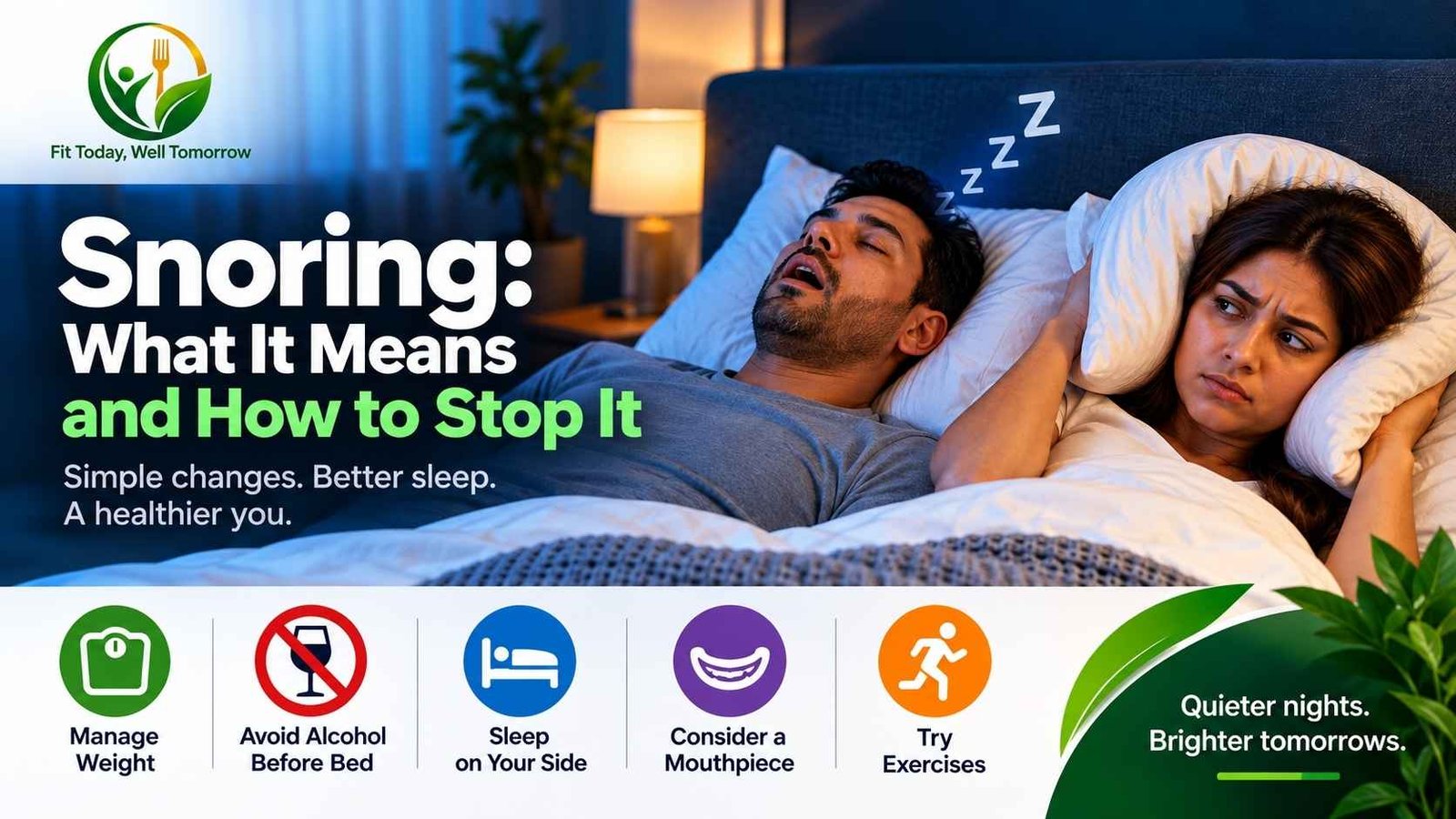
Snoring happens when the soft tissues in your nose, mouth, or throat relax during sleep and begin to vibrate as air moves through a narrowed airway. Snoring by itself has not been established as a cardiovascular risk factor. However, if your snoring is accompanied by pauses in breathing, gasping or choking during sleep, or significant daytime sleepiness, it could be a sign of obstructive sleep apnoea and should be properly assessed.
The first steps are often simple: losing excess weight and avoiding alcohol close to bedtime can make a meaningful difference. If snoring continues despite these changes, a mandibular advancement device, properly fitted with guidance from dental and sleep-medicine professionals, has the strongest formal recommendation among treatments specifically aimed at reducing snoring.
What snoring actually is
When you fall asleep, the muscles that hold your upper airway open relax. The NHS describes snoring as your ‘tongue, mouth, throat or airways in your nose vibrating as you breathe’, because those tissues ‘relax and narrow when you’re asleep’.
Cleveland Clinic puts the same thing more bluntly: snoring happens when ‘air can’t flow easily through your nose or mouth’. Mayo Clinic describes the result as air flowing ‘past relaxed tissues in your throat, causing the tissues to vibrate’. That vibration is the noise.
Formally, the International Classification of Sleep Disorders defines snoring as ‘respiration-dependent, generally inspiratory, acoustic phenomena during sleep’ with no evidence of another sleep-related breathing disorder. That last clause is the important one. It is what separates snoring on its own from snoring as a symptom of something else.
How common is snoring?
Common enough that most households have direct experience of it. A 2019 review in Deutsches Ärzteblatt International by Stuck and Hofauer reports that ‘in the UK, 20% of women and 26% of men up to the age of 24 years report regular snoring’, and that ‘the highest prevalence for snoring is attained between the ages of 45 and 54 years’.
Indian figures are thinner on the ground, and older. A 2006 study of 702 healthy adults in Lucknow, published in the Indian Journal of Sleep Medicine, found an overall snoring rate of 31.1%, with ‘33.8% of men and 26 % of women’ identified as snorers. Snoring rose steadily with age in that sample, from 23.8% among 25- to 34-year-olds to 37.3% among 55- to 64-year-olds.
Treat those numbers as a rough guide rather than a national statistic. They come from one city and one sample, and much has changed in Indian body weight and lifestyle since 2006. The same review notes that prevalence data vary significantly because researchers define snoring inconsistently.
Why you snore: the usual causes
Snoring is rarely down to one thing. It is usually a narrow airway plus something that narrows it further.
Body weight. Excess weight is among the risk factors Cleveland Clinic lists, and it is one of the few you can meaningfully change. Our guide to obesity and its health risks covers the wider picture.
Anatomy. Cleveland Clinic lists enlarged adenoids, large tonsils, a big tongue and a deviated septum among the structural causes. Mayo Clinic adds a low, thick soft palate and excess throat tissue.
Alcohol and sedatives. Cleveland Clinic notes that alcohol, sedatives and sleep deprivation all relax the upper airway muscles. The NHS advises against sleeping pills specifically because ‘these can sometimes cause snoring’.
Nasal congestion. Cleveland Clinic lists nasal congestion from allergies and colds, and hormone changes during pregnancy, among the contributing conditions.
Sleeping on your back. Back sleeping increases the likelihood of snoring compared with sleeping on your side.
Age and sex. Cleveland Clinic notes that muscle tone decreases with age, shrinking the airway, and that snoring is more common in males.
If you are routinely short of sleep, our piece on how much sleep you actually need by age is a reasonable place to start.
Two habits deserve their own numbers, because the evidence on them is unusually specific for this topic.
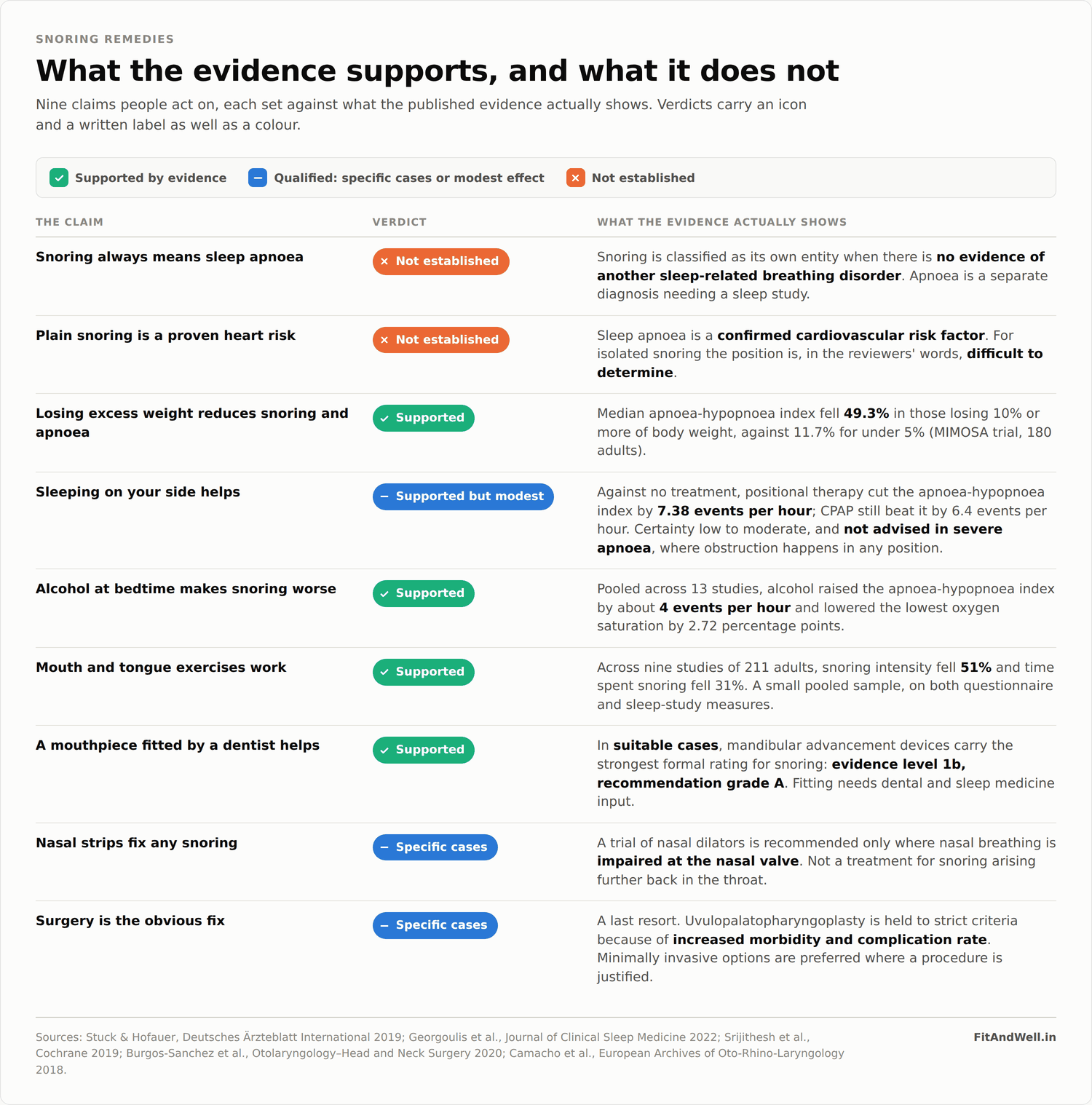
A 2020 systematic review and meta-analysis in Otolaryngology–Head and Neck Surgery by Burgos-Sanchez and colleagues screened 1,266 manuscripts and pooled 13 studies covering 279 patients. Alcohol increased the apnoea-hypopnoea index by roughly 4 events per hour compared with controls, and lowered the lowest recorded oxygen saturation by a mean of 2.72 percentage points. The authors concluded that alcohol is associated with ‘worsening severity of snoring, altered sleep architecture, AHI, as well as lowest oxygen saturation’.
That is a pooled analysis of small studies, so treat the precise figures as indicative rather than settled.
Smoking points the same way. A 2023 study of 3,442 adults in Scientific Reports found that among men, current smokers had 1.79 times the odds of being at risk of obstructive sleep apnoea compared with non-smokers (95% CI 1.10 to 2.89), and ex-smokers 1.53 times (95% CI 1.01 to 2.32). Among women, the associations trended the same way but did not reach statistical significance.
That study measured risk scored on a questionnaire rather than diagnosed apnoea, so it shows an association rather than proof that smoking causes it.
When snoring matters
This is the question worth getting right, because the answer splits into two very different situations.
Snoring on its own
Stuck and Hofauer are careful here, and so should we be. ‘Whereas OSA represents a confirmed cardiovascular risk factor, the situation is difficult to determine for isolated snoring.’
They note that ‘a handful of prospective studies suggest possible negative cardiovascular effects’, but that ‘the clinical relevance of these data is virtually impossible to estimate at present’. In plain terms: plain snoring has not been established as a heart risk, and anyone telling you otherwise is ahead of the evidence.
That is not the same as proof it is harmless. It can also wreck a bed partner’s sleep, which is reason enough to act. The NHS suggests earplugs as a stopgap while you work on the cause.
Snoring as a symptom of obstructive sleep apnoea
This is a different matter entirely. In OSA, the airway does not just narrow; it closes. An apnoea is a drop in airflow of 90% or more from baseline lasting at least 10 seconds. A hypopnoea is a reduction of at least 30% for more than 10 seconds, with either at least 3% oxygen desaturation or an arousal from sleep.
Severity is graded by how many of these happen per hour: mild is 5 to 15, moderate is more than 15 to 30, and severe is more than 30.
Untreated, OSA is associated with hypertension, myocardial infarction, atrial fibrillation, congestive heart failure and stroke, and people with OSA carry a high risk of motor vehicle accidents. It is common: StatPearls puts the global figure at almost 1 billion people, including 425 million adults aged 30 to 69 with moderate-to-severe disease.
Red flags that should prompt a doctor’s visit
Mayo Clinic lists these signs alongside snoring as reasons to seek assessment:
- Witnessed breathing pauses during sleep
- Excessive daytime sleepiness
- Difficulty concentrating
- Morning headaches
- Sore throat on waking
- Restless sleep and nighttime gasping
- High blood pressure
- Chest pain at night
The pattern to listen for is distinctive. Mayo describes OSA as ‘loud snoring followed by periods of silence when breathing stops or nearly stops’, with the sleeper surfacing on a ‘loud snort or gasping sound’. The NHS is direct about it: gasping or choking noises in sleep mean you should see a GP, because ‘you may have sleep apnoea’.
If you already have raised blood pressure, this connection matters more, not less. Our guide to hypertension management in India covers that side of it.
How snoring gets assessed
A sensible assessment starts with history, and specifically with the person who has actually heard you. Stuck and Hofauer recommend taking ‘information from bed partners’ alongside a clinical examination of the nasal structures, oropharynx, oral cavity, dental status and facial skeleton.
Daytime sleepiness is usually scored with the Epworth Sleepiness Scale, which Dr Johns created for adults in 1990. It asks about your usual chances of dozing off in eight different activities and produces a score from 0 to 24. Cleveland Clinic notes that ‘a result from 11 to 24 indicates excessive (abnormal) daytime sleepiness’.
A sleep study is the next step when it is warranted. Stuck and Hofauer suggest one when another sleep-related breathing disorder is suspected, when the patient wants treatment, or when there are significant cardiovascular comorbidities.
In-laboratory level 1 polysomnography remains, in StatPearls’ words, ‘the gold standard for diagnosing OSA’. Home testing has limitations but is acceptable under specific conditions: portable monitoring devices must meet strict criteria, including trained oversight and board-certified review of the raw data.
Costs and waiting times for sleep studies vary a great deal across Indian cities and between government and private centres, so ask your clinician what is available locally rather than budgeting from a figure you read online.
How to stop snoring: what the evidence supports
NICE’s position on obstructive sleep apnoea/hypopnoea syndrome is that ‘everyone is offered lifestyle and sleep advice’, which is where any sensible plan starts.
Lose excess weight, if you have it to lose
This has the most useful numbers attached to it. Secondary analysis of the MIMOSA randomised trial, published in the Journal of Clinical Sleep Medicine in 2022, followed 180 overweight or obese adults with moderate-to-severe OSA. Median change in the apnoea-hypopnoea index was a fall of 11.7% among those who lost under 5% of body weight, 37.9% among those losing 5 to 10%, and 49.3% among those losing 10% or more.
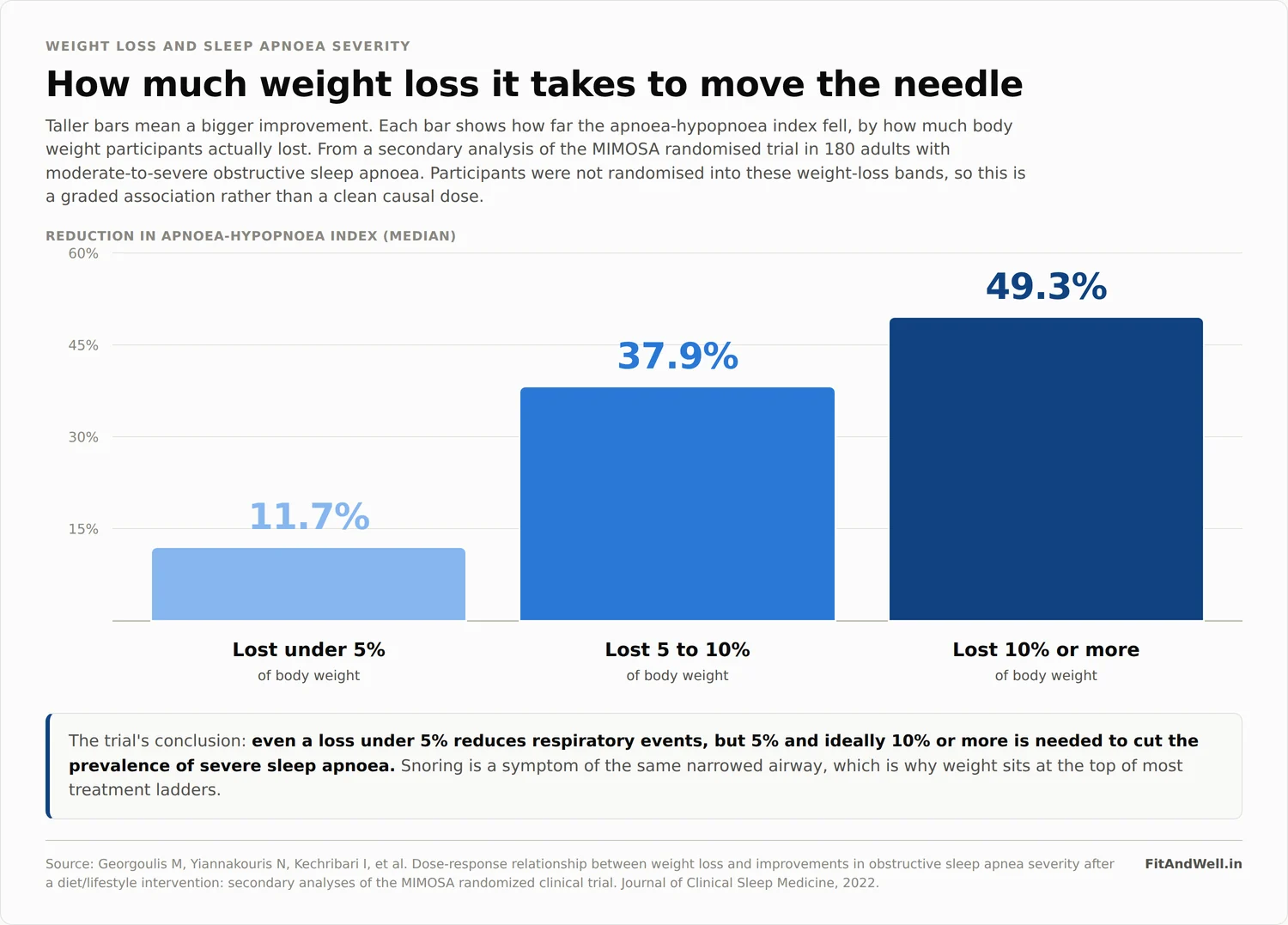
The authors concluded that ‘even a <5% weight loss can reduce respiratory events, but a ≥5% and ideally ≥10% weight loss is necessary for reducing the prevalence of severe OSA’. One caveat worth holding onto: participants were not randomised into those weight-loss bands, which are what people actually achieved, so this shows a graded association rather than a clean causal dose.
The INTERAPNEA trial, published in JAMA Network Open in 2022, is the more dramatic result. Eighty-nine Spanish men with moderate-to-severe OSA were randomised, and the intervention group saw a 51% reduction in AHI at eight weeks, when 18 of 40 participants (45.0%) no longer required CPAP. By six months, that figure was 21 of 34 (61.8%). Note the denominator: it falls from 40 to 34 between the two time points, so the later percentage rests on fewer people. The trial also enrolled only men, so it says less about women than it appears to.
For snoring specifically, Stuck and Hofauer note that ‘a decrease in body mass index results in a reduction in snoring particularly in patients with overweight or obesity’, while being honest that the direct evidence is limited. If you want a starting point that does not require a gym, our daily walking guide is a practical one, and insulin resistance is worth understanding if weight has been hard to shift.
Sleep on your side
Real, but modest, and often oversold. The 2019 Cochrane review by Srijithesh and colleagues pooled eight studies with 323 participants. Against no treatment, positional therapy lowered Epworth scores by 1.58 points and the apnoea-hypopnoea index by 7.38 events per hour. Against CPAP, it lost: CPAP reduced AHI by 6.4 more events per hour.
The interesting wrinkle is adherence. In one study, people stuck with positional therapy 2.5 hours longer than with CPAP. A treatment that works less well but gets used more can still be the better real-world choice.
The caveats are real. About 10% of participants reported adverse effects, mostly sleep disturbance and back or chest pain, and the reviewers rated the certainty of evidence as low to moderate, with all studies being short.
NICE reached a compatible conclusion, finding positional modifiers were not superior to CPAP or mandibular advancement splints as first-line treatment, and advising against them in severe disease because ‘people with severe OSAHS tend to have obstructive events whichever position they are lying in’.
For snoring specifically, Stuck and Hofauer judge the evidence insufficient for avoiding the supine position in general, while recommending that a snoring-triggered change of head position should be offered.
The NHS still lists the practical version: sleep on your side, and ‘try taping or stitching a tennis ball to the back of your sleepwear’.
Cut evening alcohol, and stop smoking
Given the effect sizes above, this is among the cheapest interventions available. Neither requires a device, an appointment or a purchase.
Try mouth and throat exercises
Better supported than most people expect. A 2018 systematic review and meta-analysis in European Archives of Oto-Rhino-Laryngology by Camacho and colleagues pooled nine studies covering 211 adults. Snoring intensity on a visual analogue scale fell 51%, from 8.2 to 4.0. Berlin Questionnaire snoring intensity fell 36%. Time spent snoring fell 31%, from 26.3% to 18.1% of total sleep time.
The reviewers concluded that ‘myofunctional therapy has reduced snoring in adults based on both subjective questionnaires and objective sleep studies’. Bear in mind that most of those outcomes are self-reported scores from a small pooled sample, so the effect is better described as promising than as proven.
Consider a mandibular advancement device
For persistent snoring, this carries the strongest formal recommendation. Stuck and Hofauer state that ‘in suitable cases … and when treatment is desired, the management of snoring with the use of an MAD can be recommended (evidence level 1b, recommendation grade A, strong consensus)’.
Note the qualifier. It is a recommendation for suitable cases, not for everyone who snores, and the review says fitting requires coordination with dental and sleep medicine experts. That is an argument against the moulded devices sold online without either.
Nasal strips and dilators, in the right circumstances
Worth trying if your nose is genuinely blocked, and not otherwise. The guideline recommendation is specific: ‘in the case of impaired nasal breathing in the area of the nasal valve, an attempt at treatment with internal or external nasal dilators should be proposed (strong consensus)’. That is a conditional recommendation about a particular anatomical problem, not a general snoring cure.
The same logic applies to surgery on the nose. Stuck and Hofauer are explicit that ‘no statement can be made on the effectiveness of nasal surgery in snorers with no subjective nasal breathing impairment’.
CPAP, where sleep apnoea is confirmed
If a sleep study diagnoses OSA, CPAP changes the calculation. StatPearls calls it ‘the most effective treatment for adults with OSA’. The catch is sticking with it: ‘nearly half of patients do not consistently follow treatment after the first month’.
Surgery, last
Palate surgery is not a first move for snoring. Stuck and Hofauer advise strict criteria for uvulopalatopharyngoplasty because of its ‘increased morbidity and complication rate’, and prefer minimally invasive options such as radiofrequency therapy or soft palate implants where a procedure is justified at all.
One thing to be wary of
Sleeping pills are worse than neutral here. The NHS advises against them precisely because they can cause snoring.
More generally, the anti-snoring products sold without any assessment share a problem: they treat a noise without anyone establishing what is causing it, and none of them substitutes for finding out whether you have sleep apnoea. If you are reaching for something to help you sleep, our review of melatonin and its status in India is a more useful starting point, as is our piece on what sleep hygiene actually achieves.
Frequently asked questions
Is snoring dangerous?
Snoring on its own has not been established as a cardiovascular risk factor. The 2019 Deutsches Ärzteblatt International review states that while OSA ‘represents a confirmed cardiovascular risk factor, the situation is difficult to determine for isolated snoring’. That is an open question rather than a clean bill of health.
Snoring that comes with breathing pauses, gasping or daytime sleepiness is a different matter and should be assessed, because untreated obstructive sleep apnoea is associated with hypertension, heart attack, atrial fibrillation, heart failure and stroke.
How do I know if my snoring is sleep apnoea?
The distinguishing pattern is loud snoring broken by silences where breathing stops or nearly stops, ending in a snort or gasp. Other pointers include witnessed breathing pauses, morning headaches, waking with a sore throat, difficulty concentrating and excessive daytime sleepiness.
An Epworth Sleepiness Scale score of 11 or above indicates abnormal daytime sleepiness. Only a sleep study can confirm the diagnosis.
Does losing weight actually stop snoring?
It is associated with substantially lower sleep apnoea severity in people carrying excess weight, and the effect scales with how much is lost. In the MIMOSA trial, median AHI fell 11.7% among those losing under 5% of body weight and 49.3% among those losing 10% or more. For snoring specifically, the direct evidence is weaker, though guideline authors still recommend weight reduction for overweight snorers.
Do anti-snoring mouthpieces work?
Mandibular advancement devices carry a grade A recommendation for snoring at evidence level 1b in the 2019 German guideline review, in suitable cases and where treatment is wanted. The important qualifier is that fitting should involve dental and sleep medicine expertise, which off-the-shelf online devices do not provide.
Do nasal strips help with snoring?
Only where nasal breathing is genuinely impaired at the nasal valve, in which case a trial of internal or external nasal dilators is reasonable. They are not a general treatment for snoring caused further back in the throat.
Can exercises really reduce snoring?
The evidence is encouraging but limited. A meta-analysis of nine studies covering 211 adults found snoring intensity fell 51% on a visual analogue scale and time spent snoring fell 31%. The reviewers drew on both subjective questionnaires and objective sleep studies, but the pooled sample was small.
Why do I only snore when I have had a drink?
Alcohol relaxes the upper airway muscles, and Cleveland Clinic lists it among the causes for that reason. Pooled data from 13 studies found alcohol raised the apnoea-hypopnoea index by about 4 events per hour and lowered the lowest oxygen saturation by 2.72 percentage points.
When should I see a doctor about snoring?
See a doctor if you make gasping or choking noises in your sleep, if someone has witnessed you stop breathing, if you are sleepy during the day despite adequate time in bed, or if lifestyle changes have not helped and the snoring is affecting your life or your partner’s. Persistent unexplained daytime tiredness is worth investigating in its own right, as our guide to why you feel tired explains.
The bottom line
Most snoring responds to unglamorous changes: less excess body weight, less alcohol in the evening, no cigarettes, and sleeping on your side rather than your back. Those are worth a genuine try before spending money on devices.
What should not wait is the apnoea question. If your snoring is punctuated by silences, gasping or choking, or if you are sleepy during the day no matter how long you spend in bed, get assessed rather than treating the noise. The snoring is the symptom people notice. The breathing is what matters.
This article is for general information and is not a substitute for individual medical advice. Speak to your doctor before starting or stopping any treatment, and seek assessment if you have symptoms suggesting sleep apnoea.
Sources
- NHS. Snoring. National Health Service.
- Stuck BA, Hofauer B. The Diagnosis and Treatment of Snoring in Adults. Deutsches Ärzteblatt International, 2019.
- Prasad R, Garg R, Verma RK, Agarwal SP, Ahuja RC. A study on snoring habits in a healthy population of Lucknow. Indian Journal of Sleep Medicine, 2006.
- Obstructive Sleep Apnea. StatPearls, NCBI Bookshelf.
- Mayo Clinic. Snoring: Symptoms and causes.
- Cleveland Clinic. Snoring: Causes and Complications.
- Georgoulis M, Yiannakouris N, Kechribari I, et al. Dose-response relationship between weight loss and improvements in obstructive sleep apnea severity after a diet/lifestyle intervention: secondary analyses of the MIMOSA randomized clinical trial. Journal of Clinical Sleep Medicine, 2022.
- Carneiro-Barrera A, Amaro-Gahete FJ, Guillén-Riquelme A, et al. Effect of an Interdisciplinary Weight Loss and Lifestyle Intervention on Obstructive Sleep Apnea Severity: The INTERAPNEA Randomized Clinical Trial. JAMA Network Open, 2022.
- Srijithesh PR, Aghoram R, Goel A, Dhanya J. Positional therapy for obstructive sleep apnoea. Cochrane Database of Systematic Reviews, 2019.
- National Institute for Health and Care Excellence. Positional modifiers: evidence review for NG202. NICE.
- Camacho M, Guilleminault C, Wei JM, et al. Oropharyngeal and tongue exercises (myofunctional therapy) for snoring: a systematic review and meta-analysis. European Archives of Oto-Rhino-Laryngology, 2018.
- Burgos-Sanchez C, Jones NN, Avillion M, et al. Impact of Alcohol Consumption on Snoring and Sleep Apnea: A Systematic Review and Meta-analysis. Otolaryngology–Head and Neck Surgery, 2020.
- Jang YS, Nerobkova N, Hurh K, Park EC, Shin J. Association between smoking and obstructive sleep apnea based on the STOP-Bang index. Scientific Reports, 2023.
- Epworth Sleepiness Scale. About the ESS.
- Cleveland Clinic. Epworth Sleepiness Scale (ESS).
- National Institute for Health and Care Excellence. Obstructive sleep apnoea/hypopnoea syndrome and obesity hypoventilation syndrome in over 16s: information for the public. NICE guideline NG202.